

Dollar Index Consolidation Near 100
Thursday, August 20, 2026
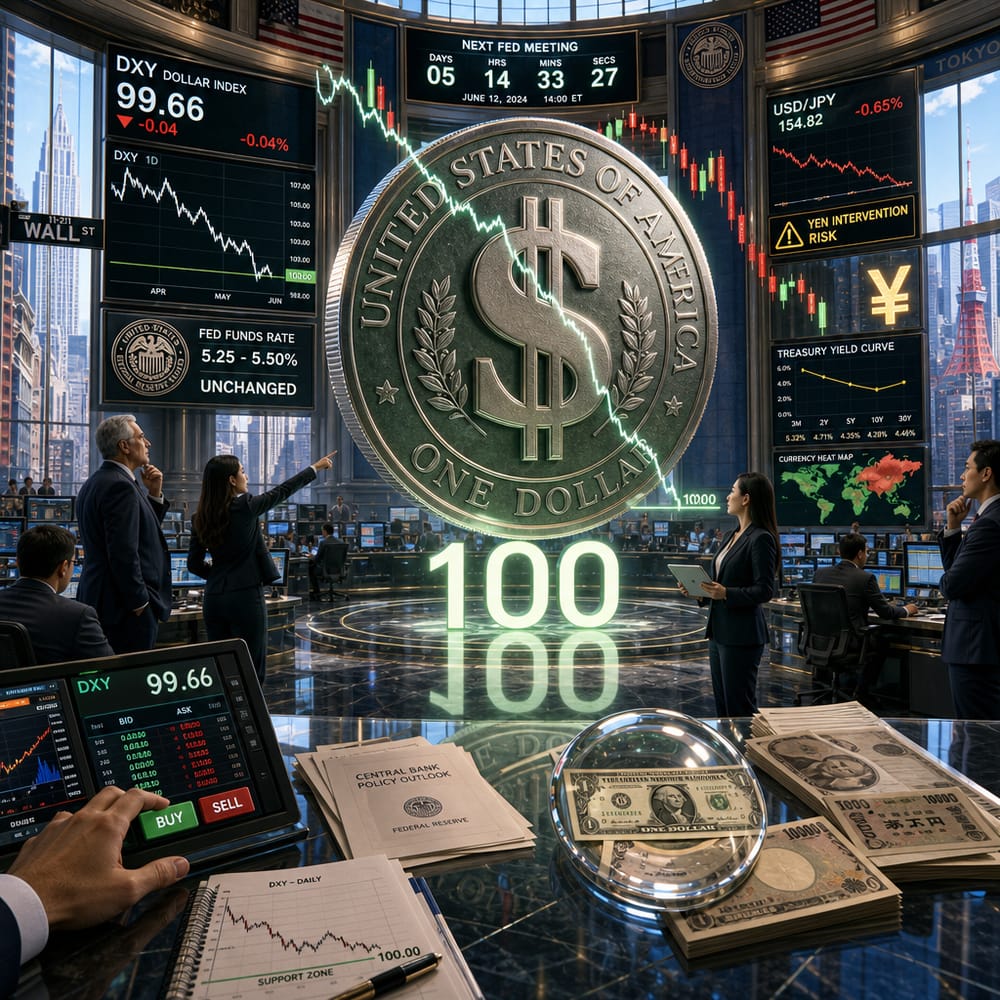
THE DOLLAR INDEX DANCE: WHY THE DXY IS TEETERING NEAR 100
Picture this: you're at a dance-off, and the music suddenly changes. The once smooth-moving U.S. Dollar Index (DXY) finds itself faltering, hovering mysteriously near the 100 mark, like a dancer trying to nail a complex choreography. This puzzling pause comes after its recent slide south of the psychological 100 threshold, leaving investors scratching their heads. What's keeping the DXY on its toes? Let’s break it down in plain English—and keep it engaging, because who wants to snooze through markets talk?
In the dazzling ballroom of global economics, the DXY’s movements can trigger ripples that touch every corner of the currency market. Recently, the DXY has been consolidating—fancy finance talk for staying put—just shy of 100, around 99.66. Is this the calm before the storm or simply a new normal? Let’s dive into why the greenback is playing it cool and what could spark its next move.
THE FED’S PLAY, OR LACK THEREOF
First up, the Federal Reserve, the cool kids on the economic block, who decided to sit back and sip their coffee instead of hiking interest rates. The Fed’s decision to keep rates unchanged has left the DXY in a bit of a quandary. Normally, higher rates attract foreign investors looking for better returns, bumping up the dollar’s value. But with the Fed hitting pause, investors are left wondering if Uncle Sam’s currency has maxed out on its appeal for now.
The pressing question here is what happens next. If the Fed decides to crank the interest rate dial up again, the DXY could get a much-needed jolt. Until then, the DXY stands like a wallflower at the dance, waiting for someone to invite it back into the action.
JAPANESE YEN TANGO
Meanwhile, over in Tokyo, whispers of intervention are setting the yen up for a potential showdown with the dollar. The Bank of Japan is rumored to be dusting off its monetary toolkit, possibly stepping in to stabilize the yen, which has taken a hit lately. If Japan decides to intervene and push up the yen, the dollar might find itself losing some of its sheen in this global dance battle.
So, we ask: will Japan’s potential intervention cool the DXY’s jets even further? If the yen strengthens, expect the DXY to feel the squeeze, as investors might look eastward for opportunities, shaking up the currency scene.
GLOBAL CURRENCY DRAMA
The DXY isn’t just a number; it’s a snapshot of the U.S. dollar against a basket of major foreign currencies. Its moves can send ripples through the market, impacting everything from import prices to tourism spending. When the dollar is strong, your overseas shopping spree is cheaper, but U.S. exports become pricier for foreign buyers—that’s basic currency math.
But why should you, the everyday investor, care? Well, if the DXY decides to break out of its current holding pattern, it could signal broader economic shifts. A rising DXY might mean tougher times for emerging markets that rely on dollar-denominated debt. On the flip side, a falling DXY could help boost U.S. exports as American goods become more competitively priced abroad.
THE FUTURE IS ANYONE’S GUESS
Here’s the kicker: predicting the DXY’s next moves is like trying to forecast the weather in a tropical storm. There’s a lot to consider. While the Fed and potential yen interventions are key factors, don’t forget about geopolitical tensions, trade policies, and economic data releases—all pieces of the economic puzzle that can flip the script at any moment.
So, keep your eyes peeled and your investment app handy. Whether you’re cheering for the DXY to rally or betting on a decline, remember that understanding its dance moves today can potentially pave the way for wiser investment decisions tomorrow. And who knows? You might just outsmart the market mavens plotting their next move over stale donuts and strong coffee.
Stay curious, stay informed, and most importantly, keep dancing through the financial twists and turns.
This article is for informational purposes only and is not investment advice. Always do your own research or consult a licensed financial professional before making investment decisions.
© Copyright 2024. All Rights Reserved.
© Copyright 2024. All Rights Reserved.