

Dollar Index Breaks Range as Soft Data Persists
Saturday, August 22, 2026
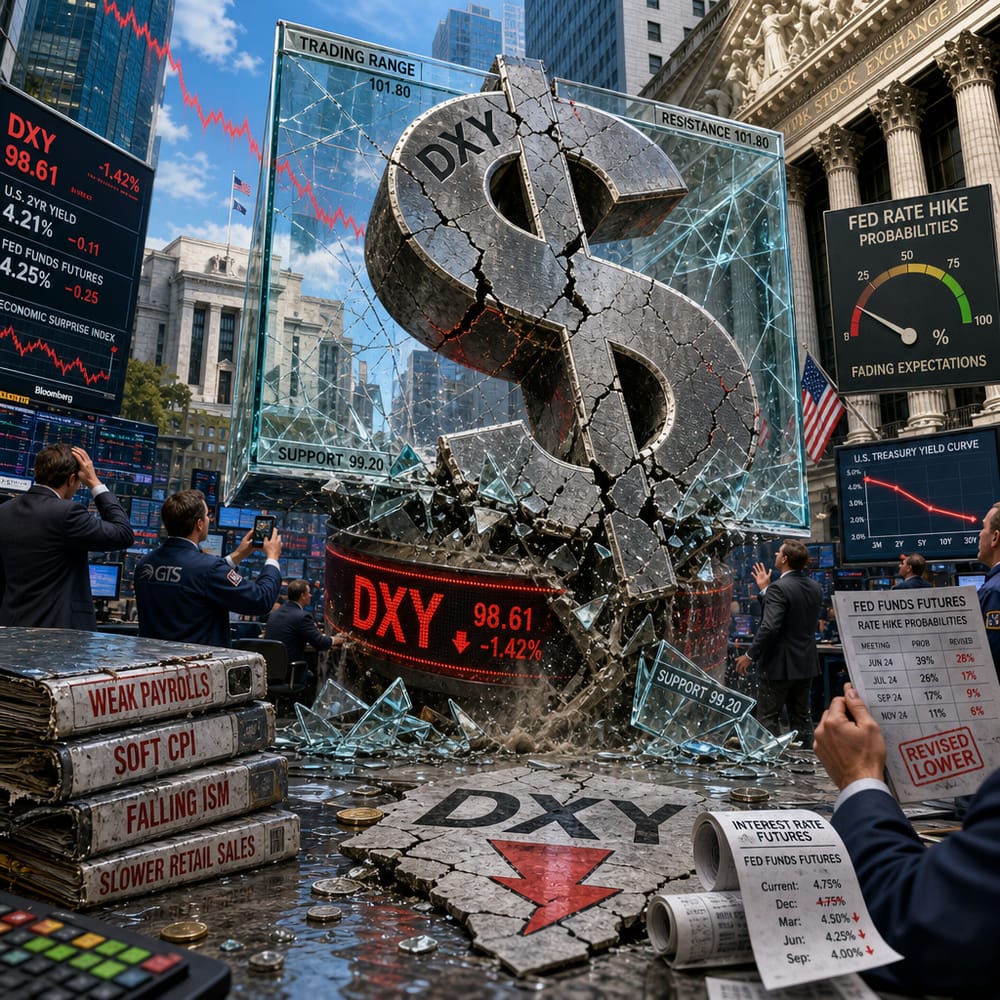
IS THE DOLLAR TAKING A VACATION? WHAT’S BEHIND THE RECENT SLIDE
Hey, did anyone see the Dollar Index sneak off for a little R&R? Because it sure seems like it’s taking a break from its usual bouncing between the cushions of its recent range. In fact, it’s made a bit of an alarming slide. For those keeping score, the Dollar Index (DXY) has slipped below its usual territory, spurred on by a series of not-so-encouraging economic numbers. And while the greenback might be catching some sun, its dip is making waves across the global financial pool.
WHY IS THE DOLLAR RELAXING?
The dollar's current chill mode isn’t just a casual decision. A slew of “soft” data – think weaker-than-usual economic signals like sluggish job growth, tame inflation numbers, and a consumer spending downturn – have been sending the dollar off its high horse. These lackluster reports are whispering sweet nothings into the ears of Federal Reserve officials, suggesting they might not need to crank up those interest rates anytime soon. In economic speak? The odds of a near-term Fed rate hike are dwindling like an ice cube in the sun.
HOW DOES THIS IMPACT THE FED'S PLAYBOOK?
With the dollar taking a back seat, the Federal Reserve is in a bit of a bind. The usual script would be to hike interest rates during stronger economic times to keep inflation in check. But with the current soft economic signals, ramping up rates could backfire, potentially stalling the economy even more. Instead, the Fed might choose to sit this one out, keeping rates steady and hoping the economy finds its own footing.
GLOBAL TRADE IMPLICATIONS: RIPPLE EFFECTS
When the dollar takes a nosedive, the reverberations are felt far and wide. For one, it changes the balance of global trade. A weaker dollar can make U.S. exports cheaper and more attractive to international buyers. So, while the dollar's on holiday, American goods are having a "sale" moment abroad. This might sound great for U.S. manufacturers, but there's a flip side. Imports become pricier, potentially hiking costs for American consumers and businesses reliant on foreign products. All in all, the vacationing dollar is shaking up the usual currency pairs and trade balances.
DOLLAR DIP: WINNERS AND LOSERS
Some folks will be sending thank-you cards to the dollar’s downtick. Emerging markets, which often hold debt in dollars, might breathe a sigh of relief as their borrowing costs potentially ease. On the flip side, U.S. travelers might find vacations abroad a bit pricier, as their dollars stretch less than they used to.
HELLO, TRADE TURBULENCE
The dollar’s escapade comes at a time when trade tensions between the U.S. and its northern neighbor are ramping up. With trade talks collapsing faster than a soufflé, new tariffs are stepping into the spotlight. The U.S. has rolled out a hefty 50% in tariffs on a variety of Canadian goods, from hockey sticks to dairy products. Canada, in a move that says “game on,” is matching those tariffs dollar for dollar. In this climate, global trade relations are about as smooth as a bumpy flight.
THE BIG PICTURE: WHAT'S NEXT?
As the world watches the dollar’s sunbathing, investors are left pondering their next moves. U.S. interest rate futures, which give a peek into what investors think the Fed might do next, are likely to see some action. Also, businesses around the globe are recalibrating their strategies to navigate this shifting landscape.
For now, the dollar might be taking a little R&R, but financial markets never really sleep. Investors would do well to keep a keen eye on economic indicators, Fed whispers, and trade negotiations. After all, the dollar might be lounging by the pool, but it won’t stay vacationing forever. When it decides to don its work clothes again, the global economy will need to be ready for the next act. Stay tuned—no one ever said keeping up with currency markets was dull.
This article is for informational purposes only and is not investment advice. Always do your own research or consult a licensed financial professional before making investment decisions.
© Copyright 2024. All Rights Reserved.
© Copyright 2024. All Rights Reserved.