

Dollar Holds Near 3.25-Month Low as Stocks Rise and Crude Stabilizes
Saturday, August 22, 2026
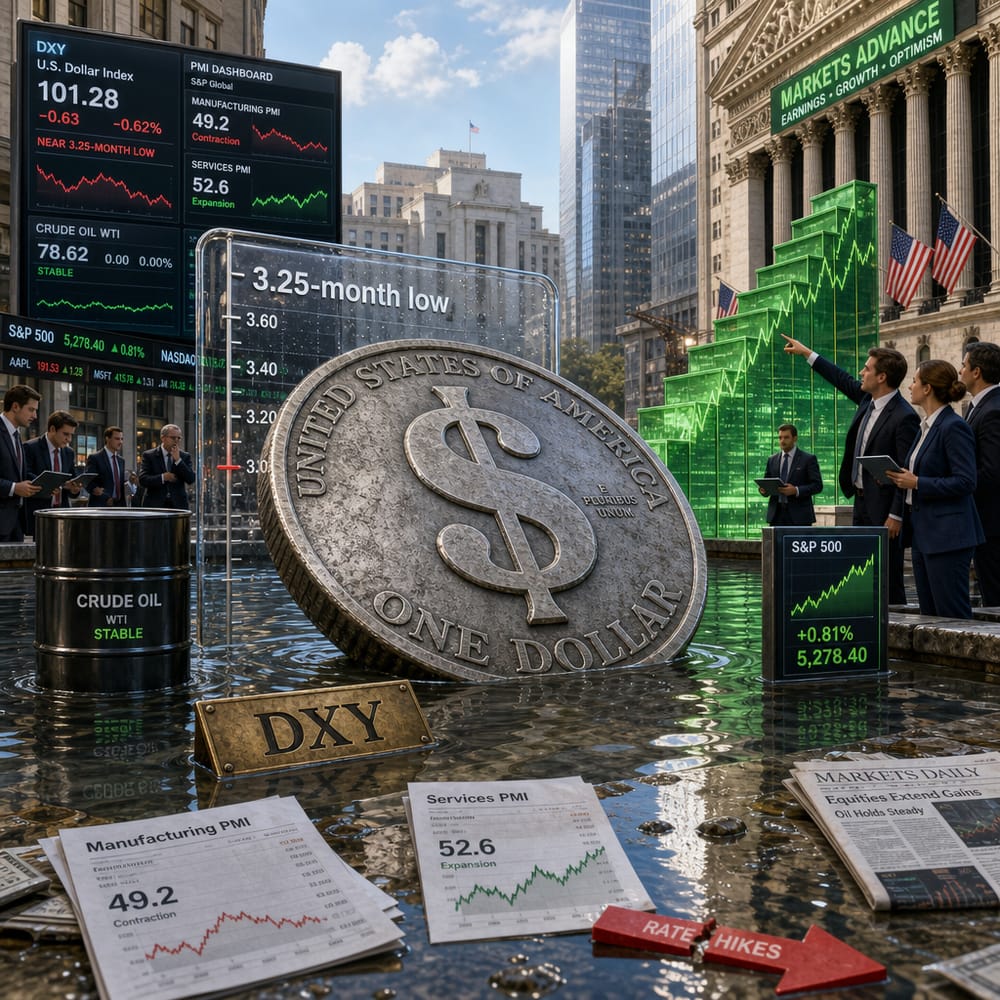
DOLLAR HOLDS NEAR 3.25-MONTH LOW AS STOCKS RISE AND CRUDE STABILIZES
If the U.S. Dollar Index were a reality TV star, it’d be the one with a penchant for drama. This week it’s serving us a plot twist: the dollar is hovering near a 3.25-month low, while stocks are throwing a party and oil prices are finally catching a breather. What gives? It’s all about the shifting sands of market expectations and a dash of unpredictable economic data.
Let’s start with the PMI, which stands for Purchasing Managers’ Index. Imagine it as a report card for the manufacturing and service sectors. The recent mixed results have been nothing short of a lukewarm latte — not too hot, not too cold, just enough to leave you pondering its implications. The manufacturing PMI came in better than expected, suggesting factories are humming along nicely. Meanwhile, the services PMI is looking a bit droopy, perhaps more Eeyore than Tigger in its pace. These numbers are crucial because they reflect the economic heartbeat — and they've got the dollar feeling a little under the weather.
Now, you might wonder why PMI data can knock the dollar off its high horse. Easy: it’s all about the Federal Reserve and those infamous interest rates. When the economy shows signs of strength — think a buzzing PMI report — the Fed might consider hiking interest rates. Higher rates can attract foreign investors looking for better returns, boosting the dollar. But this time around, the mixed signals and softer services sector have investors thinking the Fed might stay its hand on rate hikes.
The question buzzing in traders’ minds: what’s next for the Fed? If rate hikes take a backseat, we could see the dollar lose some of its mojo. Lower rates make the dollar less enticing to hold, which can send it on a downward trajectory. This shift can ripple through the forex market, impacting everything from how much you get for your euros on your next European getaway to how multinational companies manage their currency risks.
And let's not forget about geopolitics and its pesky habit of gatecrashing the economic scene. Recently, there’s been chatter about trade talks collapsing with Canada, hinting at economic tension that could influence currency flows. Add to this the fact that debt concerns are taking the spotlight, and you’ve got a recipe for market unpredictability. The U.S. debt has ballooned to a staggering $40 trillion, which economists warn could have ramifications on interest rates and overall economic stability.
But back to the here and now: even as the dollar feels the pressure, stocks are sitting pretty. Why? Because a softer dollar often translates to better times for stocks. A weaker dollar makes U.S. goods cheaper abroad, potentially boosting corporate profits and stock prices. It’s like a sale at your favorite store — everyone wins, except maybe the dollar.
As for crude oil, it’s doing its best to keep things steady, acting like the chill friend who calms the group during a heated debate. After recent volatility, oil prices have found a moment of peace, which can be good news for everyone tired of playing the “guess what you’ll pay at the pump” game every week.
So, what’s a savvy retail investor to do amidst all this? Keep your eyes on the Fed like a hawk watching its prey. Pay attention to economic data releases — they’re the tea leaves that might hint at future Fed decisions. And remember, while market moods can swing like a pendulum, understanding the underlying factors driving those swings is where the smart money sits.
In this financial soap opera, the story is far from over. The dollar will continue to dance to the tune of rate expectations, economic data, and global events. So, buckle up and keep your trading apps handy — the plot is just getting started.
This article is for informational purposes only and is not investment advice. Always do your own research or consult a licensed financial professional before making investment decisions.
© Copyright 2024. All Rights Reserved.
© Copyright 2024. All Rights Reserved.