

Dollar General (DG): HSBC Upgrade from “Hold” to “Buy”
Saturday, September 26, 2026
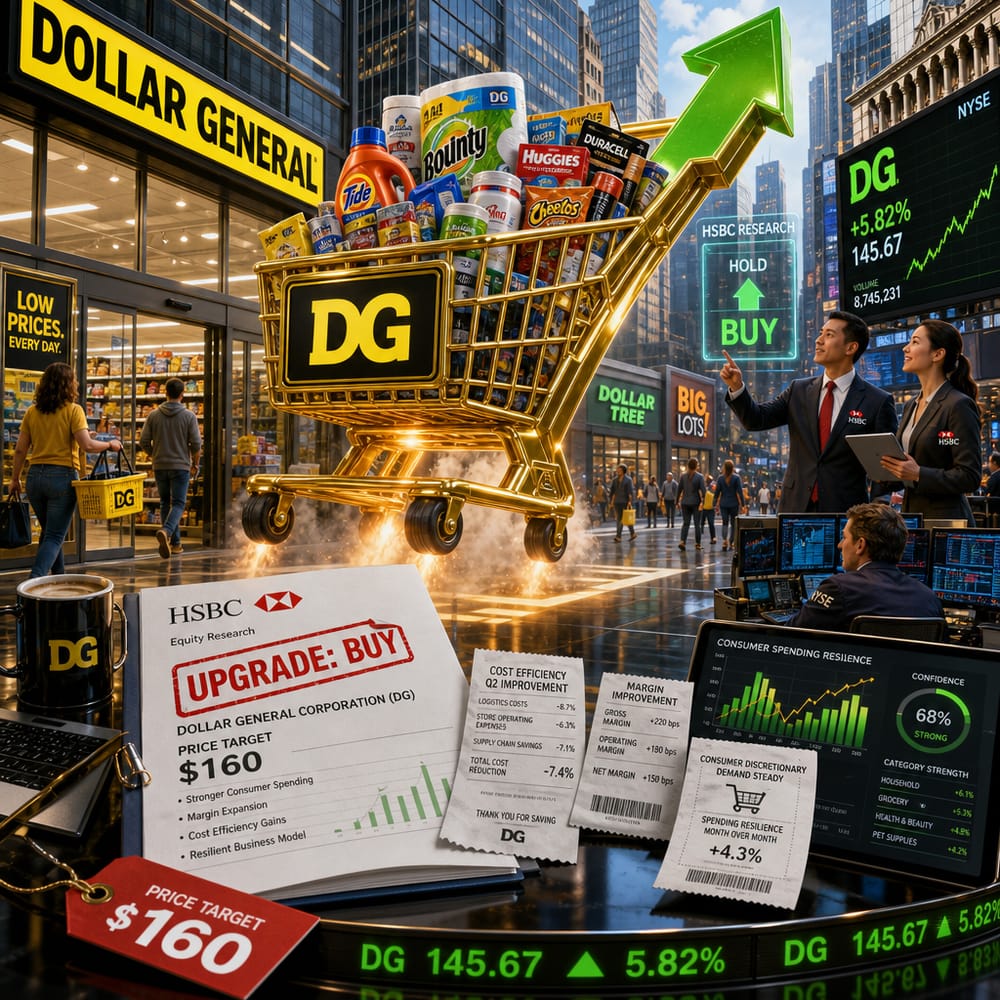
DOLLAR GENERAL: HSBC TURNS UP THE DIAL FROM “HOLD” TO “BUY”
In the thrilling world of retail stocks, where every price tag hides a secret, Dollar General just snagged itself a golden ticket. HSBC has decided that it's time to give Dollar General a little extra love, upgrading their rating from "Hold" to "Buy," and setting their sights on a price target of $160. But what’s behind this sudden burst of affection for the king of discount retail? Let’s unravel the tale of Dollar General's newfound charm and what it means for you, the savvy investor.
WHY THE LOVE, HSBC?
So, why is HSBC putting Dollar General on their shopping list? Well, it's all about improved cost efficiency and the company’s ability to weather the storm of unpredictable consumer discretionary spending. In other words, Dollar General is tightening its belt and getting more bang for its buck while staying appealing to shoppers who have a few extra dollars burning a hole in their pockets.
Consider this: in an economic climate where every dollar counts, shoppers are flocking to stores where they can stretch those dollars further. Dollar General has expertly positioned itself as the go-to place for essentials without breaking the bank. It’s like the comforting embrace of your favorite discount aisle—familiar, reliable, and oh-so-economical.
THE RETAIL RUMBLE: DG VERSUS DOLLAR TREE AND BIG LOTS
Now, let’s talk about Dollar General’s competitors. The retail battlefield is crowded, and contenders like Dollar Tree and Big Lots aren’t just window dressing. Dollar Tree, with its “everything’s a dollar” charm, has its own loyal fan base. Meanwhile, Big Lots appeals to those seeking a bargain on a slightly larger scale.
But what sets Dollar General apart is its remarkable knack for turning inventory faster and optimizing its supply chain. It’s not just about what’s on the shelves; it’s about how quickly those items get there and at what cost. This operational prowess gives Dollar General an edge in valuation, making it a more attractive option for investors compared to its peers.
For Dollar General, this means not just surviving but thriving, even as other retailers fret over inflation or consumer hesitation. HSBC’s nod of approval underscores the belief that Dollar General has the gumption—and the financial savvy—to outmaneuver the competition.
THE MARKET’S TAKE: HOW DID WALL STREET REACT?
Following HSBC’s upgrade, the market went abuzz like a swarm of bargain-hunters at a Black Friday sale. Traders, investors, and analysts all had their eyes trained on Dollar General, eager to see if the stock would rise to meet its new price target.
And rise it did. The stock experienced a notable uptick, making investors giddy at the prospect of potential gains. It seems Wall Street shares HSBC's optimism, and who could blame them? With a solid track record and strategic tweaks to its operations, Dollar General is looking like an appealing addition to portfolios searching for a stable yet opportunistic retail play.
WHAT DOES THIS MEAN FOR YOU?
Here’s the takeaway: if you’re a retail investor with a penchant for discount excellence, Dollar General is certainly worth your consideration. The HSBC upgrade isn’t just a seal of approval; it’s a spotlight on the potential for future growth. As Dollar General continues to refine its operations and capitalize on consumer trends, the stock stands as a testament to strategic retailing in challenging times.
In the grand theatre of retail investing, where trends shift like quicksilver and competition is fierce, Dollar General is proving that it has the chops to stay ahead. So, as you ponder your next investment move, you might just find that Dollar General, with its new “Buy” status, is the ticket to a profitable future.
In the end, it’s not just about the dollars you save but the dollars you earn, and Dollar General might just help you do both.
This article is for informational purposes only and is not investment advice. Always do your own research or consult a licensed financial professional before making investment decisions.
© Copyright 2024. All Rights Reserved.
© Copyright 2024. All Rights Reserved.