

Dollar Faces Pressure Amid Fiscal Risks and Yield Support
Wednesday, August 19, 2026
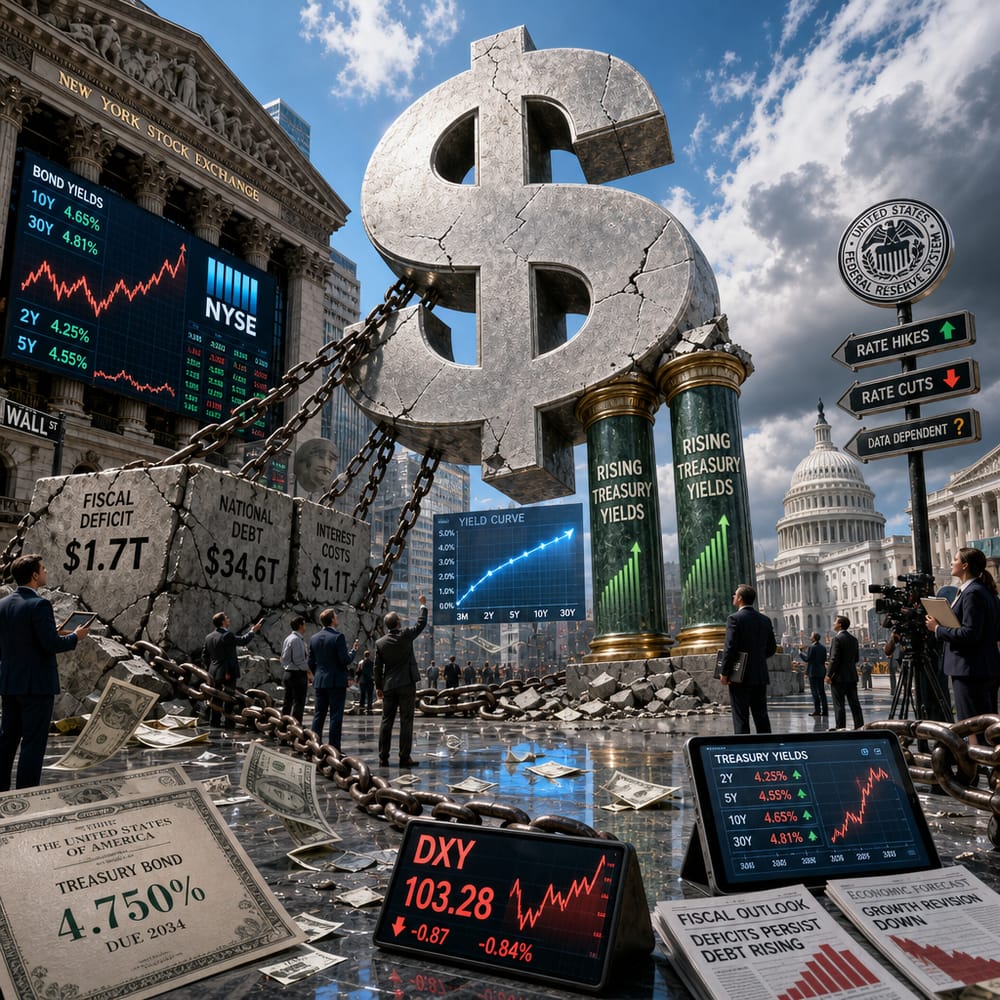
THE DOLLAR TAKES CENTER STAGE: WILL IT SIZZLE OR FIZZLE?
Cue the spotlight on the main character of the global financial drama: the U.S. Dollar. The strength of the greenback is like the plot of your favorite thriller—twists, turns, and cliffhangers. Right now, we're stuck on a particularly juicy chapter where the dollar is strutting its stuff, thanks in large part to high Treasury yields. But before you start envisioning a gold-plated future, hold on—fiscal wolves are lurking at the edges, threatening to crash the party.
THE TREASURY YIELD SUPPORT SYSTEM
Let's break it down: Treasury yields are like the dollar's fitness trainer, keeping it in shape and attractive to investors worldwide. Think of yields as the interest rates you get for lending money to Uncle Sam. When these rates are high, more folks want to invest in U.S. bonds, and they need dollars to do that. More demand for dollars generally means a stronger dollar; it's basic supply and demand at work.
But here's the kicker—these high yields aren’t just a sign of economic muscle. They often reflect concerns about how much the U.S. government is borrowing and spending. And right now, it feels like the government is on a spending spree that even the most generous credit card company would frown upon. If those fiscal risks turn out to be real threats, the dollar could find itself in a precarious position.
FISCAL RISKS: THE PARTY POOPER
So, what are these fiscal risks that keep shadowing our star performer? Let’s start with the elephant—or perhaps the herd of elephants—in the room: U.S. debt. The national debt is ballooning faster than a hot air balloon at a summer festival, sparking fears about sustainability and long-term economic health.
And it’s not just about debt; there’s also the teetering tower of government spending. Without significant policy changes, these fiscal worries could undermine the dollar's current strength. Remember, if investors start seeing U.S. bonds as risky rather than reliable, they might pull their money faster than you can say "credit crunch."
FEDERAL RESERVE: THE WILD CARD
Adding another layer to this financial soap opera is the Federal Reserve, the enigmatic maestro conducting this symphony. The Fed's policies on interest rates are another critical piece of this puzzle. Recently, talk around the Fed has been sprinkled with words like "uncertainty" and "unpredictability," which is about as comforting as a wobbly chair.
Will the Fed decide to keep interest rates high to curb inflation, adding more weight to the dollar's shoulders? Or will they lower rates, potentially pulling the rug out from under the dollar? The Fed’s moves in the coming months could either bolster the dollar's standing or send it scrambling for cover.
THE INVESTOR'S DILEMMA
For you, the retail investor scrolling through the latest headlines, this convoluted dance presents a unique challenge. Should you take comfort in the dollar's current strength, buoyed by high Treasury yields? Or should you be wary of those fiscal storm clouds gathering ominously on the horizon?
If you're dabbling in foreign exchange or have investments sensitive to currency fluctuations, staying informed is your new best friend. This means keeping an eye on governmental fiscal policies, Fed announcements, and global economic indicators that might tip the scales.
THE FINAL ACT
As the stage is set for the coming financial chapters, the U.S. dollar remains resilient for now, but it better keep checking that rearview mirror for potential fiscal pitfalls. Investors, meanwhile, must play the role of the eagle-eyed audience, ever ready to adjust portfolios as the plot unfolds.
So, here's the takeaway: While the dollar might be the lead in today's financial play, the script is far from set. Will it rise to new heights, or will fiscal realities rewrite the ending? Stay tuned, because this is one show you won't want to miss.
This article is for informational purposes only and is not investment advice. Always do your own research or consult a licensed financial professional before making investment decisions.
© Copyright 2024. All Rights Reserved.
© Copyright 2024. All Rights Reserved.