

Dollar Edges Lower Versus Euro, Swiss Franc Amid Softer U.S. Economic Data
Saturday, August 22, 2026
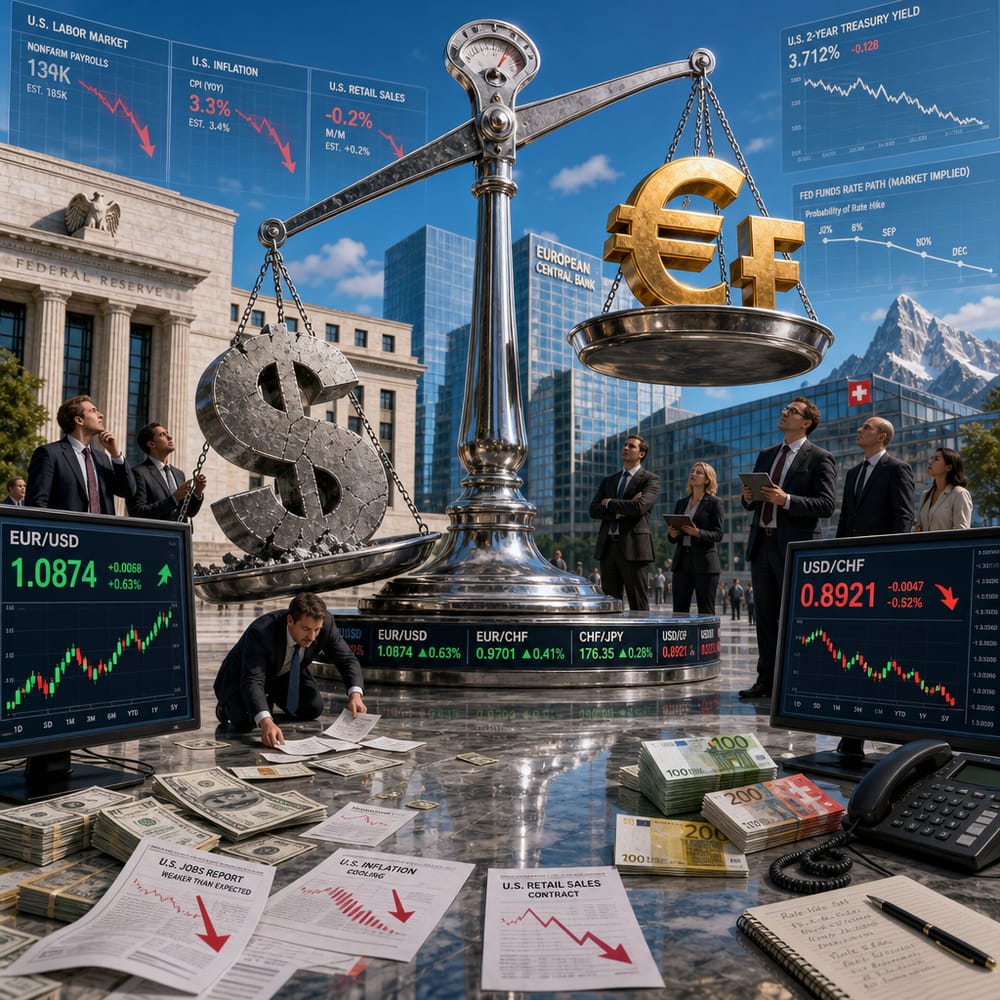
THE DOLLAR'S DANCE: HOW SOFTER U.S. ECONOMIC DATA SHIFTS THE CURRENCY TANGO
In the world of currencies, it’s not just about who’s got the flashiest dance moves — it's about who can read the room and adjust the tempo. Recently, the U.S. dollar seems to be hitting a few sour notes as it waltzes a little lower against the euro and Swiss franc. So what’s behind this not-so-smooth move? It turns out, softer U.S. economic data may be changing the tune the Federal Reserve plays, and investors are taking note.
First, let’s break down the economic beat that’s got everyone tapping their feet with a little more trepidation. Recent reports out of the U.S. have shown softer numbers than expected. Think industrial production taking a breather and retail sales losing a bit of their pep. These aren’t just numbers; they’re the pulse of American economic vitality, and right now, that pulse feels a bit lethargic.
Why does this economic malaise matter? Well, imagine trying to dance with a partner who suddenly slows down. Markets were expecting a brisk pace, but now they’re left wondering if the Fed might also take a more leisurely stroll when it comes to raising interest rates. And that’s where the dollar’s dance card begins to get messy.
Interest rates are the secret sauce in the currency exchange recipe. When the Fed hikes rates, it's like the U.S. economy popping a bottle of champagne — investors flock in, dollar demand goes up, and the greenback gets a little swagger. But if rates are expected to stay flat or rise more slowly, it's like someone switched the bubbly for flat soda. Suddenly, the dollar’s appeal dims, and investors might start eyeing other pastures — like the euro or Swiss franc — with a bit more enthusiasm.
So, how's the Fed sizing up this economic soiree? With caution, it seems. The softer data has some wondering if the Fed will hit pause on its rate hike party. If they go dovish — essentially less aggressive with rate increases — it’s a sign they’re worried about stifling growth further. This dovish stance could mean more downside for the dollar if investors decide that holding euros or Swiss francs offers a better return on their dance tickets.
Now, let’s talk real-world implications. If the dollar continues to mellow against the euro, it's not just a currency chart quirk. It could mean American-made goods are more competitively priced abroad — good news for exporters. But hold your applause; it also means imports, including that fancy European cheese you love, might just become a tad pricier. For the U.S. consumer, this currency shuffle could mean a bit of both savings and spending, depending on what side of the import-export fence you're on.
Then there’s the broader impact on investor sentiment. A softer dollar might lead some to rethink their portfolios. Suddenly, assets priced in euros or francs could look more enticing, prompting shifts in investments that could ripple throughout various markets.
This currency conundrum isn’t happening in a vacuum. Other swirling geopolitical tensions, like renewed trade skirmishes or global economic slowdowns, could throw additional wrenches into the works. If tensions rise and global growth stutters, the Fed's dance decisions could become even more conservative.
So what’s an everyday investor to do with this twist in the markets’ melody? Keep an eye on the Fed’s upcoming announcements and any further economic data drops like a hawk. Stay nimble, and consider the implications of a shifting dollar on your investments and spending.
As we watch this economic dance unfold, one thing’s clear: The currency market is a high-stakes ballet where even the tiniest misstep can lead to chaotic choreography. For now, investors and the dollar alike are waiting for the next beat to drop — because in this world, timing really is everything.
This article is for informational purposes only and is not investment advice. Always do your own research or consult a licensed financial professional before making investment decisions.
© Copyright 2024. All Rights Reserved.
© Copyright 2024. All Rights Reserved.