

Diverging Analyst Opinions on Apple: Who's Right?
Monday, August 17, 2026
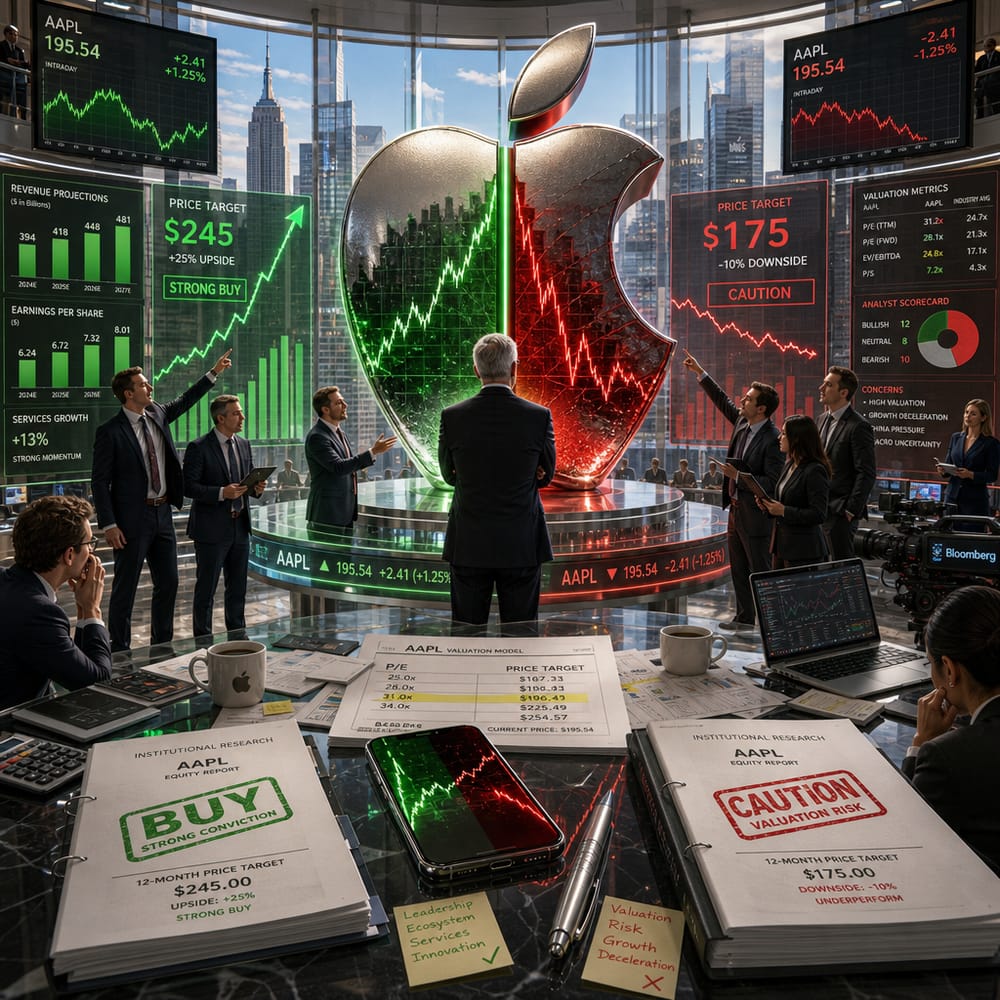
APPLE STOCK SPLIT: CAN ANALYSTS AGREE ON WHETHER AAPL IS A BARGAIN OR A BUBBLE?
If Wall Street had a family dinner table, the discussion around Apple Inc. (AAPL) would be the spicy turkey argument that splits the room in two. Half the analysts are singing "Buy, buy, buy!" like a pop song chorus, while the other half cautiously whisper, "Whoa there, it might be overpriced." Welcome to the latest saga of "Who’s got it right about Apple?"
What's got everyone talking? Well, it’s the age-old debate of valuation versus growth potential—specifically driven by Apple's whispering sweet nothings to artificial intelligence (AI) and the potential for future earnings. Let's dive into the juicy details.
VALUATION: GOLDEN APPLE OR EXPENSIVE FRUIT?
At the heart of the analyst split is the valuation of Apple. Picture this: Apple's stock is like that trendy new gadget everyone wants but carries a price tag that makes you wince. Some analysts think paying a premium is justified. Their argument? Apple's ecosystem is so sticky it’s practically coated in honey, and its customer loyalty is legendary.
But, the skeptical analysts are clutching their calculators, pointing out that maybe, just maybe, the stock's valuation has stretched a bit too far. With price-to-earnings ratios climbing higher than a kite in a windstorm, the cautionary crowd warns that Apple could be more like a luxury item in a clearance store—great, but not at full price.
THE AI FACTOR: WILL APPLE RULE THE SMART FUTURE?
Enter stage right: AI, the not-so-secret sauce that some believe will catapult Apple into a whole new era of growth. The optimistic analysts are picturing Siri 2.0 making them coffee and running their meetings. Apple has been sprinkling AI across its products like salt on French fries—think improved personal assistants, advanced health features on the Apple Watch, and even smarter iPhones.
The bullish team argues that AI is the glittering future, boosting Apple's growth potential significantly. They paint a picture of an Apple-driven future where machines do more of the thinking, and investors are handsomely rewarded.
However, the bear camp isn’t buying the full story just yet. They point out that while AI is exciting, it’s not a guaranteed golden ticket. The tech world is fast-paced and competitive, and even Apple isn’t immune to stumbling over its own futuristic shoelaces.
EARNINGS: APPLE’S FUTURE IN NUMBERS
Next, let’s talk numbers, because at the end of the day, earnings reports are the balance sheets that reflect reality. Apple's past has been a masterclass in delivering consistent, spectacular earnings. Yet, as the market evolves and the tech landscape shifts, the skeptics ponder if Apple can keep up the pace or if the growth might slow like a marathon runner after mile 20.
The optimists, on the other hand, argue that Apple's diversified product lineup and global brand strength will keep the cash registers singing. They see the potential for new revenue streams from AI-driven services and products that haven’t even hit the market yet.
WHAT'S A RETAIL INVESTOR TO DO?
So, where does this leave the everyday retail investor scrolling through their phone, wondering if they should click "buy" or "sell"? The reality is, analyst opinions, much like your crazy uncle’s prediction of next year’s Super Bowl winner, are just that—opinions.
For those thinking long-term, Apple's track record of innovation and adaptability gives it a compelling case. Yet, if you’re the cautious type, waiting for a more comfortable valuation might be the play. As always, understanding your risk tolerance and investment goals is key.
In the end, whether Apple is your tech darling or you’re a wary observer, one thing is clear: the debate over its stock isn’t cooling off anytime soon. So grab some popcorn, keep an eye on the headlines, and remember, in the stock market—just like in life—balance is everything.
This article is for informational purposes only and is not investment advice. Always do your own research or consult a licensed financial professional before making investment decisions.
© Copyright 2024. All Rights Reserved.
© Copyright 2024. All Rights Reserved.