

Divergent Analyst Ratings on Advance Auto Parts (AAP)
Friday, August 21, 2026
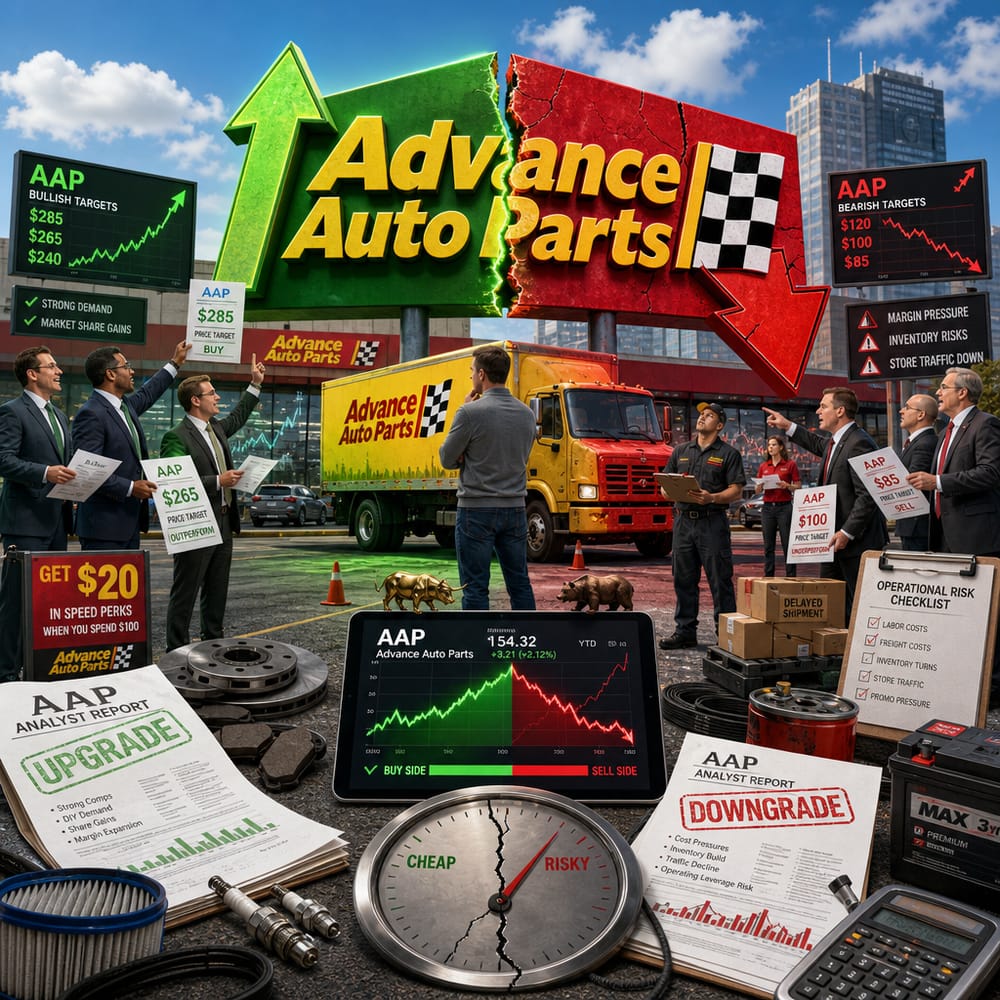
ADVANCE AUTO PARTS: CAUGHT BETWEEN A BRAKE AND A HARD PLACE
In the fast-paced world of stock investing, nothing screams "rollercoaster" quite like Advance Auto Parts (AAP) right now. Imagine you're at a speedway, and some analysts are telling you to zoom ahead while others are screaming to slam the brakes. Confused? You're not alone. Welcome to the enigmatic world of mixed analyst ratings for AAP.
For the uninitiated, Advance Auto Parts is that trusty friend you go to when your car battery dies or your air filter needs swapping. But right now, AAP is the car stalling at a green light with analysts divided on whether it’s a pit stop or a permanent breakdown. So, why the split decision from the market experts?
THE FINE LINE BETWEEN VALUE AND RISK
Analysts are seemingly split on two key areas: the company's valuation and its operational risks. Those in the bull camp are betting big on AAP's perceived undervaluation. They see the stock as an automotive diamond in the rough, underappreciated by Wall Street and ripe for the picking. Their crystal ball shows AAP bouncing back, fueled by potential improvements in supply chains and a recovery in consumer spending.
On the flip side, the skeptics are waving red flags about AAP's operational risks. They cite issues like supply chain hiccups, which can transform a hopeful profit sheet into an anxiety-inducing thriller. Not to mention, the ever-present shadow of competitors revving up their engines to seize market share. If that's not enough, some are worried that a labor shortage might leave AAP understaffed and overwhelmed, like a pit crew missing half its members.
INVESTOR SENTIMENT: TO THE MOON OR INTO A DITCH?
The mixed analyst ratings have thrown AAP's stock into a whirlwind. When one analyst upgrades the stock, it’s champagne and confetti. But when another downgrades it, it's like someone popped the balloons at the party. The stock price has been as jittery as a caffeinated squirrel, reflecting the uncertainty.
But here’s the kicker: mixed ratings can be a double-edged sword. They can keep the stock price in a limbo dance, but they can also highlight potential opportunities for savvy investors looking for a bargain. Think of it as a discount sale where you must decide if you're buying a quality item with a temporary markdown or a product with hidden flaws.
RISKS, REWARDS, AND THE ROAD AHEAD
For those brave enough to venture into AAP territory, the road is fraught with both potential treasure and traps. The rewards? If AAP manages to iron out its operational wrinkles and capitalize on a recovering market, investors could see their patience pay off handsomely. Picture yourself cruising down Easy Street with the wind in your hair and profits in your pocket.
On the flip side, if those operational risks turn from molehills into mountains, the ride could get bumpy. Supply chain snafus, fierce competition, and labor shortages could brew into the perfect storm, leaving investors stranded on the side of the road.
BOTTOM LINE: NAVIGATING THE ANALYST GAUNTLET
So, what should a curious investor do amidst this analyst chaos? First, it's crucial to do your homework. Dive into the nitty-gritty of AAP's financial statements, scrutinize their strategies for overcoming operational challenges, and keep an eye on how they stack up against competitors.
Remember, in the stock market race, being informed is your pit crew. Mixed ratings are not a definitive stop sign but a signal to proceed with caution. Whether you decide to hit the accelerator or pump the brakes, make sure it's a decision driven by insights, not just instinct.
Ultimately, Advance Auto Parts might just be the dark horse that surprises everyone or the weekend project that takes longer than anticipated. Only time—and a deep dive into their plans—will reveal whether AAP is worth the spin. Until then, buckle up and keep your eyes on the road.
This article is for informational purposes only and is not investment advice. Always do your own research or consult a licensed financial professional before making investment decisions.
© Copyright 2024. All Rights Reserved.
© Copyright 2024. All Rights Reserved.