

Divergence Between Commodity Currencies and USD Direction
Sunday, August 16, 2026
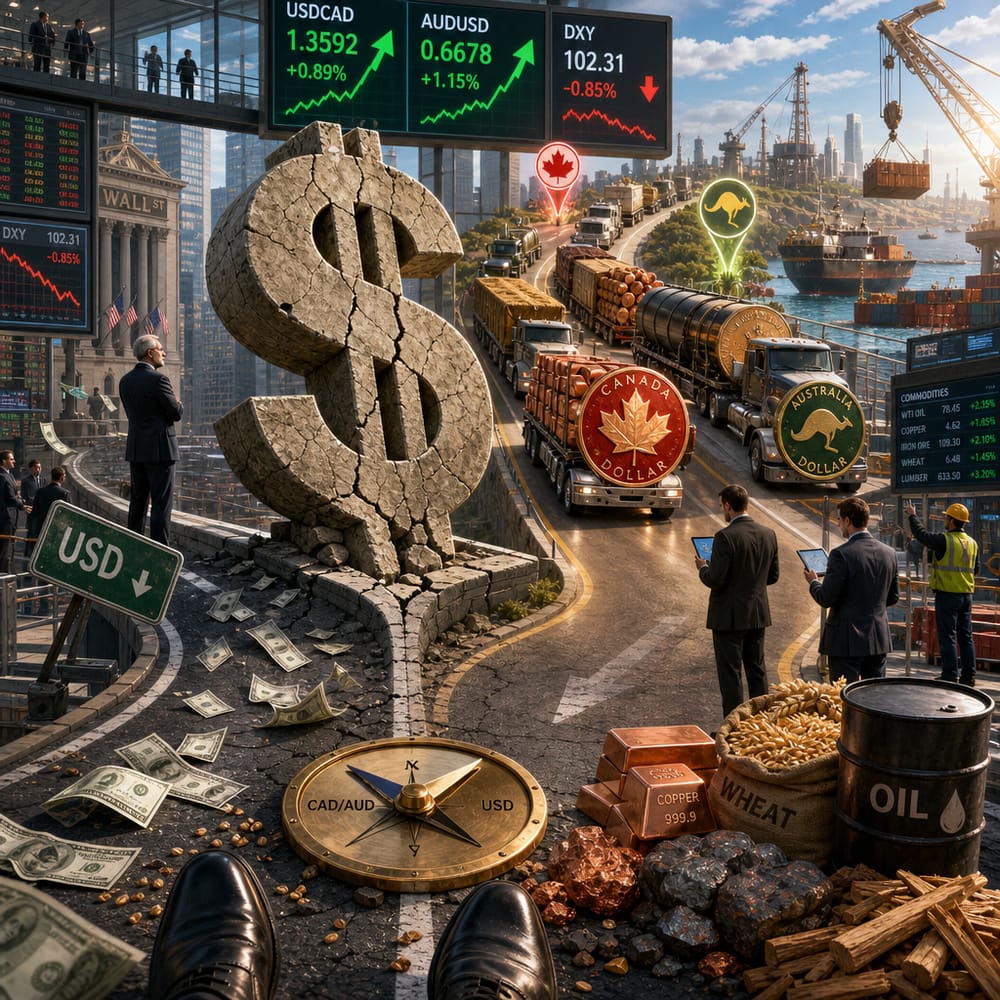
WHEN THE DOLLAR'S NOT THE KING: THE GREAT CURRENCY SWING OF 2026
If you think the mighty U.S. dollar reigns supreme, ruling the forex kingdom without contest, think again. In a plot twist worthy of a Hollywood blockbuster, the Canadian and Australian dollars are making the USD look like it's wearing last season's crown. So, what's fueling this currency soap opera, and why should you care? Buckle up, because the forex world just got a lot more interesting.
THE CURRENCY TANGO
Let's set the stage: currency movements are like a dance, where leading and following is determined by a complex mix of oil prices, economic forecasts, and interest rates. Enter the Canadian loonie and the Aussie dollar, both swaggering onto the dance floor thanks to their strong ties with commodities. When oil, gold, and other raw materials have a bullish day, these currencies strut their stuff with newfound confidence.
Meanwhile, the U.S. dollar, often the life of the party, has been showing signs of wear from its relentless interest rate hikes and the looming threat of a potential economic slowdown. It's like the USD has been doing the same dance move for too long, and everyone's noticed.
WHY COMMODITY CURRENCIES ARE SHINING
What’s making the Canadian and Australian currencies so appealing right now? Blame it on commodities. Canada, with its vast oil sands and lumber resources, and Australia, rich in minerals and metals, have economies that soar when these assets get more valuable. As global demand for natural resources booms, their currencies tend to rise in tandem. It's like they’ve found that perfect playlist that's just irresistible on the forex dance floor.
Additionally, the central banks of both countries have been playing it cool, signaling that they might not follow the Fed's aggressive interest rate hikes. For investors, this makes the CAD and AUD more appealing, creating a sweet spot where commodity prices and market-friendly monetary policy intersect.
WHAT DOES THIS MEAN FOR YOUR WALLET?
Now, you might be wondering how these currency moves affect you, especially if you're not planning to buy a beach house in Melbourne or a log cabin in Alberta. Well, this divergence could impact trade balances, making Canadian and Australian goods potentially more expensive for U.S. importers. On the flip side, U.S. exports might find more buyers in the Great White North and Down Under if the dollar remains subdued.
For investors, this split signals a pivot. Forex strategies might shift focus from the traditional heavyweights to these commodity-linked currencies, considering them as alternatives to hedge against USD weakness. It might be time to rethink where you're putting your forex bets.
THE FUTURE OF FOREX STRATEGIES
So, what's next in this currency thriller? If commodity prices continue their upward trajectory, expect the loonie and Aussie to keep dancing circles around the greenback. However, if the global economic picture shifts—say, if demand for commodities cools or the U.S. economy bounces back stronger than anticipated—this could change quicker than a sudden twist in a financial thriller.
Forex traders will need to keep a keen eye on commodity markets and central bank policies. Diversifying currency exposure, perhaps by investing in emerging markets or other commodity-rich countries, could be a way forward. It's like having a playlist ready for every mood—the key is flexibility and adaptation.
FINAL THOUGHTS
While the U.S. dollar isn't likely to lose its status as the world's reserve currency any time soon, these shifts highlight the dynamic nature of forex markets. The CAD and AUD are more than just backup dancers—they're stars in their own right, with the potential to steal the spotlight.
So, as this currency drama unfolds, stay informed and be ready to pivot. Because, in the world of forex, the only constant is change. And right now, it's a riveting show you won't want to miss.
This article is for informational purposes only and is not investment advice. Always do your own research or consult a licensed financial professional before making investment decisions.
© Copyright 2024. All Rights Reserved.
© Copyright 2024. All Rights Reserved.