

Dissent Echoes in Fed Minutes: Rising Hawkish Voices Spark Market Speculation
Saturday, August 15, 2026
Dissent Echoes in Fed Minutes: Rising Hawkish Voices Spark Market Speculation
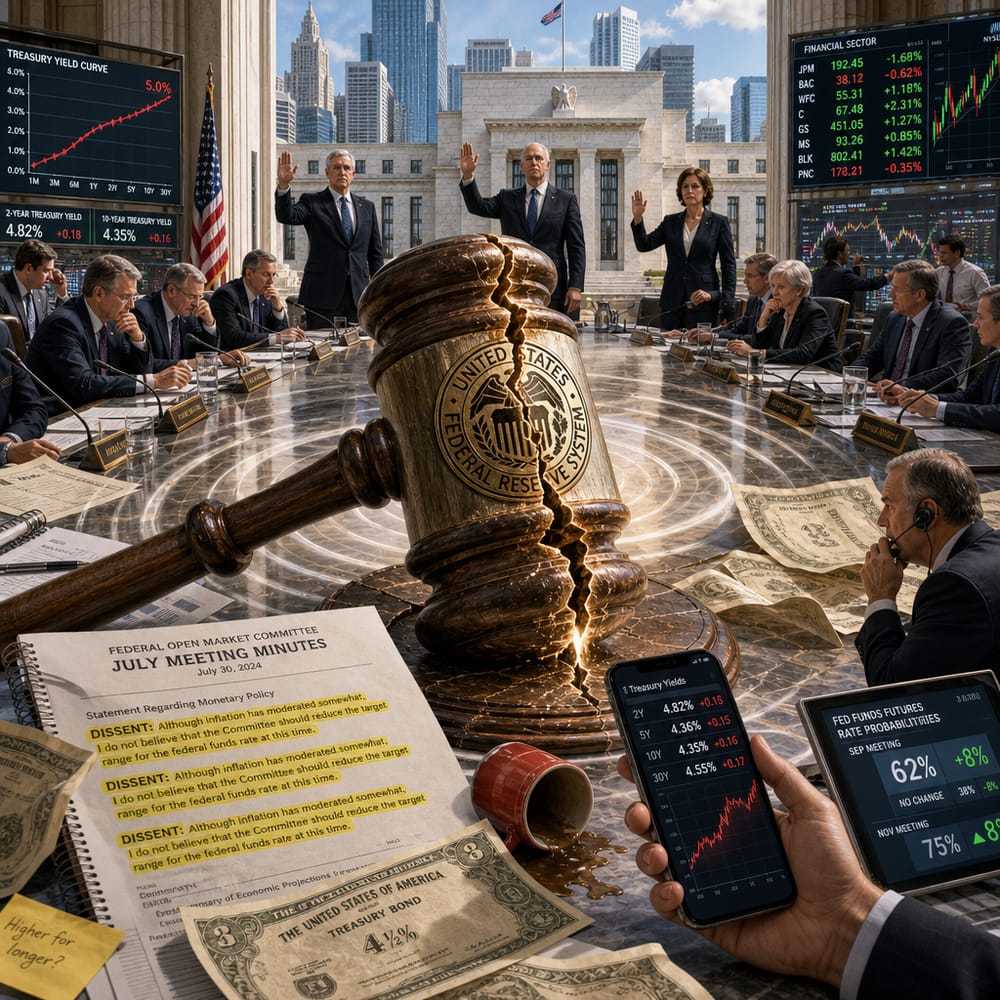
The Federal Reserve’s July meeting minutes were supposed to be another day at the office. Instead, they turned out to be the financial equivalent of finding out your favorite rock band has creative differences. Yep, our central bankers are engaged in a bit of a tiff, and the word "dissent" is rearing its head.
Three officials within the Fed, equipped with a more hawkish worldview—hawkish meaning they have a bit of a thing for higher interest rates—broke ranks and voted for a rate hike. This little slice of rebellion is enough to stir the market pot and has tongues wagging across Wall Street about what this could mean for the rest of us. Spoiler alert: it’s less about what they did and more about what they might do.
THE DISSENTING DUO (AND A THIRD!)
First, let’s ponder why these monetary mavericks are bucking the consensus. Inflation, that ever-present beast that gobbles purchasing power, is likely their prime motivator. While headline inflation may show signs of easing, core inflation—which strips out the more volatile food and energy prices—has stuck around like glitter after a party. These dissenters are probably looking at the inflation numbers and the economy’s overall health and concluding that a stitch in time saves nine.
But it’s not just about today’s prices. The Fed’s mandate is quite the juggling act—aiming for maximum employment while keeping prices stable. It's like walking a tightrope while dodging flying fruit. The dissenters are probably worried that not acting now could mean needing more drastic measures later. Think of it as a little tough love now to prevent a full-on intervention later.
WHAT DOES THIS MEAN FOR FUTURE FED DECISIONS?
So, what does this internal dissent mean for the Fed’s future decisions? Well, it can shift expectations and sentiment. The Fed’s decisions are kind of like the world’s most-watched soap opera, and everyone has an opinion on the next plot twist.
Hawkish murmurs can influence market expectations, leading to speculation about future hikes. Even if the Fed's chair and majority are singing a more dovish (read: rate-friendly) tune, the hawkish trio’s voices could get louder if inflation doesn’t play nice. This trio might just sway others to their side if their concerns become more pressing.
And if you’re a fan of reading the tea leaves—or, in this case, rate-setting signals—every word, cough, and eyebrow raise from the Fed is worth analyzing. They’ve become a master class in saying a lot without saying much at all.
RIPPLE EFFECTS: MARKETS ON EDGE
Now, let’s talk about what a rate hike could mean for the markets. Treasury bonds are usually the first to feel the Fed's love taps. When rates rise, bond prices typically drop, and yields shoot up. For investors holding long-term bonds, it's the equivalent of being caught in a surprise rainstorm without an umbrella. Suddenly, those juicy fixed rates aren’t so attractive when newer bonds offer better returns.
And where Treasuries go, so might financial sector stocks. Banks often benefit from rate hikes because they lend at higher interest rates than they pay out on deposits. It’s kind of like finding a $20 bill in your old jeans; their profit margins get a cozy little boost.
On the flip side, the broader stock market might not be as thrilled. Higher interest rates can make borrowing more expensive for companies, potentially stunting growth. It’s like having to pedal harder on an uphill slope without the benefit of a lower gear. Valuations, especially those of high-growth stocks that bank on cheap capital, might take a hit.
THE WAITING GAME
We’re now in a holding pattern, where investors and analysts will pour over every press release, every economic indicator, and every whisper from Fed members to gauge the likelihood of the hawkish crew grabbing more power. It's like a chess game, with investors trying to anticipate the Fed's next move before it’s made.
In the grand tapestry of the financial markets, the Fed’s dissent is a single thread. Yet, it’s a thread that has the potential to unravel a great deal. So, while we wait and speculate, remember: whether you’re holding Treasury bonds, bank stocks, or just trying to make sense of it all, the Fed’s internal debates are about more than just interest rates—they’re about the very pulse of the economy. And like any good drama, we’ll just have to stay tuned to find out what happens next.
This article is for informational purposes only and is not investment advice. Always do your own research or consult a licensed financial professional before making investment decisions.
© Copyright 2024. All Rights Reserved.
© Copyright 2024. All Rights Reserved.