

Disposable Income Rises, Core PCE Inflation Stays Elevated
Sunday, August 30, 2026
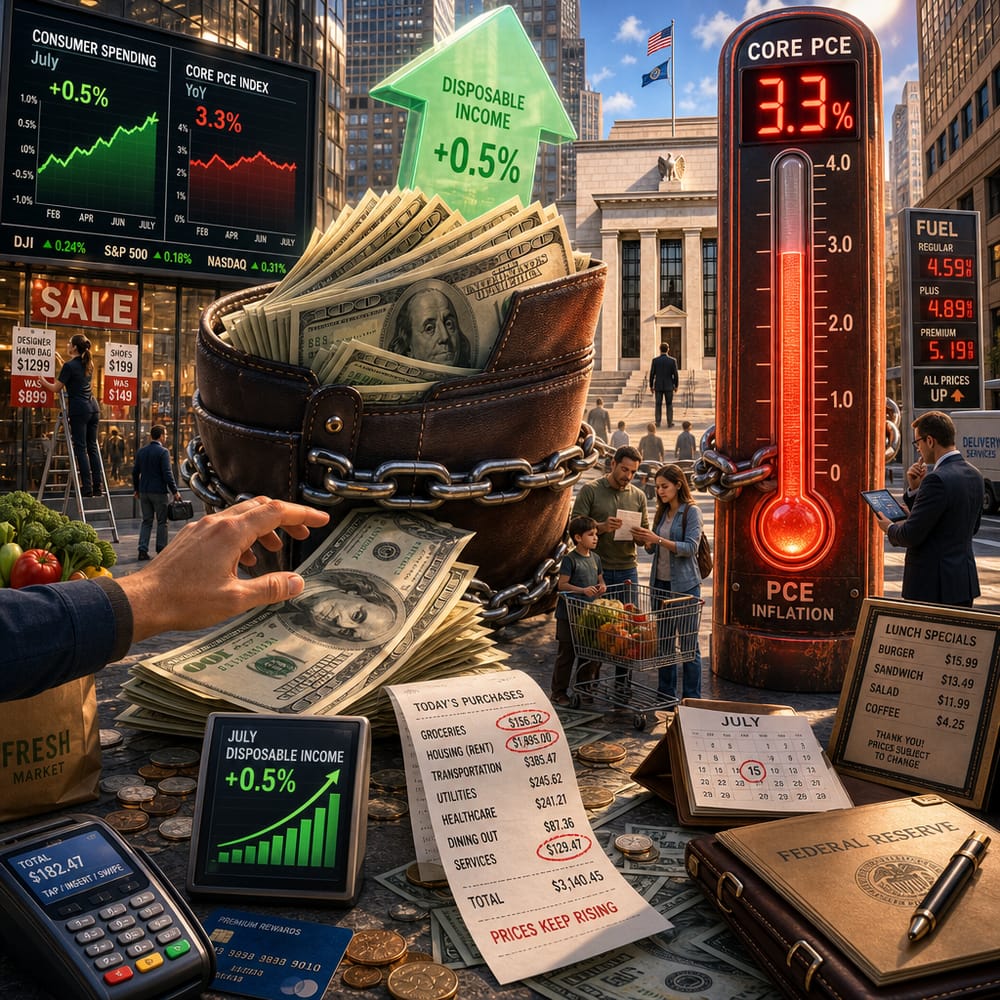
Rising disposable income and stubborn inflation are like frenemies at a high school reunion: they show up together, yet they couldn’t be more different. In the latest econo-drama, U.S. disposable income climbed by 0.5% in July, yet core PCE inflation — the fancy term for the Fed’s favorite inflation gauge — remained glued at 3.3%. So, what's the deal?
THE SPENDING SPLURGE
First off, let’s dish on disposable income. It's the cash you have left after taxes, and in July, it got a little fatter. Naturally, this means you might spot more folks splurging on that extra latte or upgrading to the latest iPhone. More disposable cash often leads to spicy consumer spending, which is a big deal because consumer spending fuels about 70% of the U.S. economy. More spending can mean more demand. More demand can mean higher prices. Higher prices? You guessed it — inflation.
So, while more dough in our pockets might sound like time to celebrate, it could also mean we're inadvertently fueling the inflation fire. It's like throwing a pizza party during a diet — it sounds good, but it might backfire.
FEDERAL RESERVE AND THE INFLATION JUGGERNAUT
Here’s where the Federal Reserve comes in, with its best impersonation of the economy’s designated driver. The Fed hates inflation like Dracula hates sunlight. Its job? Keep it in check. So, what’s next on its playlist? More interest rate hikes, if necessary. When the Fed raises rates, borrowing money gets pricier, cooling off spending, and ideally, inflation.
But here’s the curveball: markets don’t like uncertainty, and Fed Chairman Kevin Warsh’s recent poker face at Jackson Hole didn't do investors any favors. He's keeping mum on interest rate plans but still called inflation concerning. Translation? Investors are left to guess the Fed’s next move, which keeps everyone on their toes.
MIXED MARKET VIBES
With these mixed signals playing out, how are markets reacting? Well, they’re having a mood swing. Some investors are eyeing consumer stocks, banking on the idea that the extra disposable income will lead to a shopping spree. Others are cautious, waiting for the Fed to make its next move before placing any big bets. The uncertainty is like a cliffhanger at the end of your favorite Netflix series — you’re hooked but a bit anxious about what comes next.
And let's not forget the wild cards: geopolitical tensions, ongoing conflicts, and economic tremors from global events — all keeping markets jittery. Remember, markets despise uncertainty the way cats despise water. So, these mixed signals are no catnip.
WHAT DOES IT ALL MEAN FOR YOU?
The big question is: should you save or splurge? The answer might be as tricky as deciding whether pineapple belongs on pizza. If you're going to spend, be strategic. Consider essentials or smart investments rather than impulse buys that feed the inflation beast.
And if you're on the investing side of things, keep an eye on consumer sectors and Fed signals. The mixed bag of rising incomes and sticky inflation means it's a time for strategic moves, not rash decisions. Carpe diem, but maybe hold off on any wild financial bungee jumps.
In the end, the story of rising disposable income and resilient inflation is a tale of economic tension with no easy solutions. But if there’s one thing we know, it's that the economy, much like life, loves a plot twist. So, buckle up and keep those financial seatbelts fastened — it’s going to be an interesting ride.
This article is for informational purposes only and is not investment advice. Always do your own research or consult a licensed financial professional before making investment decisions.
© Copyright 2024. All Rights Reserved.
© Copyright 2024. All Rights Reserved.