

Dick’s Sporting Goods Faces Record Plunge After Q2 Miss
Sunday, August 30, 2026
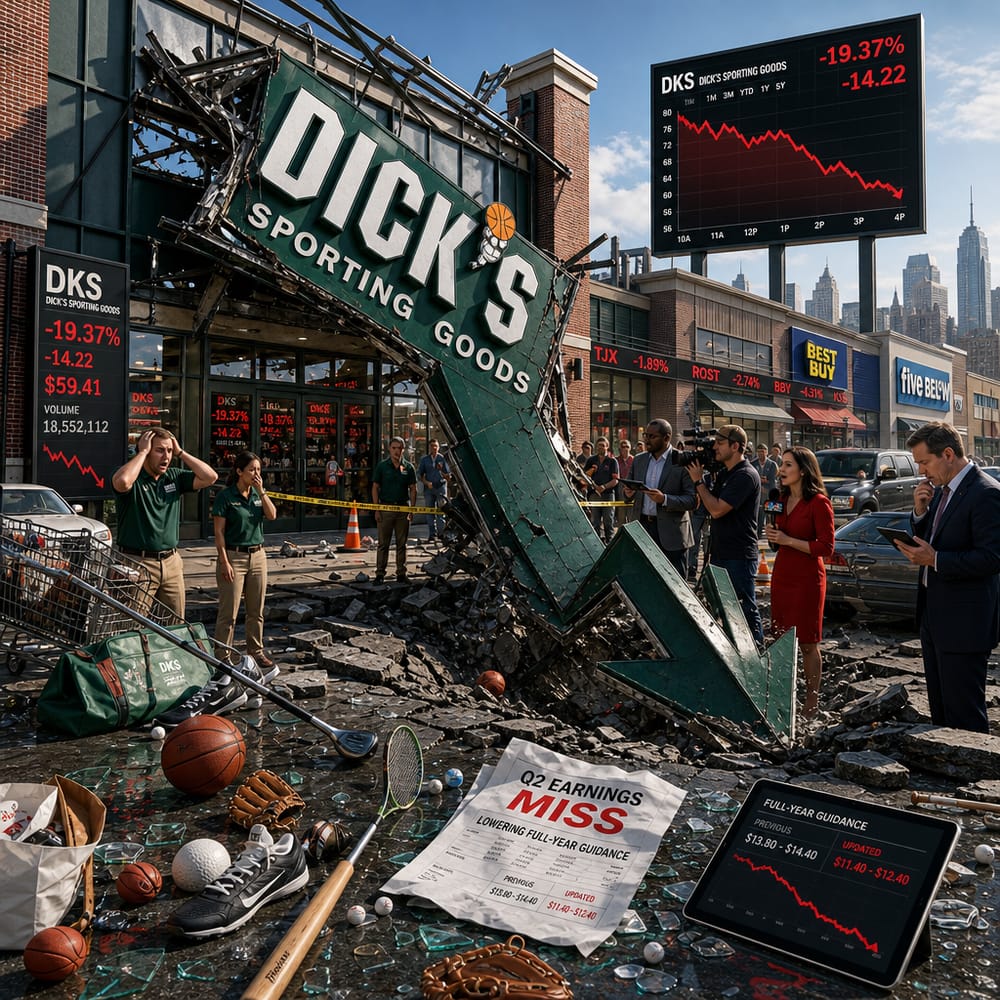
DICK'S SPORTING GOODS FACES RECORD PLUNGE AFTER Q2 MISS
When it rains, it pours—and for Dick's Sporting Goods, the forecast is looking particularly stormy. A day after releasing its Q2 earnings report, Dick's stock took a nosedive, marking its worst daily drop since the company went public. Investors didn't just lower their umbrellas; they fled for shelter. So, what exactly happened to make the retail giant trip over its own shoelaces?
Let's break it down. For starters, Dick's missed its earnings predictions by a margin that left analysts scratching their heads. Imagine stepping up to the plate, ready to swing for a home run, but instead, you accidentally fling the bat into the stands. It's a mess, folks. Earnings per share were lower than expected, and revenue growth was sluggish, to say the least. The company even slashed its full-year guidance numbers, signaling more clouds on the horizon.
But what about that shiny new acquisition, Foot Locker? The logic seemed as solid as steel-toed boots: acquire Foot Locker, and corner the market on athletic footwear and apparel. However, the reality appears to be more complicated. Merging two giants sounds promising, but it’s a bit like mixing oil and water if the execution falters. Integration costs, restructuring and a bundle of hiccups in supply chain logistics have been more of a hurdle than a helping hand, putting extra pressure on Dick's bottom line.
This brings us to the $64,000 question—or perhaps the several billion-dollar one in this case: How exactly is this affecting Dick's financial health? For starters, the acquisition has increased the company’s debt levels. While debt isn’t necessarily a bad thing—it's often used for expansion—the timing is awkward, like turning up in flip-flops to a black-tie event. In a retail environment already burdened by inflationary pressures and wavering consumer confidence, it’s an added weight on its balance sheet.
Experts are now split their assessments of Dick’s future. On one hand, some suggest that once the company gets a grip on integration, it could potentially streamline operations and generate synergy—fancy talk for making the whole greater than the sum of its parts. On the other hand, skeptics argue that the acquisition might have been ill-timed and could become a cautionary tale of how not to expand in a volatile market.
"This is a classic example of trying to bite off more than you can chew," said Jane Analyst, a retail sector expert. "They’ve got to tighten their laces and figure out how to navigate this tricky terrain."
While Dick's is no stranger to the fluctuating tides of retail, this particular storm is especially gnarly. For everyday investors glancing at their portfolios with a furrowed brow, the key question now is whether this is a momentary stumble or a sign of deeper issues. Should they cash out their chips or keep faith that the sporting goods juggernaut will recover its footing?
Retail is, after all, a cyclical beast. It ebbs and flows with the macroeconomic conditions and consumer behavior. Dick’s has the brand strength to rebound, but only if it can successfully navigate its new territory with Foot Locker and regain investor trust. The challenge lies in executing a strategy that assures Wall Street that the company isn’t just running in place.
As we wait to see if Dick's Sporting Goods can turn the ship around, one thing’s clear: it’s going to be a fascinating game of retail chess. Investors will be watching closely, and Dick’s management will need their thinking caps on—preferably ones that say “Resilience” stitched across the front. After all, in the world of Wall Street, even a sporting goods giant can’t afford to drop the ball.
This article is for informational purposes only and is not investment advice. Always do your own research or consult a licensed financial professional before making investment decisions.
© Copyright 2024. All Rights Reserved.
© Copyright 2024. All Rights Reserved.