

Defensive Sectors Gain Amid Fed Uncertainty
Wednesday, August 12, 2026
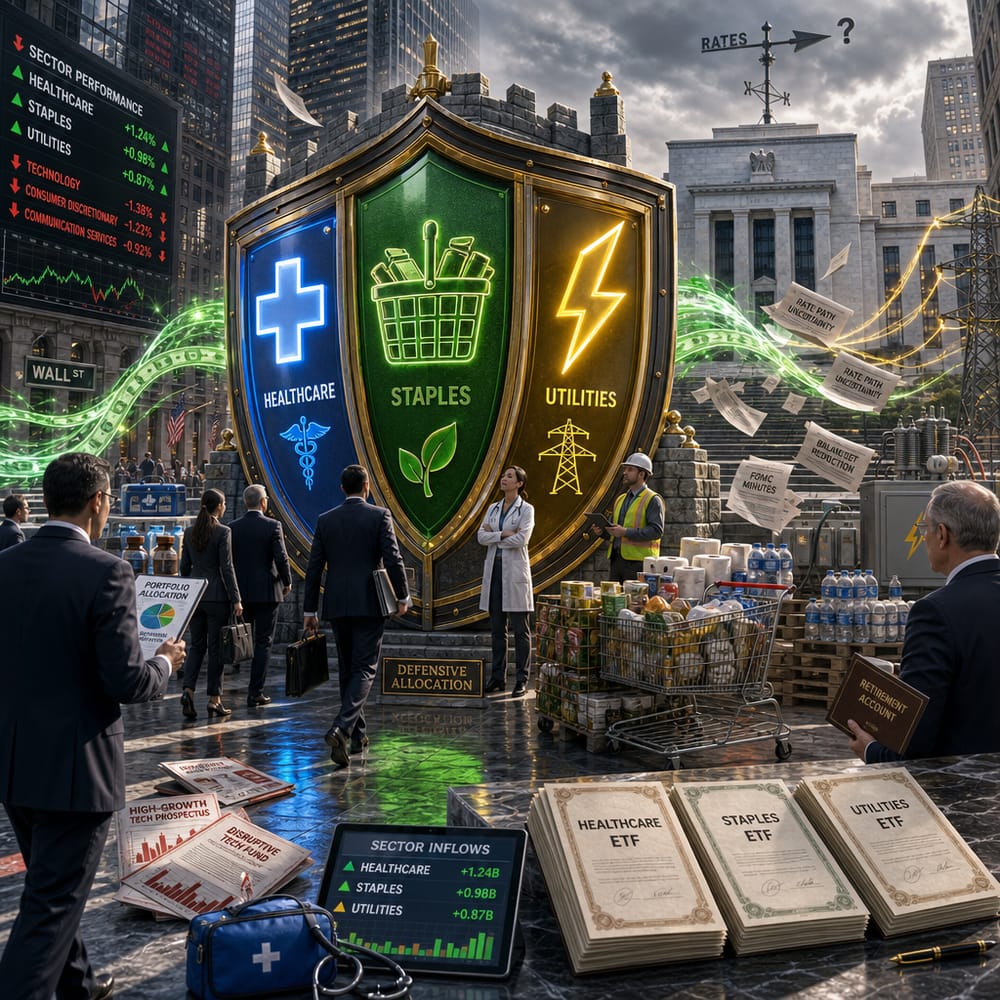
DEFENSIVE SECTORS GAIN AMID FED UNCERTAINTY
Some folks say that fiscal drama is the new soap opera. And if you've been keeping up with the Federal Reserve these days, you've got your popcorn ready. The markets are swaying and shifting like they're trying out for "Dancing with the Stars," and investors are learning new moves as they twirl into defensive sectors like healthcare, consumer staples, and utilities. Why are they doing this? Short answer: uncertainty is the name of the game, and safety feels like the smartest bet.
You know the old saying, "No news is good news"? Well, in the world of economics, no news can sometimes mean investors start sweating bullets. The Fed's recent meetings have been a classic cliffhanger, leaving everyone guessing whether interest rates will rise, fall, or dance the cha-cha. In this thriller of inflation rates and economic growth, defensive sectors are the safe haven, the security blanket that helps investors sleep a little better at night.
So why are healthcare, consumer staples, and utilities getting all the love? Think of them as the sturdy, reliable characters in your favorite drama series. They're the backbone, the ones who stick around through thick and thin. When you're not sure if the villain will spike interest rates or keep them steady, you can always count on folks needing medicine, food, and power. That's what makes these sectors so attractive; they're less likely to go belly-up when the economy does its interpretive dance.
Investors moving into these areas signals a shift in sentiment—a collective sigh of relief, if you will. It's like the market's version of a security detail, ensuring that portfolios don't take too many unexpected hits while the Fed figures things out. This rotation isn't just a random whim; it's an indicator that investors are bracing for potential turbulence ahead.
Now, let's talk about ripple effects. When investors shuffle their portfolios like a well-worn deck of cards, it doesn't just affect the defensive sectors—they impact the entire market. The broader market might see some sectors losing their shine as others gain more spotlight. Tech stocks, those flashy darlings that have been riding the AI wave to new highs, might not see the same enthusiasm if the funds start trickling into staples and utilities.
Moreover, this move towards safety can send mixed signals across the market. It's a bit like whispering in a crowded room—before you know it, everyone's talking about the same thing, and the mood shifts. Investors start to wonder if there's something coming that they haven't factored in yet, leading to a cautious approach in riskier investments.
But wait, there’s more! This isn’t just about investors being scaredy-cats. It’s about playing the long game. Defensive stocks don’t just hold up during the storm; they’re the tortoise that beats the hare. Slow and steady with dividends that feel like a warm hug in unpredictable times. They might not make headlines with jaw-dropping growth, but they deliver consistency, and in a plot as unpredictable as the Fed’s current storyline, consistency is king.
So, what's the takeaway here? As the Fed continues its high-stake poker game, with interest rates and inflation as its chips, investors are huddling in the safety zone. This rotation towards defensive sectors isn't just an escape plan—it's a savvy strategy. It speaks to a broader truth in the market: when the going gets tough, the tough get strategic.
Remember, markets are like weather—sometimes they’re bright and sunny, and sometimes you need an umbrella. As investors adjust their portfolios to navigate this ever-changing financial climate, turning to the reliable sectors is like packing a raincoat when the sky is looking gray. After all, in the grand drama of the economic world, playing it safe might just be the wisest plot twist yet.
This article is for informational purposes only and is not investment advice. Always do your own research or consult a licensed financial professional before making investment decisions.
© Copyright 2024. All Rights Reserved.
© Copyright 2024. All Rights Reserved.