

Defensive Sector Rotation: Healthcare and Financials Gain Momentum
Saturday, November 14, 2026
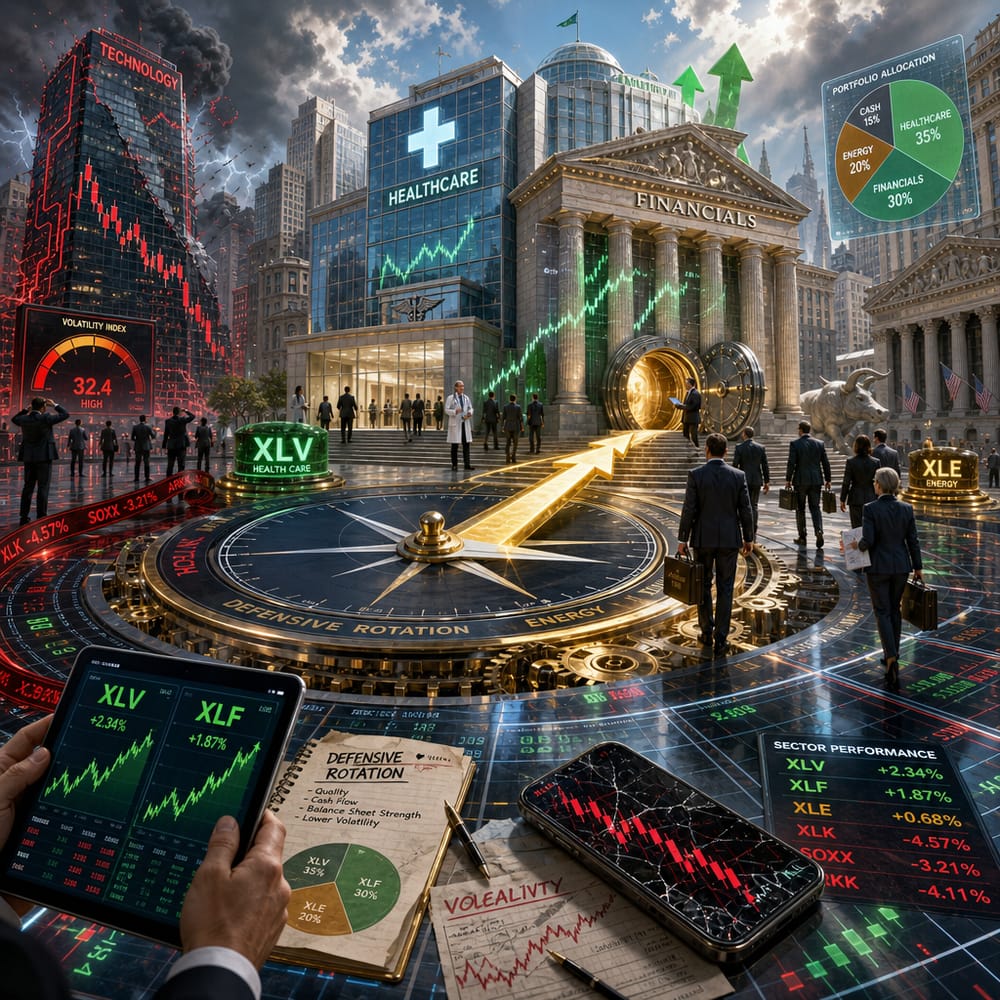
DEFENSIVE SECTOR ROTATION: HEALTHCARE AND FINANCIALS GAIN MOMENTUM
In a world where market volatility can leave even the sturdiest of stock tickers trembling, investors are donning their hard hats and rotating into defensive sectors. Yes, folks, it's rotation season, and the market's theme is all about playing defense. Tech stocks? They're benched for now, making room for the healthcare and financial sectors to take center stage.
So, what's behind this sudden sector shuffle? Let's break it down without the financial jargon that makes you want to snooze.
WHY THE SHIFT TO DEFENSIVE SECTORS?
Picture this: You're on a rollercoaster, and as thrilling as the ride can be, sometimes you just want to get off. That's the current vibe with tech stocks. While they’ve been the darlings of the market for years, recent turbulence has investors opting for a smoother ride.
The simple reason? Uncertainty. With macroeconomic conditions akin to a soap opera plot—rising interest rates, geopolitical tensions, and inflation worries—investors are seeking solace in sectors known for their stability. Healthcare and financials are the market's comfort food, offering less drama and more predictable returns.
Healthcare, represented by the XLV ETF, has always been a perennial favorite during uncertain times. It's like Netflix in your pajamas on a rainy day—consistently reliable. Whether the economy is booming or busting, people still need healthcare. It's a basic human need, making it a safe bet when the market gets wobbly.
On the financial front, the XLF ETF is drawing attention. With banks anticipating higher interest rates, they're set to benefit from an increase in loan profit margins. Plus, the financial sector is attractive for its dividend yields, which are like the cherry on top for yield-hungry investors.
KEY PLAYERS IN THE GAME
So, who’s leading the charge in these sectors? In healthcare, companies like Johnson & Johnson and UnitedHealth Group are turning heads. J&J isn't just about band-aids and baby powder—it's a pharmaceutical powerhouse with a finger in many healthcare pies. UnitedHealth, on the other hand, is thriving on the back of its diverse health services portfolio.
In financials, big names like JPMorgan Chase and Bank of America are making waves. These aren’t just banks; they’re financial fortresses poised to leverage rising interest rates to their advantage. While others fret about rate hikes, these big banks are inviting them over for tea.
ENERGY: THE OUTSIDE BET
And let’s not forget energy, the XLE ETF. It’s not quite the defensive darling, but it’s certainly playing a role in the narrative. With oil prices surging, energy stocks are seeing some action. Think of them as the wild card of the investment world—high risk but potentially high rewards, especially as geopolitical factors continue to influence energy supply.
TRENDING INTO THE FUTURE
The big question: Will this rotation into defensive sectors roll on? The crystal ball is murky, but here’s a shot at a prediction. As long as interest rates keep climbing and global uncertainties cast shadows, healthcare and financials will likely remain front and center.
However, it’s wise to keep an eye on the broader economic indicators. If the economy shows signs of stabilizing, we might see a return to tech and growth stocks. But until then, the defensive playbook seems to be the strategy du jour.
For retail investors, understanding these rotations isn’t just about sounding smart at your next dinner party. It’s a chance to make informed decisions and maybe—just maybe—sleep a little better at night knowing your portfolio is aligned with market trends.
So, the next time you’re scrolling through your phone, pondering where to park your cash, remember: sometimes, playing defense is the best offense. Just ask healthcare and financials, currently basking in the market’s spotlight.
This article is for informational purposes only and is not investment advice. Always do your own research or consult a licensed financial professional before making investment decisions.
© Copyright 2024. All Rights Reserved.
© Copyright 2024. All Rights Reserved.