

Defensive Rotation: Energy Outperforms, Tech Underperforms on Elevated Oil Prices and Rate Pressures
Wednesday, October 14, 2026
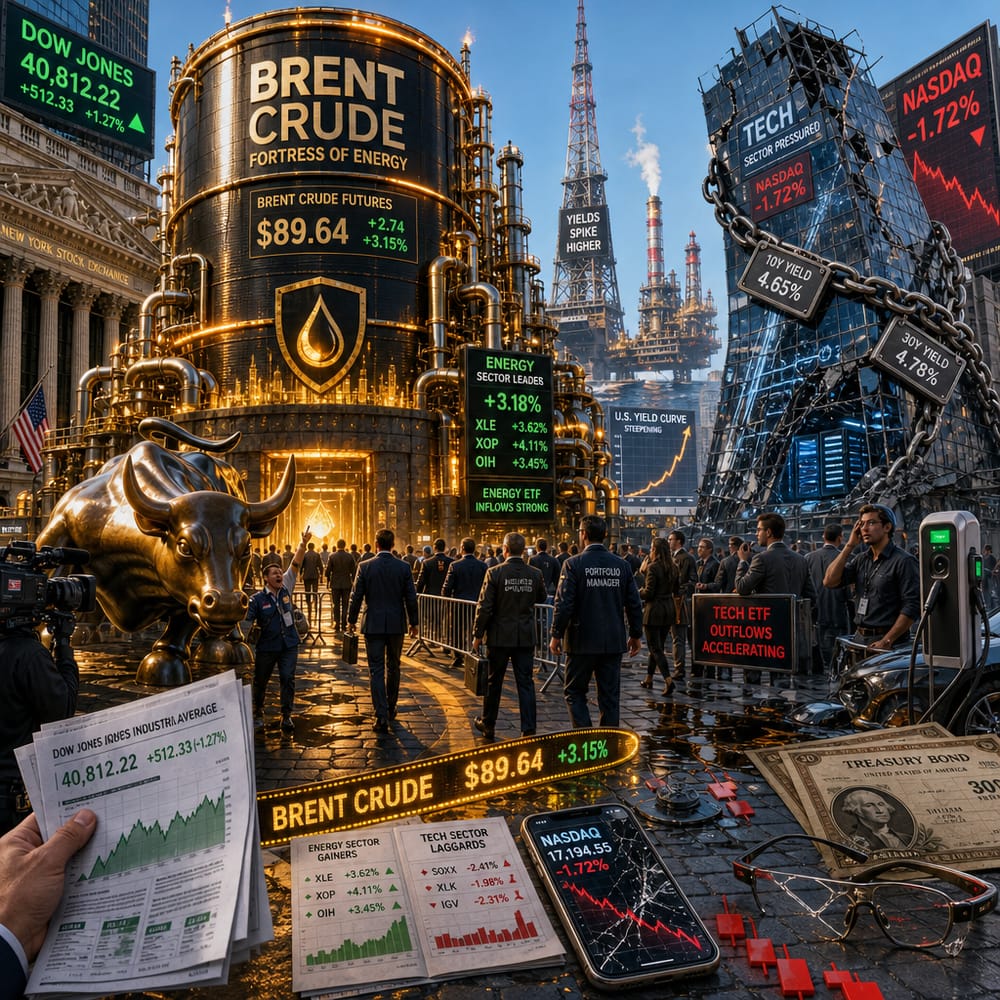
DEFENSIVE ROTATION: ENERGY OUTPERFORMS, TECH UNDERPERFORMS ON ELEVATED OIL PRICES AND RATE PRESSURES
In the world of stock markets, when the going gets tough, the tough go defensive. This week, the Dow Jones took a victory lap while tech-heavy indices like the Nasdaq were left coughing in the dust. The culprit? A classic one-two punch of surging oil prices and stubbornly high interest rates that have investors playing a cautious game of duck and cover.
Imagine it’s the weekend and you’re at an all-you-can-eat buffet. Just as you’re piling your plate with spice-laden dishes (let's call them tech stocks), you catch wind of a hot chili-infused spectacle — oil prices going through the roof, bringing more than just heartburn. Suddenly, you’re eyeing the bland but reliable mashed potatoes (think defensive stocks like energy), and investors are no different. As the cost of Brent crude soars, they're swapping out risk for reliability, and the once-glorious tech sector is feeling less like an adrenaline ride and more like a pie-in-the-face gag.
So what’s causing this dramatic shuffle in strategy? It’s the age-old tango between oil prices and interest rates — both partners leading, neither willing to let the other take center stage. The recent rise in oil prices can be attributed to geopolitical tensions. For instance, attacks on commercial vessels in the Strait of Hormuz have had traders holding their breath and clutching their wallets. Meanwhile, Treasury yields are climbing higher than a cat stuck in a tree, thanks to hotter-than-expected inflation data that has the Federal Reserve’s rate setters pacing the floors.
When the cost of borrowing shoots up, investors’ palates change. Suddenly, the fast-paced tech playground loses its shine, and sectors like energy and utilities, traditionally known for their steady cash flow and resilience, become the darlings of the dance floor. This shift is referred to as a “defensive rotation,” where everyone’s channeling their inner tortoise — slow and steady wins the race, right?
The implications for tech stocks are significant. With interest rates flexing their muscles, the appeal of heavily indebted tech companies dims. Take CoreWeave as an example. The artificial intelligence darling is stumbling under the weight of rising bond yields, which are now demanding double-digit interest rates — a clear sign that investors are wary of pouring money into ventures that might not pay off when borrowing costs are sky-high.
Moreover, a tech sector that once basked in the glow of easy money is now grappling with a reality check. Investors — once eager to jump on the AI bandwagon — are now scrutinizing balance sheets with a magnifying glass, demanding their fair share of risk compensation. It’s like turning up to a wild party only to find out it’s a surprise accounting seminar. Not quite the fun night out everyone had in mind.
This defensive shift is a telling indicator of how market players perceive economic stability moving forward. If the party’s over for tech stocks, the energy sector is still pouring drinks and playing host. The Dow Jones, buoyed by its energy and healthcare stalwarts, has displayed a resilience that tech-heavy indices would currently trade their algorithmic souls for. This isn't just about short-term gains — it's about a broader strategy recalibration in the face of uncertainty. And for investors, this means rethinking portfolios to weather the economic storm clouds gathering on the horizon.
As investors dine on a financial landscape that's anything but predictable, decisions are being made on whether to stick with the safety of established energy giants or venture back into the tech universe with its promises of innovation and risk. One thing is clear: cozying up to defensive sectors isn’t just a whim — it’s a strategic choice amid the ongoing tug-of-war between oil prices and interest rates.
So, retail investors, buckle up. Keep your eye on the economic barometer and your portfolio as diversified as a buffet spread. Whether the bulls or bears are in charge, smart investing means being prepared to pivot — from tech's high-octane thrills to energy’s steady, reassuring hum. Because in the stock market, as in life, the only constant is change.
This article is for informational purposes only and is not investment advice. Always do your own research or consult a licensed financial professional before making investment decisions.
© Copyright 2024. All Rights Reserved.
© Copyright 2024. All Rights Reserved.