

Data Center Slowdown Signals Sector Rotation Risk
Tuesday, November 17, 2026
DATA CENTER SLOWDOWN SIGNALS SECTOR ROTATION RISK
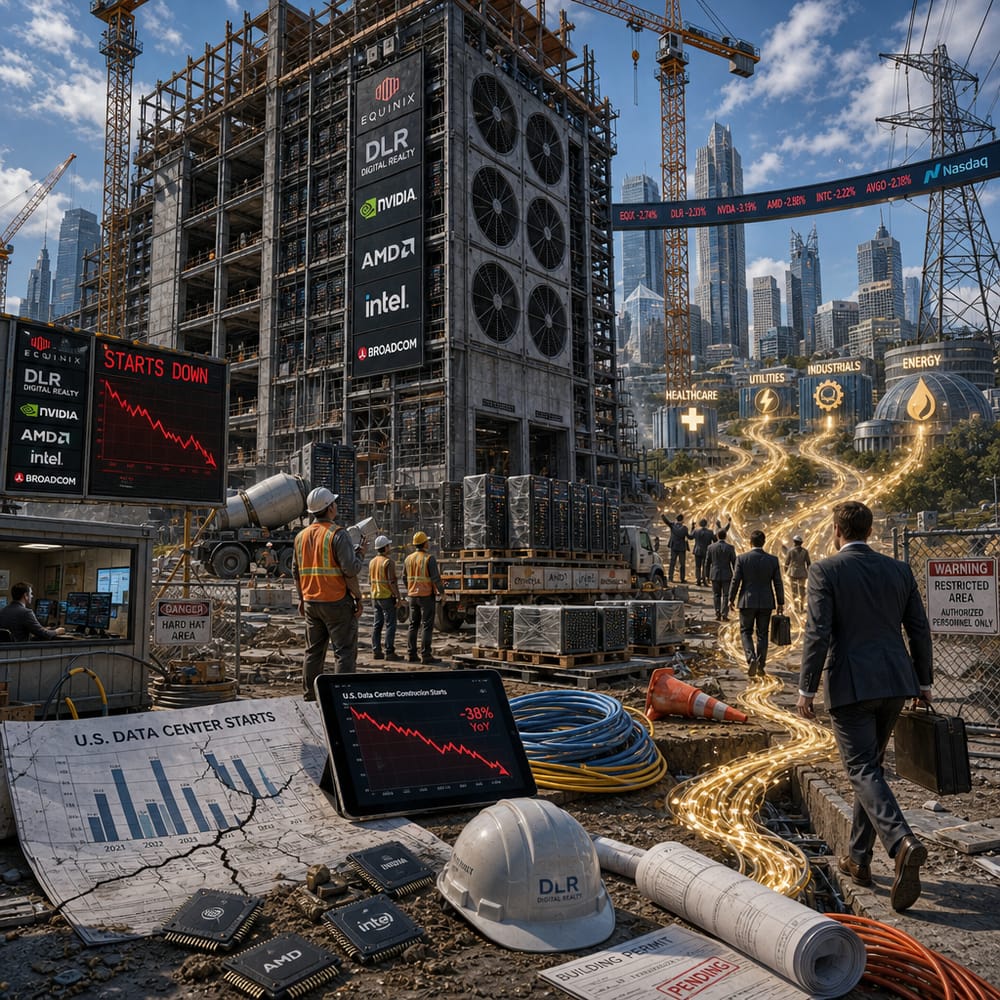
Once upon a time, data centers were the darlings of Wall Street—the shiny tech infrastructure stocks that seemed to have a direct line to the future. But if Wall Street is a soap opera, then data centers just hit a plot twist. A recent report has come through like a wake-up call at a slumber party: U.S. data center construction starts are hitting the brakes. And if you're invested in tech infrastructure stocks, this is your cue to pay attention.
Let’s break down what’s happening behind the data center curtain. The hum of construction has quieted, signaling a slowdown in capital expenditures—essentially the big bucks companies spend to build and improve facilities. This isn't just a blip on the radar; it's a wake-up call for cloud, semiconductor, and infrastructure companies. We're talking about heavy hitters like Equinix, Digital Realty, Nvidia, AMD, Intel, and Broadcom. If you've got stocks in any of these, it's time to sit up and take notice.
The data centers were supposed to be the backbone of the AI revolution. But now, with the brakes on construction, the script might be changing. So, what does this mean for tech infrastructure stocks? In plain English, it means potential pressure on growth. Fewer new data centers mean less demand for the hardware and services these companies provide. And when growth opportunities dry up, investor sentiment can turn as cold as January in Minnesota.
But don't panic-sell just yet; the market loves a good pivot. When one sector slows, investors often play a little game called “sector rotation.” It's essentially switching horses mid-race, and it begs the question: Which sectors might become the new favorites?
Enter stage right: defensive plays. Sectors like utilities, consumer staples, and healthcare often get more love when tech throws a tantrum. These industries are dubbed "defensive" because they tend to be less vulnerable to economic swings. People still need electricity, groceries, and healthcare, no matter what’s happening in the tech world.
Yet, this slowdown isn't just a short-term headache; it has long-term implications for cloud and semiconductor companies. If you're in the cloud, the data center construction freeze could mean fewer places to park your servers. In the semiconductor world, where chips are the beating heart of tech innovation, the ripple effects might pinch demand. This is especially true for companies like Nvidia and AMD, who rely heavily on data centers for a chunk of their revenue.
Nvidia, as you might have heard, is currently dealing with a bit of a scandalicious subplot involving its CEO and espionage allegations—cue the dramatic music. But let’s say you’re more concerned with the company’s earnings than its drama. The construction chill means that even as Nvidia’s boardroom deals with its soap opera, its growth prospects could be impacted by the broader market cooldown.
So, are we witnessing the end of the tech infrastructure honeymoon? Not necessarily. But we're definitely seeing a shift that requires investors to rethink their strategies. It's like watching your favorite TV show pivot to a new storyline—things won't ever be quite the same.
For the savvy investor, this could be an opportunity. It’s time to re-evaluate your portfolio through a new lens. You might want to consider mixing in some defensive stocks or sectors that aren't overly reliant on the tech boom. Diversification, as they say, is the only free lunch in finance.
In the grand scheme, data centers might just be passing through a brief storm on their way to sunnier skies. But in the meantime, keep one eye on the tech sector and another on potential new champions. The market, much like life, loves a good plot twist. And as any seasoned investor knows, those who adapt fastest often come out ahead.
So tighten your seatbelt, keep your eyes peeled for new opportunities, and remember that in the world of investing, the only constant is change.
This article is for informational purposes only and is not investment advice. Always do your own research or consult a licensed financial professional before making investment decisions.
© Copyright 2024. All Rights Reserved.
© Copyright 2024. All Rights Reserved.