

Darden Restaurants' Upgrade Amid Consumer Dining Trends
Friday, August 28, 2026
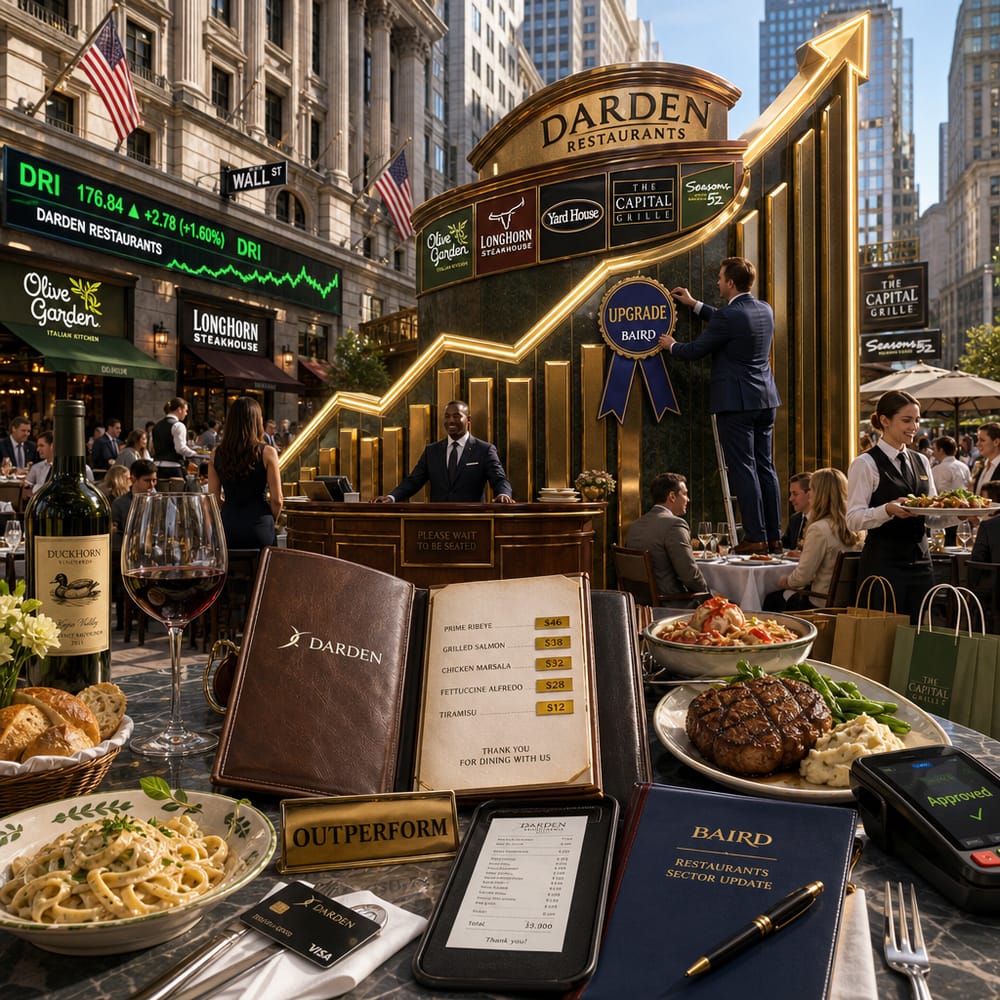
Darden Restaurants Is Making Moves: Dining Out Isn't Just Surviving, It's Thriving
Ever thought about how many breadsticks it would take to feed America? Well, Darden Restaurants is on the verge of finding out, and they’re feeling pretty perky about it. Picture this: Baird, the financial analyst heavy-hitter, just gave Darden a high-five in the form of an “Outperform” rating. For the uninitiated, in Wall Street speak, this means they’re betting Darden will do better than the rest of the crowd. But why all the confidence in Olive Garden’s overlord?
LET'S DIVE INTO THE TRENDS
In a world where we're all clutching our wallets a bit tighter, it seems dining out is still on the menu. Amid looming economic whispers of recession and inflation juggling, one might wonder why anyone is going out for a meal they could just as easily whip up at home. The answer could be in the sauce: Americans love to eat out, and this trend doesn’t seem to be going anywhere. Family gatherings, date nights, that post-payday splurge—these aren’t just fading traditions. They're staples.
And Darden is right there, bib on, napkin ready, to catch the crumbs. People are increasingly leaning towards mid-tier dining experiences where they can enjoy good food without the guilt of maxing out their credit cards. Darden has smartly positioned its portfolio to cater to this sweet spot with brands like Olive Garden and LongHorn Steakhouse leading the charge.
THE PRICE IS RIGHT
When it comes to pricing power, Darden is the restaurant equivalent of carrying around a VIP card. They can raise prices without scaring away their loyal patrons. That's a luxury not every restaurant chain can afford. Competitors might flinch at the thought of upping menu prices, fearing the dreaded customer defection. But Darden? They've managed to pull it off, thanks to a combination of a strong brand presence and an understanding of consumer sensitivity.
And while we're on the subject, it’s not just about throwing price hikes onto the menu willy-nilly. Darden knows how to strike a balance by offering promotions and limited-time specials that keep folks coming back for more. It's a delicate dance, but one they seem to be mastering with aplomb.
RISKS AND REWARDS: WHAT'S IN IT FOR INVESTORS?
So, should investors be rushing to buy Darden shares for their portfolio’s next meal? Well, like any dish, there are ingredients to consider.
On the reward side, Darden's got a recipe that's working. They’ve got strong brand recognition, a solid consumer base, and pricing power that lets them ride out the economic storms. Add to that their diversified portfolio with a range of restaurant types, and they’ve got some serious staying power.
But no investment comes without risk. The restaurant sector is notoriously finicky. A shift in consumer habits, a rise in ingredient costs, or even an economic downturn hitting harder than expected could spell trouble. And while Darden seems to have its pricing strategy down pat, there’s always the risk of overestimating just how much consumers are willing to tolerate.
THE COMPETITIVE LANDSCAPE
Darden isn’t exactly alone at the buffet, though. Competitors like Brinker International (the brains behind Chili's) and Yum! Brands (KFC, Taco Bell, and Pizza Hut fame) are also significant players in the game. While Darden boasts strong pricing power and brand loyalty, these competitors aren't exactly slouches. They, too, are adjusting menus, introducing new concepts, and keeping a keen eye on pricing strategies to lure in diners.
Yet, Darden’s ability to leverage their scale and maintain consistent quality and service across their chains often gives them the edge. It’s not just about the pasta; it’s about the experience that keeps diners coming back for more.
THE BOTTOM LINE
In a brave new world where every dollar counts, Darden Restaurants is standing tall. They've got a finger on the pulse of consumer trends, understand the power of pricing, and are ready to serve up success. For investors and diners alike, they’re a notable player in the restaurant sector—one that’s not just surviving but thriving. So, next time you’re at Olive Garden, savor those breadsticks. You might just be nibbling on a piece of financial greatness.
This article is for informational purposes only and is not investment advice. Always do your own research or consult a licensed financial professional before making investment decisions.
© Copyright 2024. All Rights Reserved.
© Copyright 2024. All Rights Reserved.