

Dallas Fed President Advocates for Modestly Higher Rates
Tuesday, July 28, 2026
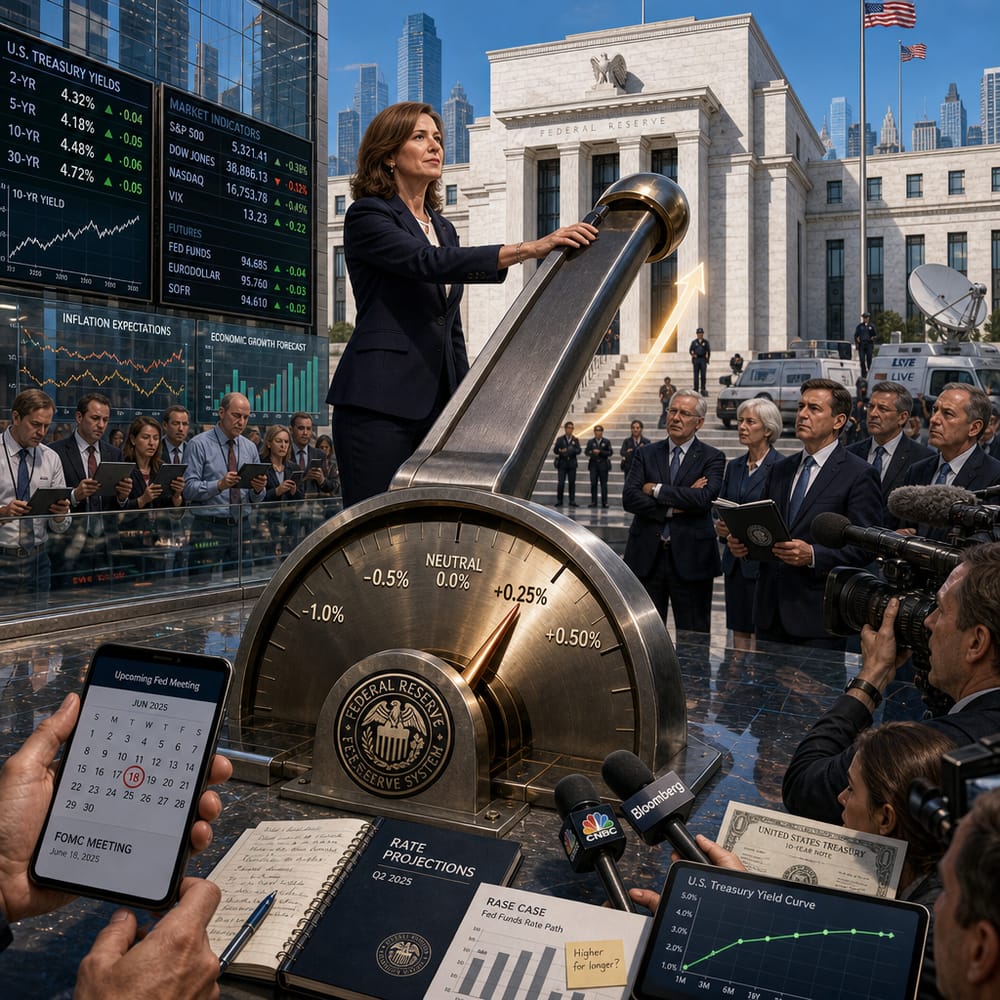
DALLAS FED PRESIDENT ADVOCATES FOR MODESTLY HIGHER RATES
Just when you thought the Federal Reserve had finally settled into a cozy corner of consensus, Dallas Fed President Lorie Logan has decided to shake things up. Logan recently suggested that interest rates might need to be "modestly higher" than their current levels, potentially setting the stage for a bit of drama at the next Fed meeting. It's like watching a reality TV show where someone suddenly declares, "Plot twist!"
Why does this matter, you ask? Well, dissent within the Fed is like turbulence on a flight. It won’t necessarily crash the plane, but it might make you spill your drink. In the world of financial markets, dissent can ripple through stocks, bonds, and even your 401(k) with surprising speed.
THE FEDEX OF FINANCIAL POLICY
The Federal Reserve, or the Fed, for those in the know, is the gatekeeper of interest rates in the U.S. It's like the FedEx of financial policy, delivering interest rate hikes or cuts across the economy. When Fed officials disagree, it introduces unpredictability into that delivery process, leaving investors to wonder whether their package will arrive on time or be lost in transit.
So, what's the big deal about Logan's comments? As an influential voice within the Fed, her advocacy for higher rates could signal a potential split in opinion among Fed members. The central bank's policy decisions are typically guided by consensus, making any departure from that norm a bit like a cat walking across a piano—jarring and hard to ignore.
THE RIPPLE EFFECT
The implications of internal dissent could be far-reaching. For starters, it can influence future rate decisions. If enough Fed members rally behind Logan's call for higher rates, the central bank might lean toward tightening monetary policy. Higher rates can make borrowing more expensive, cooling down spending and investment. It's like turning the temperature dial on a hot oven, bringing the economy down from a simmer to a gentle simmer.
But it doesn't stop there. Market reactions can be swift and decisive. Investors are notoriously skittish creatures, and the mere hint of higher rates can send them scurrying like squirrels with a newfound acorn stash. Stocks could stutter, bonds might wobble, and even the dollar may decide to dance to a different tune.
ARE WE IN FOR A RATE RUCKUS?
While Logan's remarks are just one piece of the puzzle, they add an interesting wrinkle to the narrative. The upcoming Fed meeting is shaping up to be less of a snooze fest and more of a suspense thriller. Will Logan's voice resonate with other Fed members, or will she find herself singing a solo in the choir of central bankers?
The prospect of higher rates looms large, and it's a bit like that moment in a horror movie when you’re not sure if the monster is real or just a figment of your imagination. Investors will be closely watching to see if Logan's stance gains traction among her peers. If it does, brace yourself for a potential shift in policy that could send ripples through markets.
SO, WHAT'S THE TAKEAWAY?
For the everyday investor, it's a good time to keep a close eye on your portfolio. Changes in interest rates can have a domino effect on various sectors, impacting everything from mortgage rates to your favorite tech stocks. While we're not in panic mode just yet, staying informed and nimble could be your best strategy.
In the end, Logan's call for modestly higher rates is a reminder that in the world of finance, nothing is ever set in stone. The Fed's decision-making process is as dynamic as a jazz improvisation, and sometimes, a single note can change the entire melody.
As Dallas Fed President Lorie Logan takes the stage, remember that dissent isn't just a bump in the road—it's a signal that someone thinks the map might be wrong. And in the vast landscape of financial markets, that's a cue to pay attention.
This article is for informational purposes only and is not investment advice. Always do your own research or consult a licensed financial professional before making investment decisions.
© Copyright 2024. All Rights Reserved.
© Copyright 2024. All Rights Reserved.