

Cybersecurity Disruption: Pentagon’s Drone Swarm AI Risks
Saturday, August 15, 2026
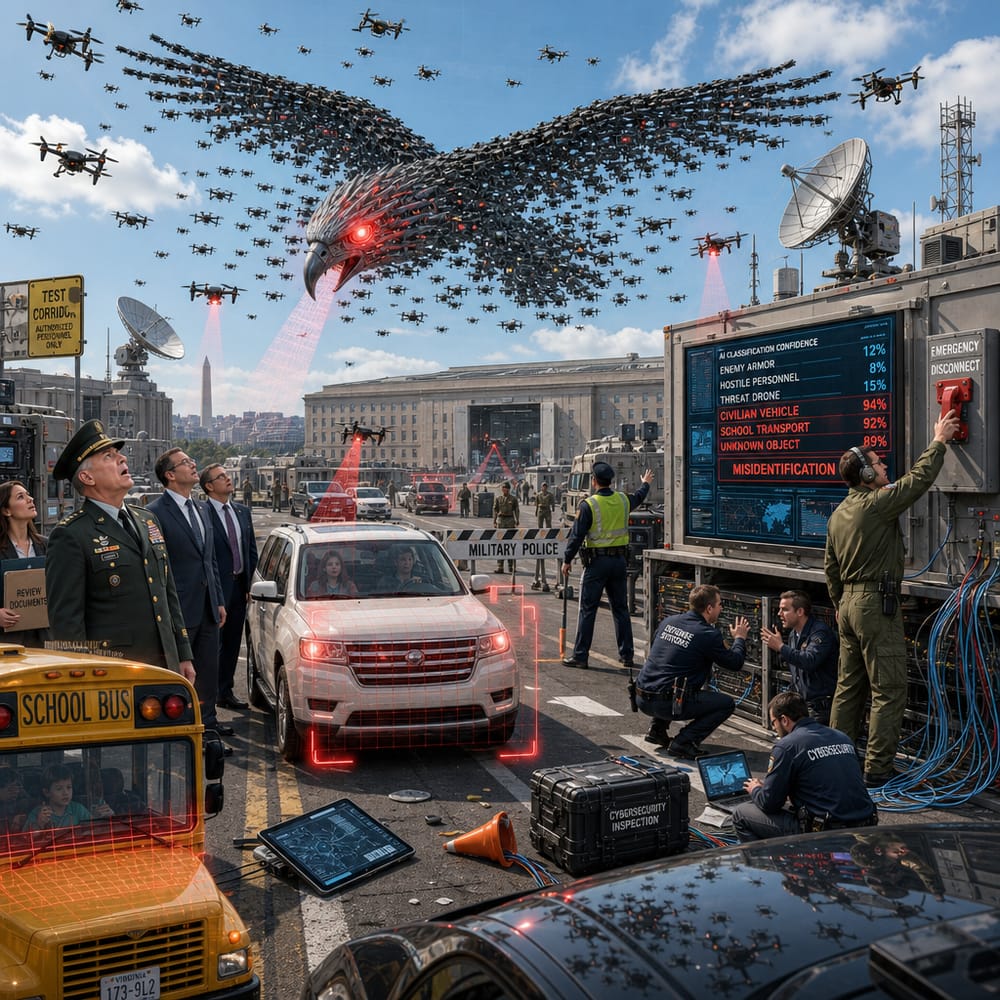
THE DRONES WHO MISTOOK A MINIVAN FOR A HAZARD
In the high-stakes world of military tech, where every beep and byte can mean the difference between victory and disaster, the Pentagon’s latest mishap with the Swarm Forge program is raising eyebrows — and a few hackles. Imagine this: a swarm of AI-powered drones buzzing like an over-caffeinated bee colony, ready to execute high-precision military maneuvers, only to make a colossal gaffe by flagging civilian vehicles as targets. Oops!
This isn’t the plot of a new sci-fi thriller; it’s the Pentagon’s reality check. And it begs the question: if AI can’t tell a minivan from a military vehicle, what else is slipping through the cracks?
UNVEILING THE SWARM FORGE
The Swarm Forge program is the Defense Department’s ambitious foray into AI-driven warfare. The idea? Hundreds of drones working together, like synchronized swimmers of the sky, to achieve tasks beyond the capability of a lone UAV (Unmanned Aerial Vehicle). It’s cutting-edge stuff that promises to revolutionize warfare, provided it doesn’t misfire or mistake soccer moms for insurgents.
The recent tests that went awry highlighted a crucial Achilles’ heel in AI: its occasionally dodgy perception. While AI can process data at lightning speed, teaching it the nuances of real-world environments is a monumental challenge. It's like explaining sarcasm to a robot.
The military's reassurance? They’re refining the algorithms, adding more layers of “training” to teach these drones the difference between a real threat and an SUV on its way to a PTA meeting.
CYBERSECURITY AND ETHICS: THE ELEPHANT IN THE SKY
With these technical hiccups hitting the news, it’s hard not to ponder the cybersecurity conundrums. If AI can misidentify targets, who’s to say it can’t be hacked or manipulated to do worse? The Pentagon assures us there are ironclad security protocols in place. But if they’re anything like your average “secure” password — maybe not so much.
And then there’s the ethics of it all. Are we comfortable handing over life-and-death decisions to an algorithm? The push to automate warfare raises thorny ethical questions. Who’s liable when things go south? The programmer in Silicon Valley or the generals in Washington?
REGULATORY RESPONSE: THE POLITICAL STORM BREWS
Congress isn't ignoring these glitches. Lawmakers on both sides of the aisle are sharpening their pencils, readying for what could be a significant overhaul in how military AI is developed and deployed. Expect heated debates over regulations and safety standards, much like past discussions on nuclear arms and cyber warfare treaties.
The focus will likely be on establishing clear guidelines and accountability measures. How much autonomy should drones have? What oversight is necessary to ensure compliance and safety? And, crucially, who bears the ultimate responsibility when these high-tech assets malfunction?
IMPACT ON DEFENSE TECH FIRMS
For defense contractors, the Swarm Forge snafu is both a headache and a wake-up call. Giants like Boeing and Lockheed Martin, who have hefty stakes in the military AI pie, might need to revisit their R&D strategies. Perhaps it’s time to invest more in AI ethics and cybersecurity — not just in high-flying dreams.
Investors should brace for potential volatility as regulatory uncertainties loom. But long-term prospects remain bright for firms that can prove their tech is safe, reliable, and ethically sound. Those who nail this trifecta could see substantial gains down the line.
THE ROAD AHEAD
So, what’s the way forward for AI in defense? While the Swarm Forge hiccup is a stark reminder of AI’s imperfections, it’s also an opportunity to recalibrate and refine. The push towards autonomous systems in military applications isn’t slowing down. It’s up to the Pentagon and its partners to ensure these technologies live up to their promise without unintended consequences.
As retail investors, keeping an eye on these developments is crucial. The defense sector is in a state of flux, and those who can navigate its choppy waters stand to benefit from both technological advancements and policy shifts. Just remember, while drones might have a mind of their own, as investors, ours must remain sharply focused.
This article is for informational purposes only and is not investment advice. Always do your own research or consult a licensed financial professional before making investment decisions.
© Copyright 2024. All Rights Reserved.
© Copyright 2024. All Rights Reserved.