

Currency Cooperation Under Siege: Europe Raises Eyebrows at U.S. FX Actions
Sunday, August 30, 2026
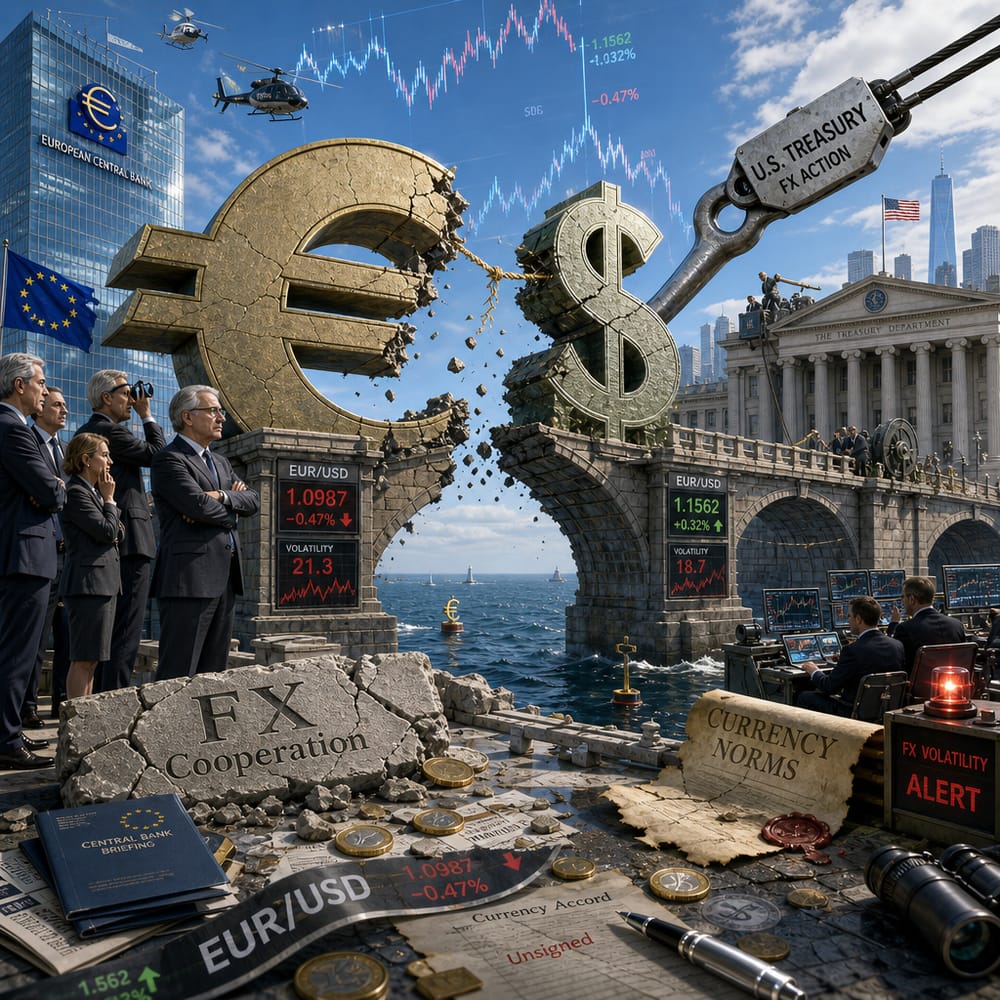
CURRENCY COOPERATION UNDER SIEGE: EUROPE RAISES EYEBROWS AT U.S. FX ACTIONS
Imagine waking up to find that your trusty neighbor has decided to redecorate your shared backyard without so much as a heads-up. That's pretty much how European central bankers are feeling right now, as the U.S. Treasury’s recent escapades in the foreign exchange (forex) market have rattled the usually calm waters of international currency cooperation. And this is not just a teacup-stirring event—there might be a full-blown storm brewing for the EUR/USD currency pair.
WHAT’S THE BIG DEAL?
Here's the quick rundown: In recent months, the U.S. Treasury has been intervening in the forex markets with a heavy hand, raising eyebrows and tempers across the Atlantic. Normally, currency interventions are like a soft nudge to a sleepy cat—subtle and generally harmless. But these moves have been more akin to throwing a rock into a pond, creating ripples that refuse to settle.
The EUR/USD, the most traded currency pair globally, is, unsurprisingly, feeling the heat. When the U.S. decides to alter the game plan without consulting its European counterparts, the Euro, already dealing with its own set of challenges, might end up as collateral damage. Investors and traders holding assets denominated in Euros or Dollars are now left with one big question: What’s next?
THE DOLLAR DANCE
Currency interventions by the U.S. Treasury can have a domino effect. When Uncle Sam steps in to weaken or strengthen the Dollar, it doesn’t just stop there. The Euro typically responds in kind, and it’s a classic dance of give-and-take. If the Dollar is pushed down, the Euro could rise, making European exports more expensive, thereby affecting Europe's already fragile economic recovery. Conversely, if the Dollar rises, it could hurt U.S. exporters. Caught in this tug-of-war, the EUR/USD pair is more volatile, leaving traders on edge and investors reaching for their stress balls.
This is not just a momentary blip; it's an issue of trust. Forex markets thrive on stability and predictability. When a major player like the U.S. Treasury chooses to go rogue, it sets a precedent that could lead to increased volatility, not just for the EUR/USD but potentially for other currency pairs too. Markets hate uncertainty, period.
DIPLOMATIC FALLOUT
Let’s talk diplomatic relations. Traditionally, major economies work together to ensure currency stability. It's like a global game of Monopoly, and unexpectedly switching out the money rules mid-game is a surefire way to spark outrage at the table. The European Central Bank and other European institutions are, understandably, not thrilled. Such unilateral actions strain the norms of currency cooperation and could lead to diplomatic tensions.
When central banks and finance ministries meet, usually at glamorously named events like the G20 summit, they discuss and align their monetary strategies. These meetings are supposed to be the bridge over troubled waters, not the starting point for another round of international chess. However, with the U.S. Treasury calling its own shots, we're venturing into uncharted territory.
What does this mean for the dollar-dumped Euro? If Europe decides to retaliate with its own set of interventions, we could see a tit-for-tat scenario play out, adding even more pressure to global markets. Diplomacy isn’t just about handshakes and photo ops; it’s about keeping economies stable. When those diplomatic bridges start to wobble, markets notice.
WHAT SHOULD INVESTORS DO?
If you're an investor, you might be wondering how to navigate this currency conundrum. Here’s the spicy bit: Consider keeping an eye on how this plays out in diplomatic circles. Any signs of negotiation or compromise could provide hints at future currency stability, which might just be the lifeline you need to make informed decisions.
If you’re trading EUR/USD or related assets, buckle up. Increased volatility might mean higher potential rewards, but it also means higher risks. It’s a bit like roller coaster investing, thrilling yet terrifying. A diversified portfolio could help cushion any unexpected blows stemming from this currency chaos.
In conclusion, the U.S. Treasury's recent moves have cast a spotlight on the fragile dance of international currency relations. Whether this leads to a ballroom brawl or a diplomatic hug remains to be seen. Stay sharp, stay informed, and maybe keep a good luck charm handy. Because if there’s one thing we know for sure, this ride is far from over.
This article is for informational purposes only and is not investment advice. Always do your own research or consult a licensed financial professional before making investment decisions.
© Copyright 2024. All Rights Reserved.
© Copyright 2024. All Rights Reserved.