

Crypto’s Resurgence as Equity Mood Sours
Sunday, August 23, 2026
CRYPTO’S RESURGENCE AS EQUITY MOOD SOURS
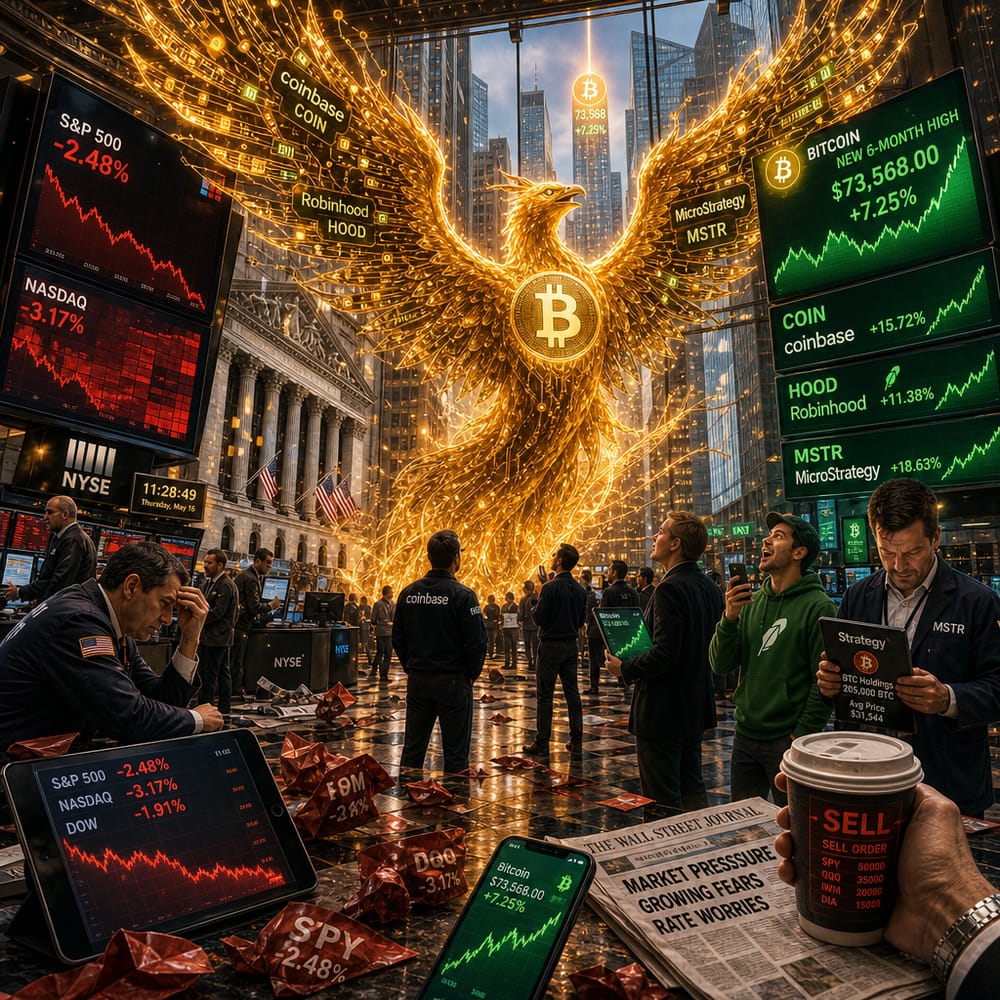
Let’s face it, if you told someone a decade ago that Bitcoin would become a safe haven, they'd probably have laughed you out of the room. But here we are, with crypto-related stocks surging like they just won the lottery while the traditional stock market sulks in the corner. So, what’s causing this digital gold rush, and why should you care? Grab your popcorn; it’s a wild ride.
First things first—what’s driving this crypto comeback? Bitcoin is partying like it’s 2017, and Coinbase, Robinhood, and MicroStrategy (MSTR) are enjoying a similar euphoria. The catalyst? A heady mix of financial dread and digital dreams. Investors are shaking off the equity blues, and Bitcoin’s recent spike to its highest level since May is like finding sunshine in Seattle.
With the broader equities market being buffeted by storm clouds like soaring bond yields and a $40 trillion national debt (yikes!), investors are looking for a lifeboat. Enter the crypto market, stage right, wearing a superhero cape. Bitcoin’s allure is its independence from the traditional financial system—a system that currently feels like a teetering Jenga tower thanks to inflation woes and debt concerns.
It seems investors are taking a page out of the “don’t put all your eggs in one basket” playbook by using crypto as a hedge against all that equity market jitteriness. Think of Bitcoin as the rebellious cousin who doesn’t have to follow the rules of the stock market. When traditional assets slide down, Bitcoin sometimes dances upwards, reminding everyone of its untamed potential.
But hold your horses! Before you go all in on crypto, let's talk risk versus reward. Sure, the crypto market's had a hot streak, but it’s also notorious for its mood swings. One minute it’s the life of the party, and the next it’s a no-show. The crypto market’s volatility is like riding a rollercoaster with no safety bar, thrilling but terrifying.
Investors diving into crypto are essentially signing up for a treasure hunt. The potential rewards are huge—a ballooning portfolio where you can brag to your friends that you saw the future. But the risks? They’re not for the faint-hearted. Sudden crashes, regulatory crackdowns, and security breaches can wipe out gains faster than a toddler with a bowl of spaghetti.
So, why are risk-takers getting heart-eyed over crypto now? Part of it is practical: some are fed up with the bond market’s melodrama and the U.S. Treasury’s head-scratching interventions that seem like putting duct tape on a leaky ship. Meanwhile, the equity market is still reeling from inflation pressures and retail giants like Walmart feeling the heat from higher gas prices. The traditional market feels like it's on a treadmill, working hard but getting nowhere fast.
Alternative investments like crypto provide a narrative that’s not beholden to the usual suspects of economic indicators and quarterly earnings reports. It’s the rogue, the renegade, the rascal of the investment world—and that unpredictability can be oddly comforting when everything else seems rigid and rule-bound.
But let’s not lose our heads. As enticing as crypto appears right now, it’s crucial to approach it with a level head and a stomach for volatility. Diversifying your portfolio and doing diligent research can help mitigate some risks. In the end, crypto could very well be the poster child for modern risk diversification strategies—if approached wisely.
So, as you watch Bitcoin and its crypto kin rise while the stock market feels a tad under the weather, remember this: fortune favors the bold, but the wise read the fine print. Whether you’re a seasoned investor or a rookie just dipping your toes in, the crypto craze offers a chance to rethink traditional strategies and consider new avenues for growth.
In the grand chess game of investing, crypto is the wild card. Whether it’s your winning move or just another piece on the board, only time—and your risk tolerance—will tell.
This article is for informational purposes only and is not investment advice. Always do your own research or consult a licensed financial professional before making investment decisions.
© Copyright 2024. All Rights Reserved.
© Copyright 2024. All Rights Reserved.