

Crypto Regulation Developments: U.S. Treasury Proposes Stablecoin Rules
Monday, August 24, 2026
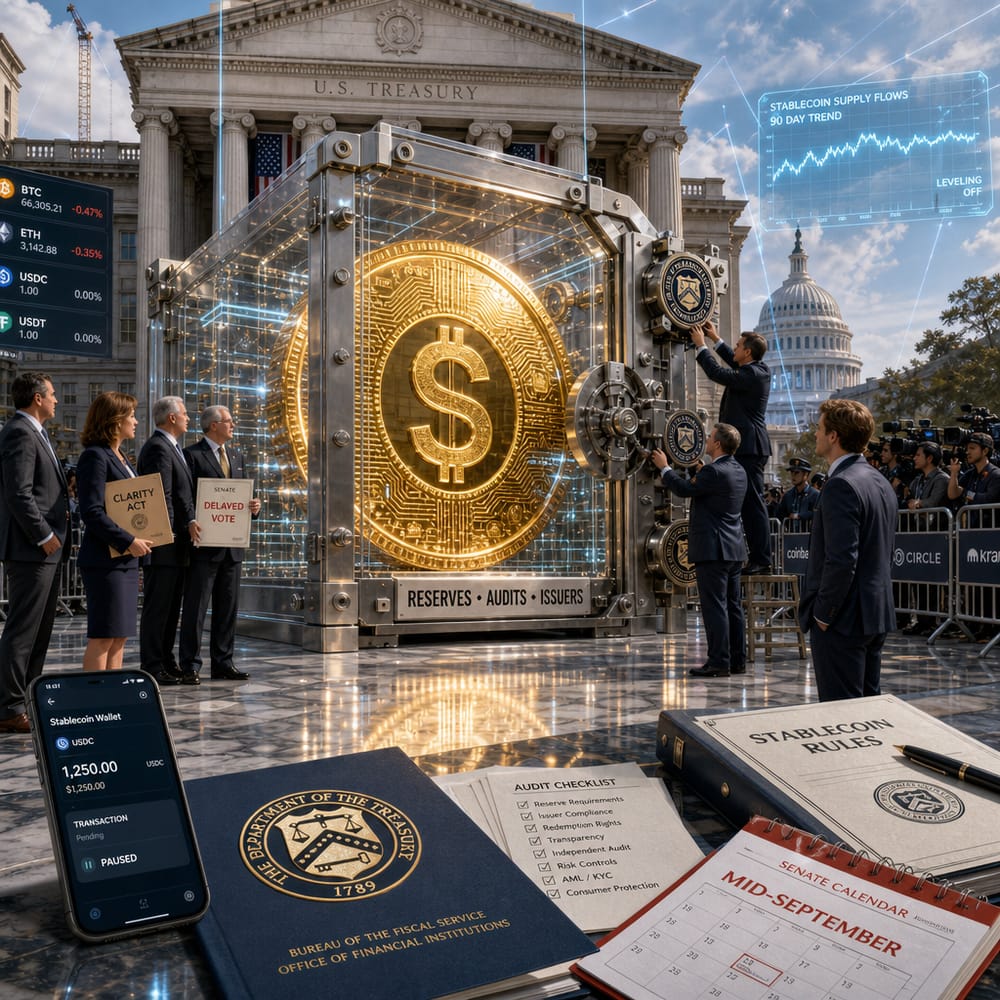
Crypto Regulation Developments: U.S. Treasury Proposes Stablecoin Rules
Hold onto your digital wallets, folks. The U.S. Treasury has just dropped a regulatory bombshell on the crypto world, and it’s all about stablecoins. If you’re thinking this sounds like the start of a financial drama series, you’re not too far off. Except, this isn't fiction—it's the latest twist in the ever-evolving narrative of cryptocurrency regulation.
So, what's the deal with the new stablecoin regulations? The main character in this tale is the U.S. Treasury, which is finally stepping into the regulatory ring with a set of proposals aimed at putting stablecoins on a leash. Stablecoins are the digital darlings of the crypto universe, designed to hold a steady value by being pegged to a more stable asset like the U.S. dollar. Think of them as the non-rollercoaster ride in the crypto amusement park, offering a refuge of stability amid the wild ups and downs of Bitcoin and its ilk.
THE BIG PROPOSAL: WHAT’S IN THE REGULATORY TOOLKIT?
The Treasury’s proposed rules are a bit like a three-course meal, each serving a distinct purpose. First up is requiring stablecoin issuers to hold high-quality, liquid assets to back their coins. This means they need a stash of tangible assets, like cash or short-term government bonds, to reinforce their digital coins. It's kind of like making sure your Monopoly money is backed by real cash.
Next on the menu is a mandate for regular audits. The Treasury wants these audits to be as transparent as a glass-bottom boat, ensuring everyone can see what's supporting the stablecoins. And finally, here's the pièce de résistance: stablecoin issuers need to be licensed like banks. It's an effort to bring them into the financial fold and make sure they’re playing by the same rules as traditional financial institutions.
HOW WILL THIS IMPACT THE STABLECOIN PLAYERS AND USERS?
For stablecoin issuers, these regulations could mean a trip back to the financial drawing board. Adapting to the new rules may involve restructuring their reserves and operations, which could squeeze profit margins and shake up their business models. Picture this: a crypto company suddenly needing to act like a traditional bank. It’s like asking a skateboarder to wear business attire and follow a corporate dress code.
As for the users—those crypto-savvy individuals who rely on stablecoins for everything from day-to-day transactions to speculative trading—the impact is a mixed bag of nuts. On the upside, increased regulation could translate into heightened trust and stability. After all, knowing there’s something tangible backing your digital dollars might help you sleep a little better at night.
But here's the kicker: with great regulation comes greater costs. If stablecoin issuers find themselves spending more to comply with these rules, don't be too surprised if some of those costs trickle down to the user, perhaps in the form of higher transaction fees.
THE RIPPLE EFFECT ON THE CRYPTO ECOSYSTEM
The bigger question is how these regulations could ripple across the broader crypto market. Stablecoins have been the reliable workhorse of the crypto ecosystem, providing liquidity and a semblance of stability in a volatile market. By smoothing out some of the risks associated with stablecoins, the Treasury's moves might attract more conservative investors who have been sitting on the sidelines, wary of the Wild West nature of cryptocurrencies.
However, there’s also the potential for a bit of a shake-up. Over-regulation might inadvertently stifle innovation, leading some companies to look for friendlier jurisdictions. This could pave the way for a fresh round of global regulatory arbitrage, where companies hopscotch around the globe in search of the most favorable regulatory environments.
THE WAITING GAME FOR CLARITY
While the stablecoin saga heats up, there's another subplot in this regulatory drama—the Senate's decision to hit pause on the CLARITY Act vote until mid-September. This piece of legislation aims to bring further transparency and regulation to the crypto world, but for now, it's in legislative limbo, leaving industry players and investors in a holding pattern as they await the next chapter.
In the end, whether these regulations are a lifesaver or a straitjacket for the crypto market remains to be seen. But one thing’s for sure: in the crypto world, where the only constant is change, these new stablecoin rules are bound to stir up the waters. As always, stay tuned—and maybe keep a life preserver handy.
This article is for informational purposes only and is not investment advice. Always do your own research or consult a licensed financial professional before making investment decisions.
© Copyright 2024. All Rights Reserved.
© Copyright 2024. All Rights Reserved.