

Crypto Regulation: CLARITY Act and Stablecoin Rules Gain Traction
Friday, August 21, 2026
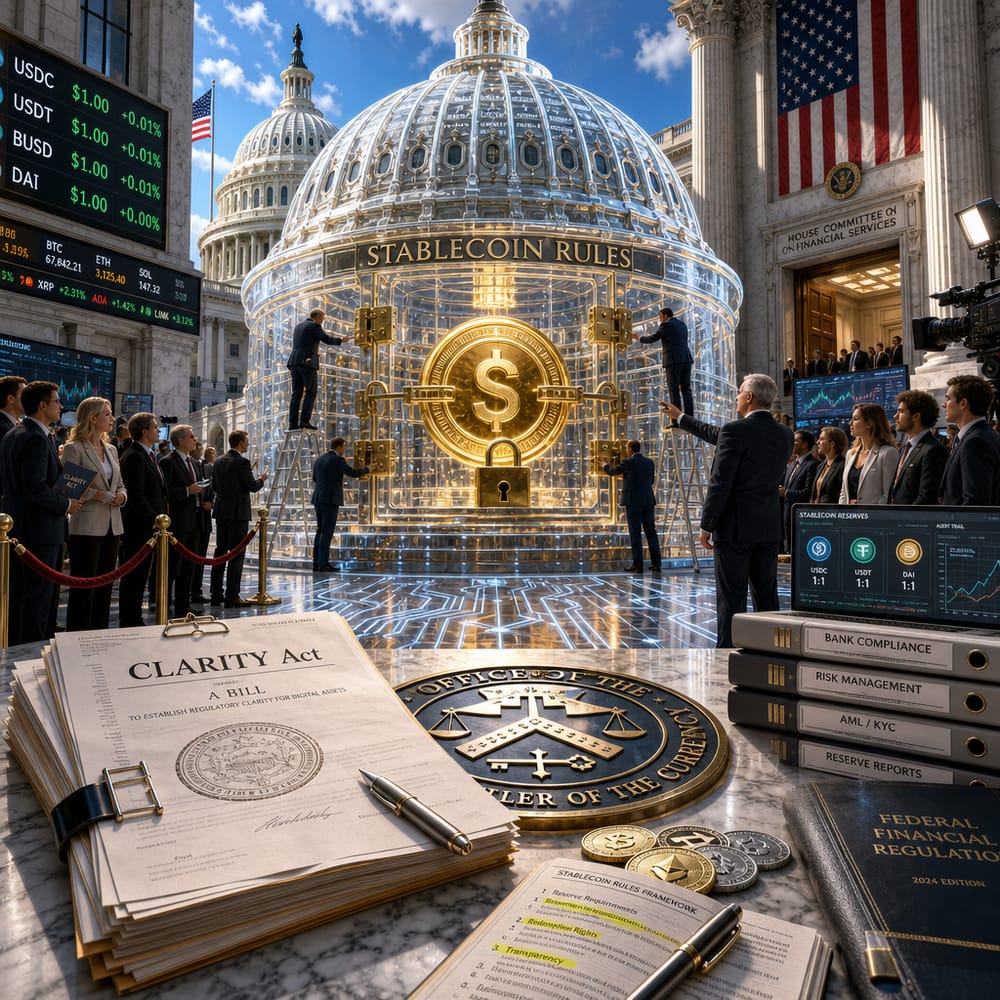
Is Federal Crypto Regulation Finally Coming?
Brace yourself, crypto enthusiasts and skeptics alike—regulation may be coming to the wild west of digital currencies. If you've ever felt that the crypto market is like the Wild West with coins and tokens shooting off like errant fireworks, you're not alone. But now, a sheriff in the form of federal regulation might be riding into town. Let's dive into this new chapter in the crypto saga and see what's on the horizon for the CLARITY Act and stablecoin rules.
THE CLARITY ACT: A BEACON IN FOGGY WATERS?
Imagine you're navigating a dense fog in the crypto ocean. Suddenly, there's a lighthouse—the CLARITY Act. Spearheaded by none other than the Office of the Comptroller of the Currency (OCC), this proposed legislation isn't just a piece of paper—it’s a potential game-changer. At its core, the CLARITY Act aims to provide, well, clarity. What a shocker, right? We're talking about a framework that would establish how digital assets are classified, handled, and regulated.
Now, why should you care, dear retail investor flipping through your phone? Because clarity means stability. With a solid foundation, the rollercoaster ride that is crypto might just get a bit smoother. And with more predictability, who knows, maybe grandma will feel safe enough to dabble in Bitcoin.
STABLECOINS: NOT JUST ANOTHER PRETTY FACE
Enter stablecoins—the darlings of digital currency. Think of them as the chill cousins at a family reunion, less volatile than your average cryptocurrency. But stability doesn't mean ignoring the rules. The OCC is putting stablecoins under the microscope, determined to whip up some regulations that ensure these assets live up to their name.
What's at stake here is big, folks. Stablecoins like Tether and USD Coin play a pivotal role in the crypto ecosystem, acting as a bridge between traditional finance and the crypto world. Getting a regulatory framework in place could offer much-needed assurance to investors who have been side-eyeing these coins with suspicion.
WHAT'S IN IT FOR YOU?
So, how might these moves impact you, our eagle-eyed investor? First off, more regulation could mean less Wild West and more Wall Street, which isn't necessarily a bad thing if you're looking for stability. The crypto market, historically as predictable as a cat on catnip, might just find its center of gravity.
Investor confidence is a fickle beast, and nothing soothes it like the promise of oversight. A robust regulatory framework could act as a safety net, encouraging more people and institutions to tiptoe—or dive headfirst—into the crypto pool. And as confidence grows, so could the market itself, potentially leading to increased investment opportunities and, dare we say, profits.
But there's a twist. Regulations could also mean that some of the "bad boys" of crypto might face the music. Stricter rules could weed out frauds and scams that have plagued the sector, but it could also cramp the style of those who relish the market's current laissez-faire vibe.
THE ROAD AHEAD
Federal regulation isn't just a glimmer in the crypto eye anymore—it's marching towards reality. The CLARITY Act and stablecoin regulations signal a pivot, potentially heralding a more mature, regulated crypto market. While the jury's still out on exactly how these changes will play out, one thing's for sure: the conversation is shifting from "if" to "when."
So, as you sip your morning coffee and scroll through the latest market updates, keep an eye on these regulatory developments. They could very well shape the future of crypto investing and, who knows, maybe even make it the norm to discuss Bitcoin futures at the family dinner table.
In the meantime, enjoy the ride and keep your portfolio as diversified as your breakfast buffet—because in the world of finance, nothing is ever truly certain. But with a little clarity and some stable footing, we might just be on the verge of a new era in digital finance.
This article is for informational purposes only and is not investment advice. Always do your own research or consult a licensed financial professional before making investment decisions.
© Copyright 2024. All Rights Reserved.
© Copyright 2024. All Rights Reserved.