

Crypto Mining Difficulty Rebounds to 126 Trillion Ahead of Next Adjustment
Tuesday, August 11, 2026
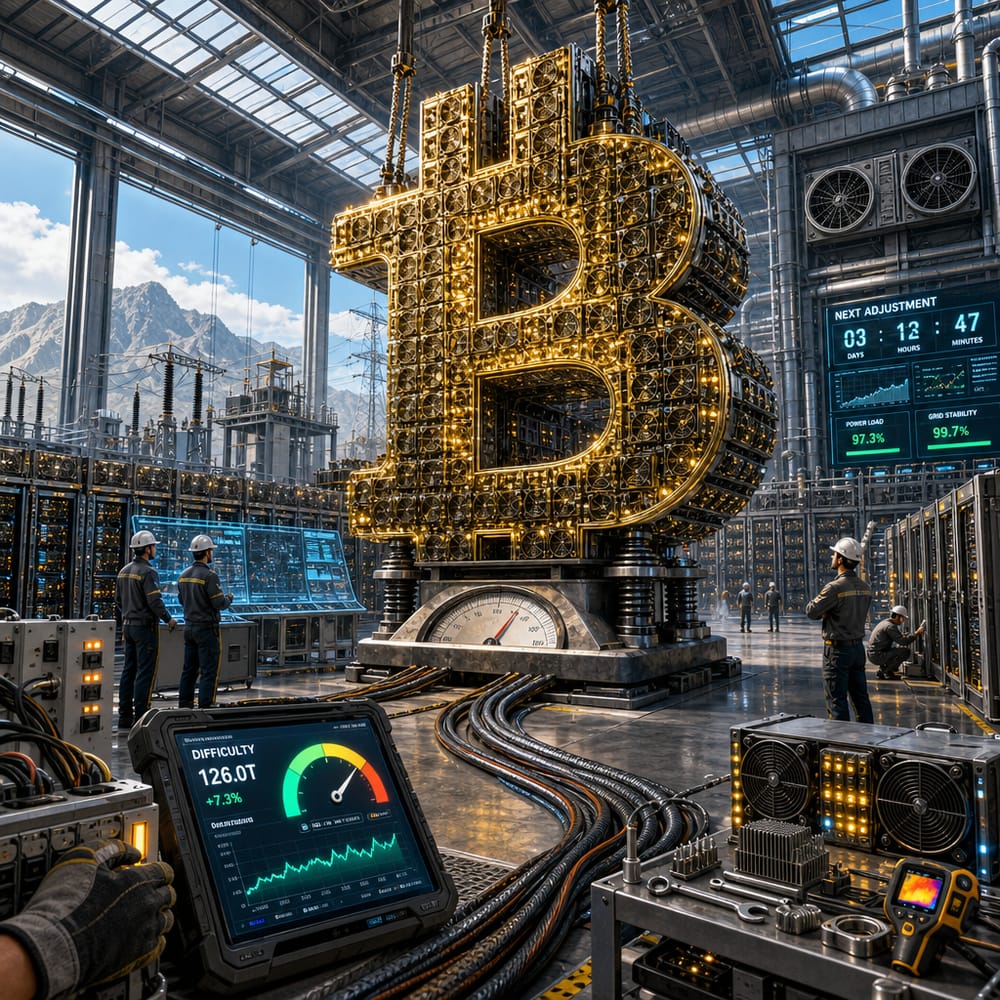
If you thought Bitcoin mining was all about digital dragons hoarding virtual gold, think again. It's more like a high-stakes thriller, with plot twists that keep crypto aficionados on the edge of their seats. And the latest twist? Bitcoin's mining difficulty has rebounded to a cool 126 trillion, just as the network braces for its next adjustment. Yes, you heard that right — trillion with a “t.” So, what's driving this stability, and why should it matter to you, dear retail investor? Let's find out.
WHAT IS BITCOIN MINING DIFFICULTY?
Before we dive into the nitty-gritty, let's clear up what mining difficulty even means. Imagine Bitcoin as a giant, global Sudoku competition, where miners (the people who create new Bitcoins) solve complex puzzles to earn their prize. As more miners join the game, the puzzles get tougher to keep everyone from solving them too quickly and flooding the market with Bitcoins. This difficulty adjusts roughly every two weeks, depending on how fast the miners have been cracking the code.
THE STABILITY FACTOR
So, why is this 126 trillion figure such a big deal? In the rollercoaster world of crypto, stability is like gold dust. Stable mining difficulty means the network remains secure, with a consistent level of effort required to mine new Bitcoins. And why is this consistency significant? Because it suggests that, despite external pressures — regulatory crackdowns, geopolitical jitters, or a nosedive in crypto prices — the Bitcoin network is chugging along like a well-oiled machine. It’s like the unsinkable ship in the turbulent seas of the crypto market.
THE SECURITY ANGLE
Stable mining difficulty isn’t just a nice-to-have; it’s crucial for Bitcoin's security. Think of it as the network's immune system. A consistent difficulty level means that there’s a steady influx of miners. This diversity makes it harder for any one entity to control over half the network's mining power, a scenario known as a "51% attack," which could spell disaster for Bitcoin's integrity. So, in essence, stable mining difficulty keeps the bad guys at bay.
WHAT’S KEEPING IT STABLE?
You might be wondering, what’s holding this mining difficulty level so steady? Well, it's a cocktail of factors. First, advancements in mining technology mean that miners can chew through those puzzles faster and more efficiently, without needing to double the energy bill. Next, despite fluctuating Bitcoin prices, the promise of high rewards keeps miners in the game, maintaining competition and stability. Lastly, geopolitical factors, like China's crackdown on crypto, have pushed mining operations to more miner-friendly havens. The result? A resilient, stable network.
LOOKING DOWN THE ROAD
So, what does the future of Bitcoin's mining difficulty look like? That's the million-dollar question. On the one hand, as we edge closer to the last Bitcoin being mined (scheduled around 2140, mark your calendars), the supply will diminish, driving up demand — and likely difficulty. Plus, technological innovations and shifts in global energy policies might alter the landscape, favoring greener mining solutions.
On the flipside, regulatory changes could throw a spanner in the works. Countries could impose more stringent controls or taxes on mining, impacting its economic viability. But for now, the resilient stability of Bitcoin's mining difficulty remains a beacon of security and reliability in an often unpredictable market.
WRAPPING IT UP WITH A BOW
So, there you have it. While the rest of the financial world frets over oil prices, AI advancements, and the latest geopolitical dramas, Bitcoin's mining difficulty stands as a rare pillar of stability. It’s a testament to the robust architecture of the Bitcoin network and a reassuring signal for investors who might be questioning whether to dip their toes back into the often chilly waters of crypto investing. Whether you’re a Bitcoin believer or just watching from the sidelines, the significance of this stability is hard to ignore.
In the world of investing, there's always a slew of reasons to keep your eyes peeled and your ears open. And right now? This steady mining difficulty should be one of them.
This article is for informational purposes only and is not investment advice. Always do your own research or consult a licensed financial professional before making investment decisions.
© Copyright 2024. All Rights Reserved.
© Copyright 2024. All Rights Reserved.