

Crypto Miners Under Pressure: Hashrate Up, Hashprice Down — Signs of Mining Crisis
Monday, August 10, 2026
CRYPTO MINERS UNDER PRESSURE: HASHRATE UP, HASHPRICE DOWN — SIGNS OF MINING CRISIS
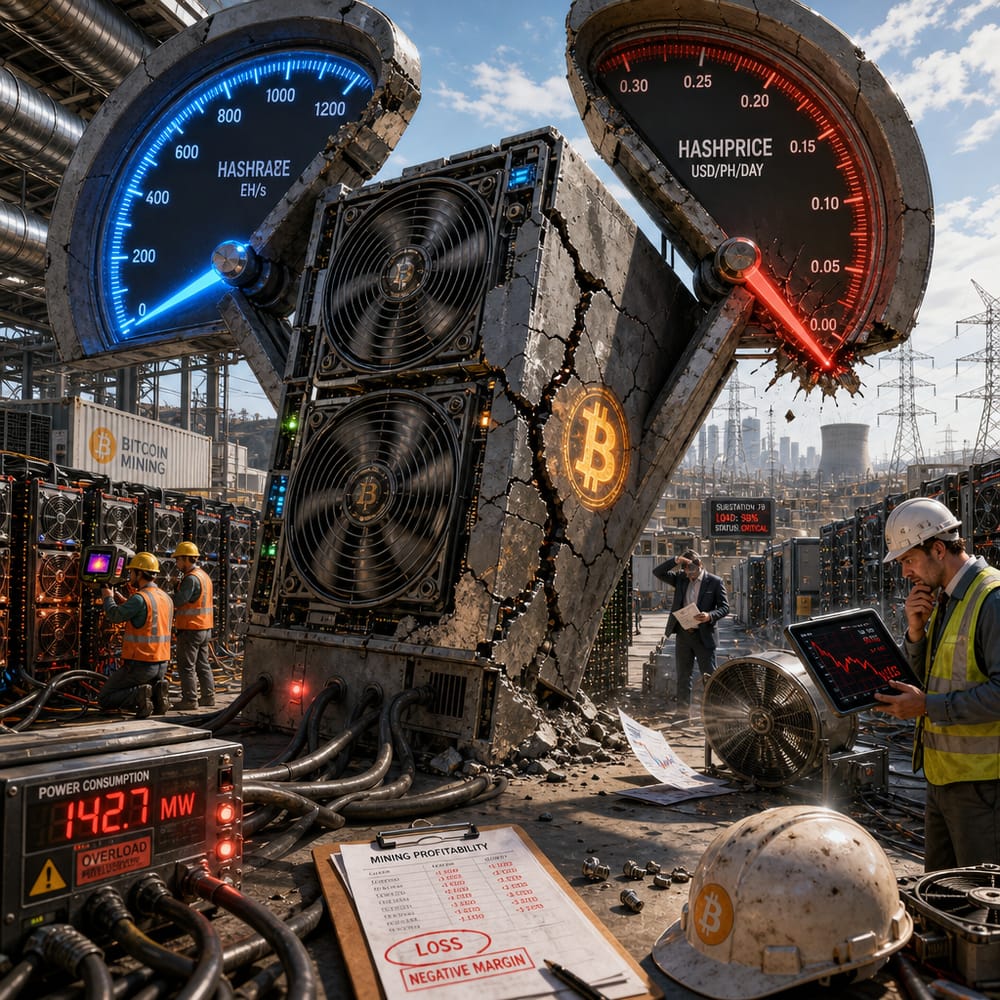
In the high-octane world of Bitcoin mining, the drama isn't about heists or digital sleuthing. It's about numbers, and right now, those numbers are blaring like an out-of-tune orchestra. We're talking about the hashrate — that's the horsepower of all computers mining Bitcoin — shooting up like a rocket, while hashprice — the money miners earn per unit of computational power — plummets like a lead balloon. If this sounds like a recipe for financial heartbreak, you might be onto something.
Here's the scoop: Hashrate is soaring. More miners are joining the fray, driving up competition. But why? Blame it on better and cheaper mining hardware. Imagine suddenly all your neighbors got faster, shinier cars and now everyone's racing to get to work first. That's your Bitcoin mining scene right now. But here's the hitch: while more horsepower sounds great, miners are earning less bang for their buck. The hashprice has taken a nosedive, meaning miners are pocketing less for the same effort.
So, why should you care? Well, if you're a miner, you might already be sweating bullets. The cost of running those beefy mining rigs doesn't go down just because Bitcoin prices dip. Many are now at the crossroads of either upgrading to super-efficient hardware or exiting the game altogether. This squeeze could send smaller operations packing and leave only the big fish swimming.
Now, let's put on our futurist hats and consider the broader impacts. For starters, fewer miners mean less competition, which could, ironically, stabilize the Bitcoin network. However, the flip side is that it could also make Bitcoin more susceptible to attacks if network security drops due to less distributed mining. In short, the integrity of the Bitcoin network is like a game of Jenga right now — take away too many pieces, and the whole thing could wobble dangerously.
But don't just take my word for it. The miners out there are not sitting ducks. They're crafty folks, always hunting for the next edge. Some might double down on more sophisticated, energy-efficient hardware, pivoting faster than a caffeinated squirrel. Others might look to renewable energy sources to cut down costs — mining's dirty little secret is its colossal energy appetite, after all.
And let's not forget the geographical game of musical chairs. Miners have been known to pack up and head to regions with cheaper energy prices. If the U.S. becomes too costly, who's to say they won't ship operations to cooler climes with lower electricity bills? A few might even hop on the AI bandwagon, channeling their tech prowess into this red-hot field, like a Wall Street trader pivoting to tech.
Long-term, this shake-up could churn out a leaner, meaner breed of Bitcoin miners. But there's no sugarcoating it: the current conditions could spell short-term pain for many. It's a test of endurance and adaptability in a landscape that's as predictable as a cat on a hot tin roof.
Meanwhile, what about Bitcoin itself? If miners struggle, it could slow down the rate at which new Bitcoins are minted and transactions confirmed. This bottleneck might ruffle feathers in the crypto world, where fast transactions are money. And trust me, when crypto investors get ruffled, things can get wild.
In conclusion, this isn't just a miner's problem. It's a canary in the coal mine for the entire Bitcoin ecosystem. Will miners innovate and adapt, or will the pressure be too much? And what does this mean for Bitcoin's long-term viability? As the hash wars rage on, only time — and maybe a few quantum computing breakthroughs — will tell. So, for the crypto-curious and investors alike, keep your eyes peeled. The digital frontier is just getting started, and it's bound to be a wild ride.
This article is for informational purposes only and is not investment advice. Always do your own research or consult a licensed financial professional before making investment decisions.
© Copyright 2024. All Rights Reserved.
© Copyright 2024. All Rights Reserved.