

Crypto Market Pullback Ahead of Inflation
Saturday, August 15, 2026
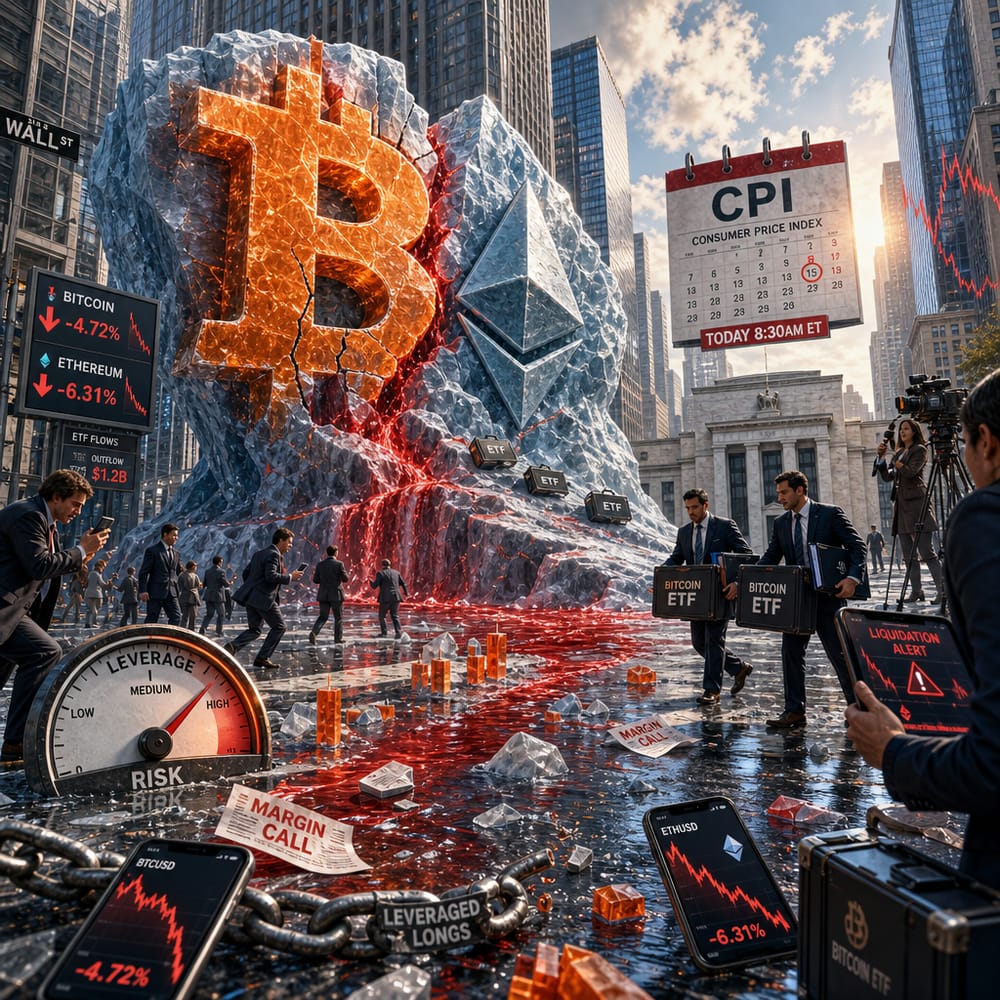
CRYPTO MARKET PULLBACK AHEAD OF INFLATION: WHAT'S REALLY GOING ON?
You know the feeling when you're about to hit a milestone in your life—graduating college, buying a house—and suddenly it feels like the universe is conspiring against you? Well, that's how the crypto market is feeling right now. Bitcoin and Ethereum prices took a nosedive this week, as if someone yelled "fire!" in a crowded theater. The culprit? The liquidation of leveraged long positions ahead of a highly anticipated U.S. Consumer Price Index (CPI) report. It's like the crypto world is holding its breath, waiting to see what inflation data will reveal.
But why does inflation data matter so much to Bitcoin, the original digital gold, and its younger sibling, Ethereum? To answer that, we need to understand the intricate dance between macroeconomic indicators and crypto volatility. Inflation data has become the new bogeyman for investors everywhere. A spike in inflation could mean higher interest rates, which, in turn, might lead investors to flee riskier assets. Enter the "risk-off" move—where investors ditch assets like Bitcoin and Ethereum and flock to safer havens like U.S. Treasury bonds. Suddenly, crypto doesn't seem as shiny when Uncle Sam is offering solid returns without the heartburn-inducing volatility.
And this isn't just a retail investor panic. Institutional players are in on the game too. The recent ETF (Exchange-Traded Fund) flows into Bitcoin signal that big money still sees potential in the digital currency. ETFs offer a regulated way for institutions to gain exposure to Bitcoin without having to deal with the complexities of storing and securing the actual currency. This consistent flow suggests that, despite market jitters, there’s faith in Bitcoin's long-term resilience.
The recent liquidation event is a gentle reminder that leverage is a double-edged sword. When you borrow money to amplify your bets, you're essentially dancing with the devil. It works beautifully when the market moves in your favor, but when things go south, well, you’re left performing the financial equivalent of a trust fall without any friends to catch you.
Now, let's talk resilience. Despite these hiccups, Bitcoin’s price hasn’t cratered as one might expect. Analysts attribute this to the steady demand from ETFs and other institutional investments. These aren't your typical day traders; they’re in it for the long haul, and their unwavering interest provides a price floor, cushioning the blows from retail investor sell-offs.
So, what’s next on the crypto horizon? All eyes are on the upcoming CPI report. A higher-than-expected inflation number could stoke fears of aggressive rate hikes, potentially leading to more sell-offs. Conversely, a report that shows inflation cooling might reignite the appetite for risk, drawing money back into the crypto space.
But let’s not get too cozy in one narrative. The crypto market is notorious for its unpredictability. Last year's crypto winter seemed endless, but come spring, Bitcoin was blooming like a Colorado wildflower. The market has a knack for bouncing back, sometimes when you least expect it.
In the meantime, what should the everyday investor do? For starters, keep an eye on those inflation numbers. Next, consider your risk tolerance. Are you ready to ride the roller coaster of crypto volatility, or are you more comfortable with the steady climb of less risky assets? Remember, in the world of investing, there’s no one-size-fits-all approach.
In conclusion, while inflation data continues to play its mischievous role in crypto’s drama, the enduring interest from institutional players provides a silver lining. Whether Bitcoin and Ethereum continue to dive into the abyss or rise from the ashes remains to be seen. What’s clear, however, is that the crypto market isn’t going anywhere anytime soon. So buckle up, stay informed, and maybe keep a bottle of Tums handy—because the crypto rollercoaster is as thrilling as it is stomach-churning.
This article is for informational purposes only and is not investment advice. Always do your own research or consult a licensed financial professional before making investment decisions.
© Copyright 2024. All Rights Reserved.
© Copyright 2024. All Rights Reserved.