

Crypto ETF Outflows Intensify: Bitcoin ETFs Shed $3.5B in November
Monday, November 23, 2026
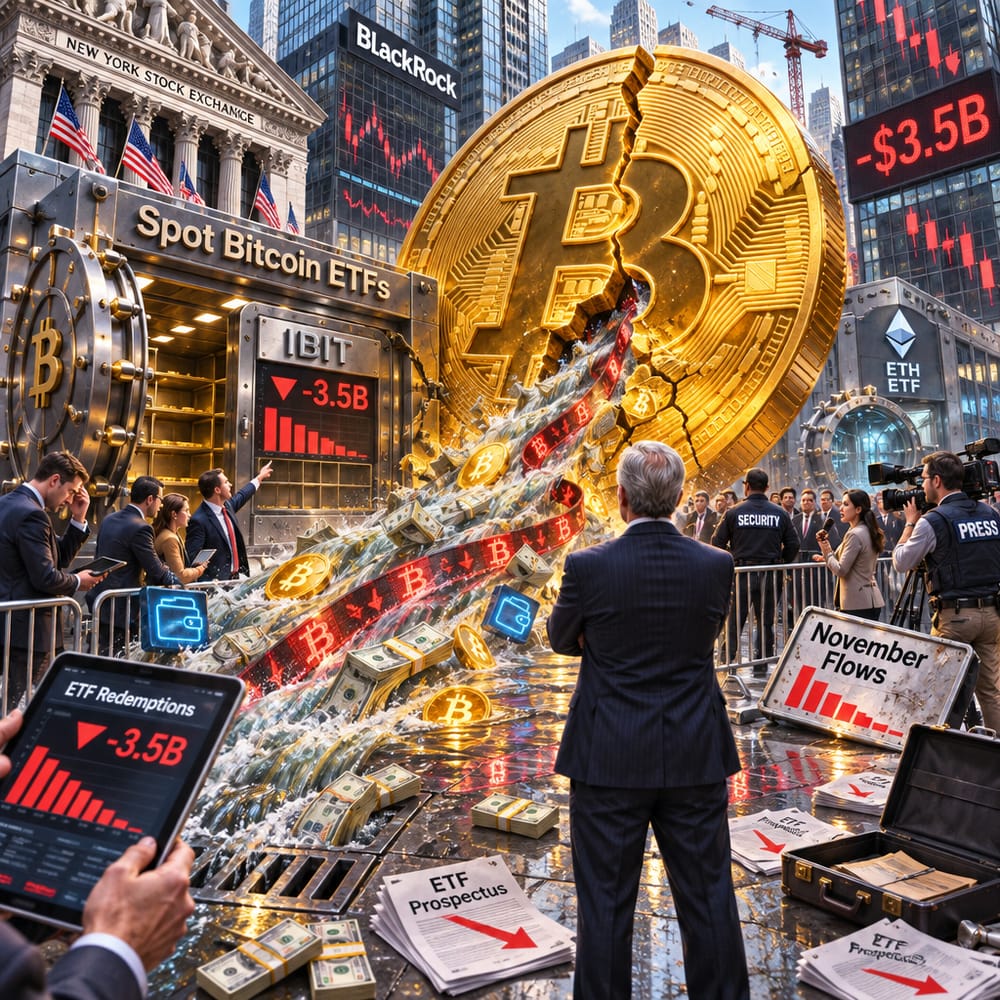
CRYPTO ETF OUTFLOWS INTENSIFY: BITCOIN ETFS SHED $3.5B IN NOVEMBER
In the world of finance, November just got a starring role in the crypto drama we didn’t know we were cast in. Picture this: U.S. spot Bitcoin ETFs have quietly bid farewell to nearly $3.5 billion, and BlackRock's IBIT fund is carrying the heaviest suitcase. If you listen closely, you might just hear the collective sigh from crypto investors echoing across the digital landscape.
WHAT'S CAUSING THE CRYPTO EXODUS?
Let’s get straight to it—what's fueling this money mass exodus? For starters, there's been a noticeable shift in the winds of investor confidence. Rising interest rates and a rather wild economic rollercoaster have made investors rethink their risk appetites. Crypto, with its infamous mood swings, isn’t exactly the go-to for a safe night in.
Add to this cocktail a sprinkle of regulatory uncertainty. With Uncle Sam casting side-eyes at crypto while figuring out how to fit this square peg into a round hole of rules, it's no wonder investors are getting itchy feet. Plus, after the remarkable rally earlier this year, taking profits is looking more tempting than a bowl of nachos at happy hour.
How about the players involved? BlackRock's IBIT fund, for one, is seeing the most significant outflows. That’s right; the financial giant known for making waves is now feeling a splash of its own. BlackRock's predicament is a microcosm of a broader trend as investors are re-evaluating their portfolios amidst the current market jitters.
BITCOIN AND ETHEREUM: A PRICE CHECK
So what does this mean for Bitcoin and its sidekick Ethereum? Well, when you remove the kind of money that keeps these markets afloat, you're bound to get a splash. We’re talking potential short-term price dips as liquidity—think of it as the oil in the engine of crypto trading—decreases. Lower liquidity can lead to increased volatility, making prices swing more wildly than a crypto startup's mission statement.
For those glued to their screens, a drop in ETF investments might initially seem like a buy-the-dip moment. But don’t rush to hit that buy button just yet. The sea of investor sentiment is more tumultuous than usual, and it might be wise to wait for clearer waters.
INVESTOR SENTIMENT: THE INVISIBLE HAND
Now, let's dive into the murky waters of investor sentiment. It’s invisible, yet its impact is like wind shaping the desert dunes. When sentiment turns sour, even the most optimistic of investments start looking a little less rosy.
With the Federal Reserve’s moves keeping everyone on their toes and geopolitical tensions reminiscent of a chess game, it’s easy to see why sentiments are fickle. Investors are finding comfort in more traditional assets, with Bitcoin and Ethereum feeling like the risky bets they truly are.
A TALE OF TWO CITIES
So, what’s next in this unfolding saga? For one, keep an eye on market reactions to any macroeconomic news. The interplay between traditional markets and the crypto world is more tangled than a pair of earbuds in your pocket.
Also, regulation watch is on high alert. Any decisive move from the top dogs in Washington could either be a soothing balm or a shot of adrenaline to the crypto market's already racing heart.
THE FINAL WORD
In the grand theater of finance, the latest act in the crypto story is a stark reminder: volatility is the name of the game. But don’t tune out just yet. The underlying technology and growth potential of the crypto sector remain revolutionary—even if the current economic climate is enough to make anyone reach for the stress ball.
Retail investors should keep their wits about them, consider diversifying, and perhaps, most importantly, enjoy the show. After all, finance might just be the greatest performance art of our time, with Bitcoin and Ethereum playing leading roles in a plot full of intrigue, suspense, and the occasional twist you didn’t see coming.
This article is for informational purposes only and is not investment advice. Always do your own research or consult a licensed financial professional before making investment decisions.
© Copyright 2024. All Rights Reserved.
© Copyright 2024. All Rights Reserved.