

Crude Drop Eases Bond Jitters
Friday, August 28, 2026
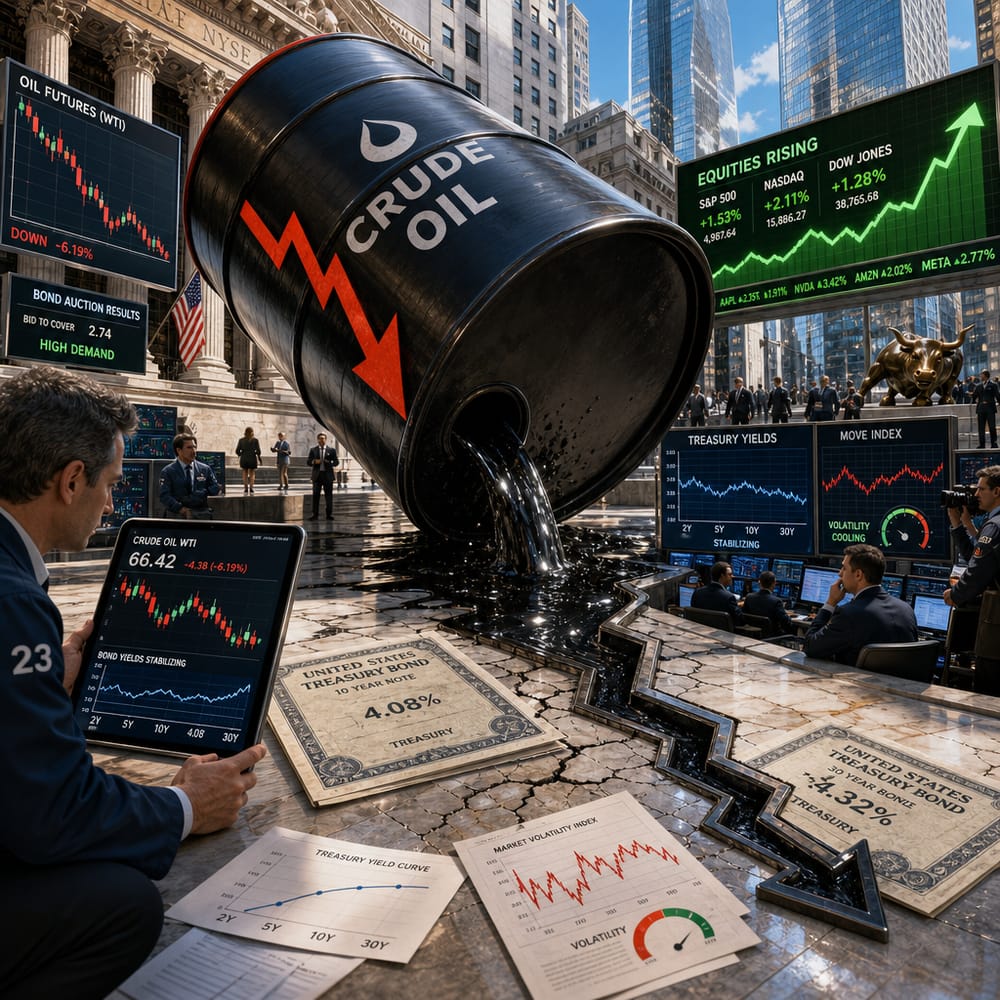
CRUDE DROP EASES BOND JITTERS
If you've been riding the roller coaster of bond markets lately, all thanks to rising oil prices, here's a plot twist that might not make you reach for an antacid: oil prices finally dropped, and boy, did that do wonders for your nerves. On Tuesday, August 25, crude oil took a step back, and suddenly, bond markets decided to chill out, giving a much-needed boost to equities. It's the kind of financial drama that makes you want to pop some popcorn.
Now, if you're scratching your head wondering how a barrel of oil can have such a profound effect on your bond and stock portfolio, here's the lowdown. When oil prices soar, it's like putting your finances in a sauna — everything gets hot, sticky, and uncomfortable. Higher oil prices mean higher transportation and manufacturing costs, and that often translates into inflation. Inflation is like the villain in our market story: when it shows up, bond yields typically rise. This happens because investors demand higher returns to offset the nasty effects of inflation. And when bond yields rise, bond prices fall. See the problem?
But why did our hero, oil, decide to take a breather? Well, it could be the market's reaction to recent sanction news, or perhaps, it's just the market gods offering a reprieve. Whatever the reason, this dip in oil prices has allowed bond markets to stabilize, giving equity markets a little pep in their step. The Fed's recent hawkish murmurs about inflation certainly didn't help matters, so a little oil relief was like a splash of cold water on an overheated market.
So, how do lower oil prices ripple through the economy, and more importantly, your investments? For starters, some sectors get positively giddy when crude takes a nosedive. Think airlines and transportation companies — they're suddenly paying less to fuel up those planes and trucks. Manufacturing industries also catch a break as their production costs decrease, which might even make them think about passing the savings onto consumers (talk about a rare win-win).
But it's not just industries doing a little happy dance. Consumers, too, find more room in their wallets when they're not shelling out the big bucks to fill up at the pump. With extra money to burn, they might just head to the mall or, more realistically, go on an Amazon binge, feeding the retail and e-commerce sectors with a healthy dose of spending juice. And that, my friends, is how a drop of oil can lead to a stock market boost.
Now, if you've been biting your nails over the Fed's next move, you might be curious about how this oil price dip plays into the bigger inflation story. Fed Chairman Kevin Warsh, in recent comments, waved the inflation flag like a diligent lifeguard eyeing a crowded beach. He's worried about inflationary ripples and hinted at potential rate hikes if prices don't cool it. But here's where the plot thickens: lower oil prices might just give the Fed some breathing room, offering a counterbalance to those inflationary forces Warsh is concerned about.
The takeaway? Keep your eyes on oil prices like a hawk. They're the invisible puppet master pulling the strings on bond yields and stock prices. If crude keeps its cool, that could mean a more stable bond market and a friendly environment for stocks to flourish. But remember, in the ever-unpredictable world of markets, today's hero could be tomorrow's villain.
So, if you're reading this on your phone while sipping your overpriced coffee, take solace in the fact that, at least for today, the market's giving you a break. But don't get too comfy; like any good thriller, there's always a twist around the corner.
This article is for informational purposes only and is not investment advice. Always do your own research or consult a licensed financial professional before making investment decisions.
© Copyright 2024. All Rights Reserved.
© Copyright 2024. All Rights Reserved.