

Cross-Asset Volatilities Rise Amid Bond Market Concern ‘Contagion’ Risk
Saturday, August 29, 2026
CROSS-ASSET VOLATILITIES RISE AMID BOND MARKET CONCERN ‘CONTAGION’ RISK
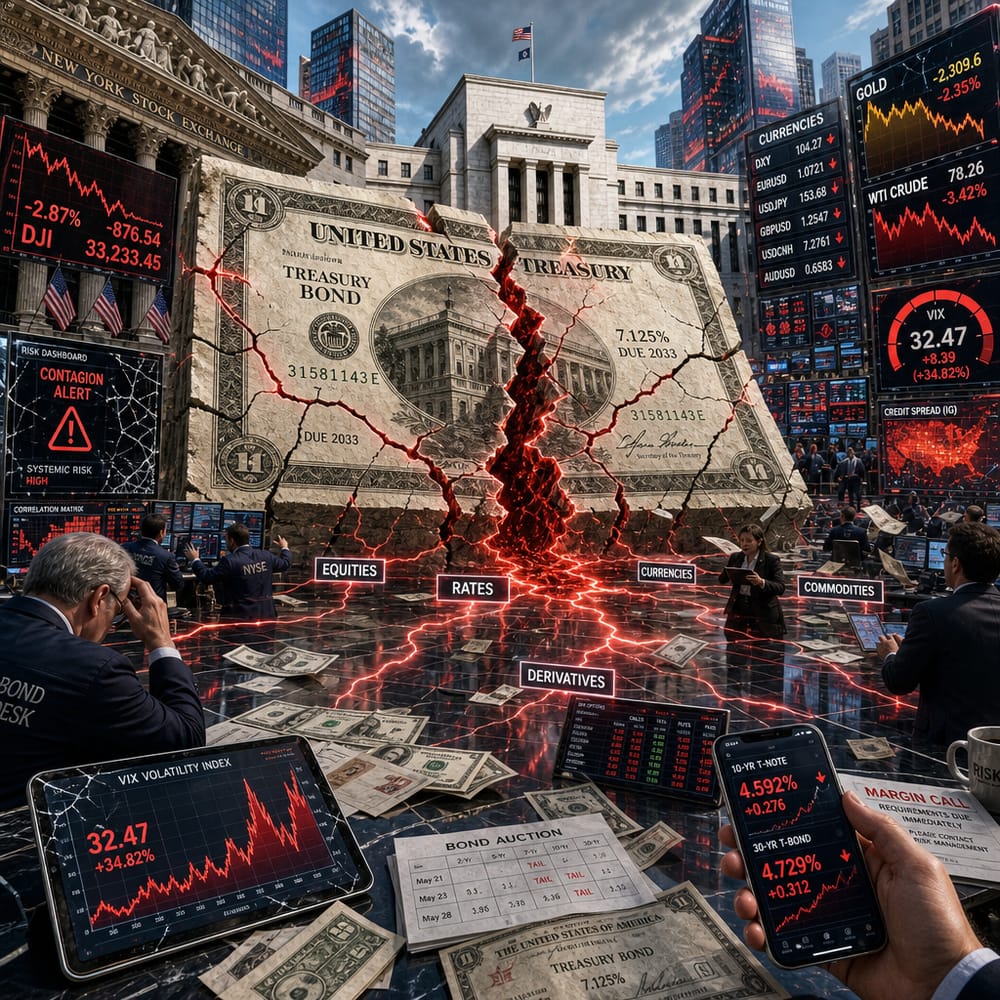
If you're wondering why your investment portfolio looks like it's auditioning for a rollercoaster ride, look no further than the bond market. Lately, the U.S. Treasury market has been throwing a fit, causing waves of implied volatility to crash across asset classes like a toddler who missed nap time. Think of it as a financial ripple effect, a contagion of jitters that's making even the most steadfast investors clutch their spreadsheets a little tighter.
But why all the drama? The root of the commotion lies in a confluence of factors that have turned the once-staid Treasury market into a hotbed of unpredictability. Long-term Treasury yields are scaling heights not seen in nearly a quarter-century, thanks to a cocktail of economic conditions. Inflation might be the usual suspect, but according to experts like David Bianco of DWS, the real culprits are more structural. It’s all about those pesky fiscal deficits, ballooning debt-to-GDP ratios, and a diminishing appetite from foreign buyers to scoop up Uncle Sam’s IOUs.
This bond market hullabaloo has sent implied volatility — that’s Wall Street speak for market mood swings — jumping across stocks and other assets. Essentially, when the bond market sneezes, the stock market catches a cold. It’s a financial version of the domino effect, or as some analysts might say, a contagion risk that’s got traders reaching for the financial equivalent of hand sanitizer.
For everyday investors, this era of heightened volatility can feel like trying to navigate a minefield in the dark. But fear not, brave investors, for this too shall pass — or at least that's the hope. History's got your back, suggesting that bull markets, those glorious periods of rising stock prices, typically follow bear markets, albeit after inflicting a bit of heartache. So what's an investor to do in the meantime?
First, resist the urge to panic-sell your way into a cash-only existence. Yes, the ride is bumpy, but abandoning ship could mean missing out on the eventual market recovery. Instead, focus on diversification — the not-so-secret sauce of risk management. Think of it as spreading your bets across different investment types to cushion the blow when one sector decides to throw a tantrum.
Moreover, it's worth taking a cue from the sage advice of investing in low-cost index funds. These market mirroring machines might not make you a fortune overnight, but they’ll put your money to work with quiet efficiency, riding out the highs and lows of the market’s mood swings. Historical data supports the wisdom of this approach, showing it’s possible to turn modest monthly contributions into a six-figure nest egg over time. Thanks, compound interest!
Amidst the chaos, remember that the Federal Reserve also plays a starring role in this unfolding drama. Fed Chair Kevin Warsh recently dropped some hints at the Jackson Hole summit, suggesting a potential path for interest rates that has investors and central bankers alike leaning in with curiosity. While the timing and number of potential rate hikes remain shrouded in mystery, the mere anticipation of Fed action is enough to keep markets on edge.
In these times of uncertainty, a steady hand and a long-term vision are your best allies. Sure, the financial seas are choppy, but that's all part of the investing adventure. Keep a clear head, stick to your strategy, and don't let the market's tantrums shake your resolve. After all, every storm eventually passes, leaving the opportunity for sunnier days — and portfolios — ahead.
This article is for informational purposes only and is not investment advice. Always do your own research or consult a licensed financial professional before making investment decisions.
© Copyright 2024. All Rights Reserved.
© Copyright 2024. All Rights Reserved.