

Cross-Asset Snapshot: Equities Boom, Bonds Rally, Crypto Sags
Tuesday, November 24, 2026
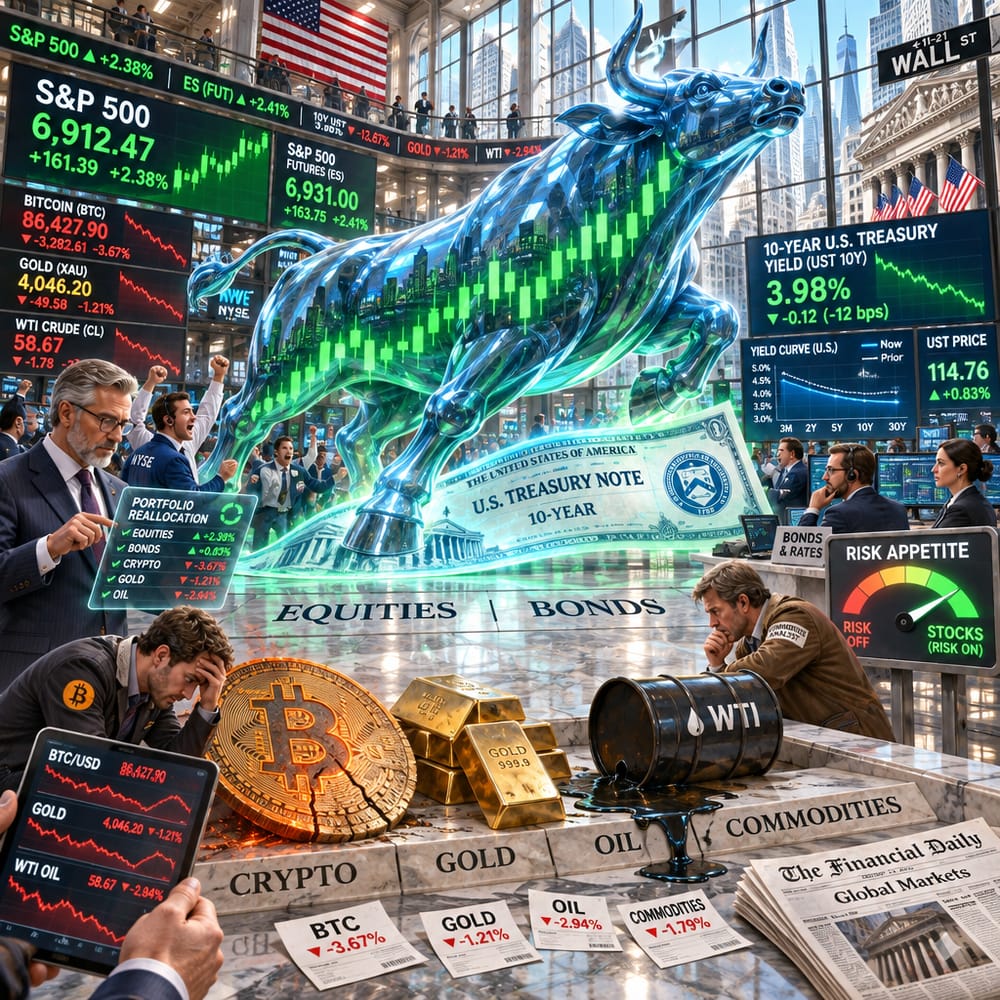
CROSS-ASSET SNAPSHOT: EQUITIES BOOM, BONDS RALLY, CRYPTO SAGS
If you woke up on November 23, 2026, and thought Santa came early with a sack full of gains, you weren't entirely wrong. The stock market was in a festive mood, with equities partying like it's 1999. The S&P 500 was popping off, and the Nasdaq Composite had its best day in over a year. Meanwhile, U.S. Treasury yields took a dip, and crypto and commodities were left feeling a little Grinchy, reflecting a shift in market sentiment that's got analysts buzzing. So, what on earth does this all mean for us mere mortal investors?
Let's break down this market rollercoaster. On one hand, you've got equities surging, fueled by a blend of optimism and probably a bit too much caffeine. Nvidia's stock was soaring, thanks to the dramatic return of Jensen Huang as CEO, sparking a revival in the chip market and the AI sector. This momentum was like a double shot of espresso for tech stocks, lifting the entire market.
But what happens when equities dance around with that kind of exuberance? Treasury yields often take the hint and do the opposite. It's like a see-saw—when one goes up, the other usually wants to go down. The 10-year U.S. Treasury yield dipped as investors sought the relative safety of bonds amid some geopolitical chatter and an inflation warning from the Fed. This drop signals a move towards caution, as yields and prices move in opposite directions. Essentially, when yields fall, it means investors are buying more bonds, driving up their prices.
So why the retreat to bonds? Well, sometimes when the stock market gets too hot, smart money decides to hedge its bets and park some cash in safer, more predictable investments. It’s like wearing a helmet when riding a motorbike—not the most exciting, but probably a good idea.
While bonds were getting some love, crypto and commodities were left out in the cold. Bitcoin, the wild child of the investment world, wasn't having its best day. Investors weren't feeling the risk as much, given the allure of a more stable equity market and safer bonds. Gold and oil, those traditional hedges against economic uncertainty, also took a back seat. When equities rally, commodities sometimes take a breather because risk appetite is channeled elsewhere.
But what drives these inter-asset correlations? It's all about the economic environment and sentiment. When investors are confident about the economy, they plow into stocks. However, if they’re jittery about future growth or inflation, bonds become the go-to option. The odd one out here is crypto, which still behaves like a teenager figuring out its place in the world—volatile and unpredictable.
For those investing in the wild world of crypto, or even commodities, days like this can feel a bit like walking on a tightrope. The lesson here? Diversification. It’s not just a buzzword thrown around by financial advisors to sound smart—it’s a strategy that can help cushion your portfolio against swings in any single asset class.
As retail investors, understanding these market dynamics isn't just a party trick. Knowing how different assets interact can help you make smarter choices about where to put your money. Want in on the equity action? Maybe consider whether it’s a good time to also hold some bonds. Feeling brave with crypto? Make sure your overall portfolio isn't an all-or-nothing gamble.
In essence, keep an eye on the big picture. Pay attention to how these asset classes play off each other—like an intricate dance, each responding to the other's moves. In a world where market sentiment can shift as quickly as a TikTok trend, staying informed is your best bet for navigating the financial landscape. So, keep reading, keep learning, and maybe keep a close eye on that crypto wallet.
After all, in this financial symphony, knowing how to tune into the right notes might just be the key to stacking up those gains without losing your rhythm.
This article is for informational purposes only and is not investment advice. Always do your own research or consult a licensed financial professional before making investment decisions.
© Copyright 2024. All Rights Reserved.
© Copyright 2024. All Rights Reserved.