

Cross-Asset Implied Volatility Climbs Amid Treasury Market Stress
Sunday, August 30, 2026
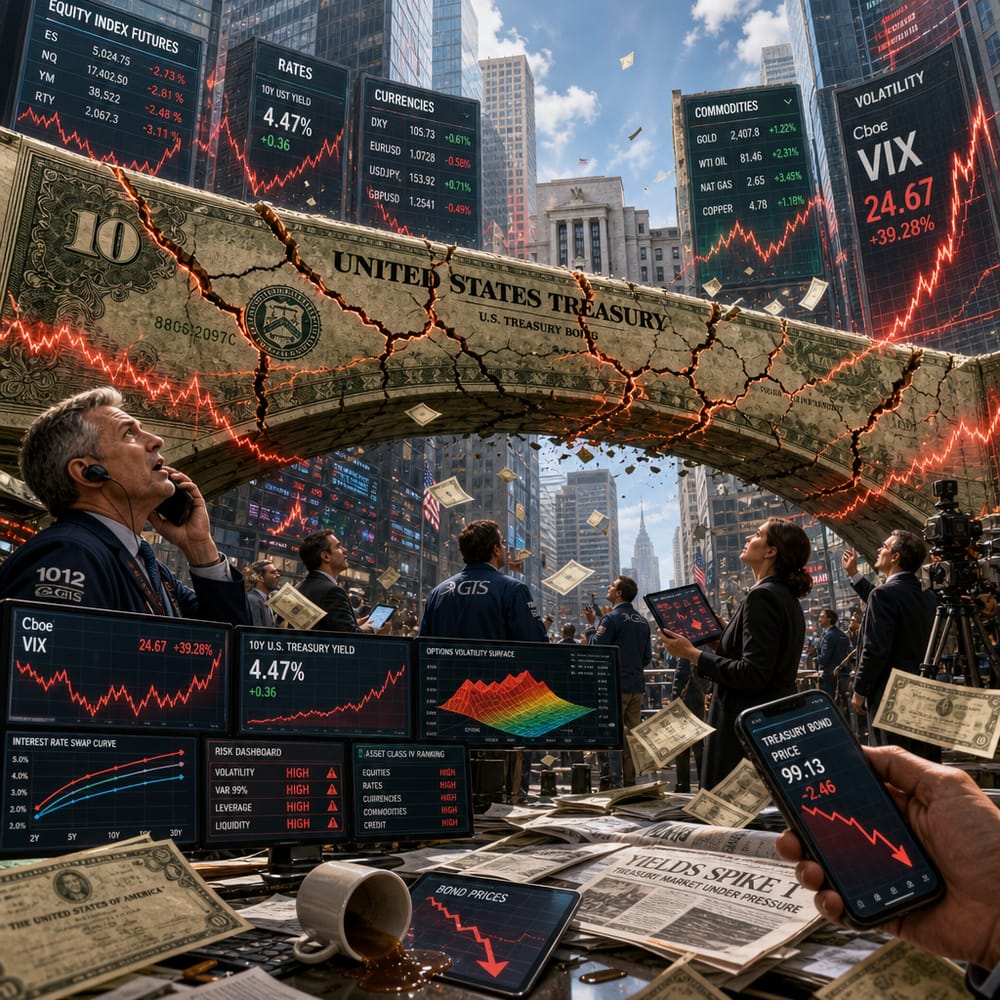
VOLATILITY IS THE NEW BLACK: WHY TREASURY TURBULENCE HAS INVESTORS SWEATING
If the market were a roller coaster, it feels like we're clicking toward the top of the first big drop. Behold, folks, the rise of implied volatility — that cryptic, spooky measure of how erratically investors think markets might move. It's having a moment, spreading across equities, rates, and just about any asset class you can think of. And the main generator of those worried whispers? Our good old friend, the U.S. Treasury market.
Imagine walking into a room where everyone’s holding their breath. That’s sort of what happens when the implied volatility across multiple asset classes ramps up. The Cboe Volatility Index, affectionately known as the VIX and dubbed the “fear gauge” of Wall Street, is suddenly the life of the party. But no one’s exactly celebrating. Rising implied volatilities are waving red flags about the stability of Treasury markets, and when Treasuries catch a cold, every other security sneezes.
WHAT'S GOT VOLATILITY ON THE RISE?
Picture this: U.S. Treasury bonds, usually the market’s snooze fest of stability, are now the center of drama. The bond yields are fluctuating like a caffeinated stock market. Why? Well, geopolitical tensions, inflation fears, and the Federal Reserve's cryptic stance on interest rates are stirring the pot. Fed Chairman Kevin Warsh’s recent poker face about interest rate plans left investors with more questions than answers. Inflation is still a buzzing mosquito in our collective financial ear, and Treasury yields are feeling the heat.
Global tensions, like the ongoing conflict involving Iran, aren’t helping the mood either. Oil prices are dancing to their own tune, leaving investors jittery about potential ripple effects. Every cough from a major economy echoes in the Treasury market, where investors seek refuge in times of uncertainty — unless, of course, that safe haven starts to feel like a haunted house.
HOW ARE INVESTORS PLAYING THE GAME?
So, as volatility rises, what's an investor to do? When markets waver, savvy investors start shuffling their decks. Portfolio diversification becomes a mantra. Think of it as spreading your eggs across many baskets in the hope that not all of them crack at once. In practical terms, investors are hedging their bets by turning more to options and derivatives to protect against potential downturns.
Some are fleeing to commodities like gold, the perennial “panic room” of the investment world, while others are eyeing sectors deemed less volatile, such as utilities or consumer staples — think the comfort foods of stocks. The art here is to manage risk without missing out on a potential upside if the market decides to calm down and behave itself.
IMPACT ON INVESTMENT STRATEGIES
Rising volatility can scare the pants off risk-averse investors and send them scurrying to safety. But it’s not all bad. For those with a stomach for financial roller coasters, heightened volatility can also mean opportunities. Traders could ride the waves looking for quick gains, while long-term investors might view the dips as buying opportunities, hoping the market will eventually right itself like a tipsy sailor.
Yet, it's not all fun and games. Increased volatility means investment strategies need a polish, maybe even an overhaul. Risk tolerance is being reevaluated, and everyone’s second-guessing whether their portfolios are as bulletproof as they once thought. It’s a reminder that markets, much like that precarious game of Jenga, can tumble with just the slightest nudge from global events or policy shifts.
BOTTOM LINE
Volatility isn’t just a number; it’s a mood. And right now, that mood is as jittery as a cat on a hot tin roof. While the current climb in cross-asset implied volatility has everyone from hedge fund managers to retail investors sweating over their smartphones, it's also a reminder of market resilience and adaptability.
The Treasury market may be flashing warning signs, but history has shown that with every storm, there’s eventually a calm. Investors are tightening their seatbelts, adjusting their strategies, and bracing for whatever twists and turns lie ahead. In the meantime, keep an eye on those Treasury yields and listen closely to the Fed — they might just drop a hint that could settle the market’s nerves. Until then, hang on tight. It’s going to be a bumpy ride.
This article is for informational purposes only and is not investment advice. Always do your own research or consult a licensed financial professional before making investment decisions.
© Copyright 2024. All Rights Reserved.
© Copyright 2024. All Rights Reserved.