

Credit Watch on Nvidia: S&P Global May Downgrade Amid Governance Concerns
Thursday, November 26, 2026
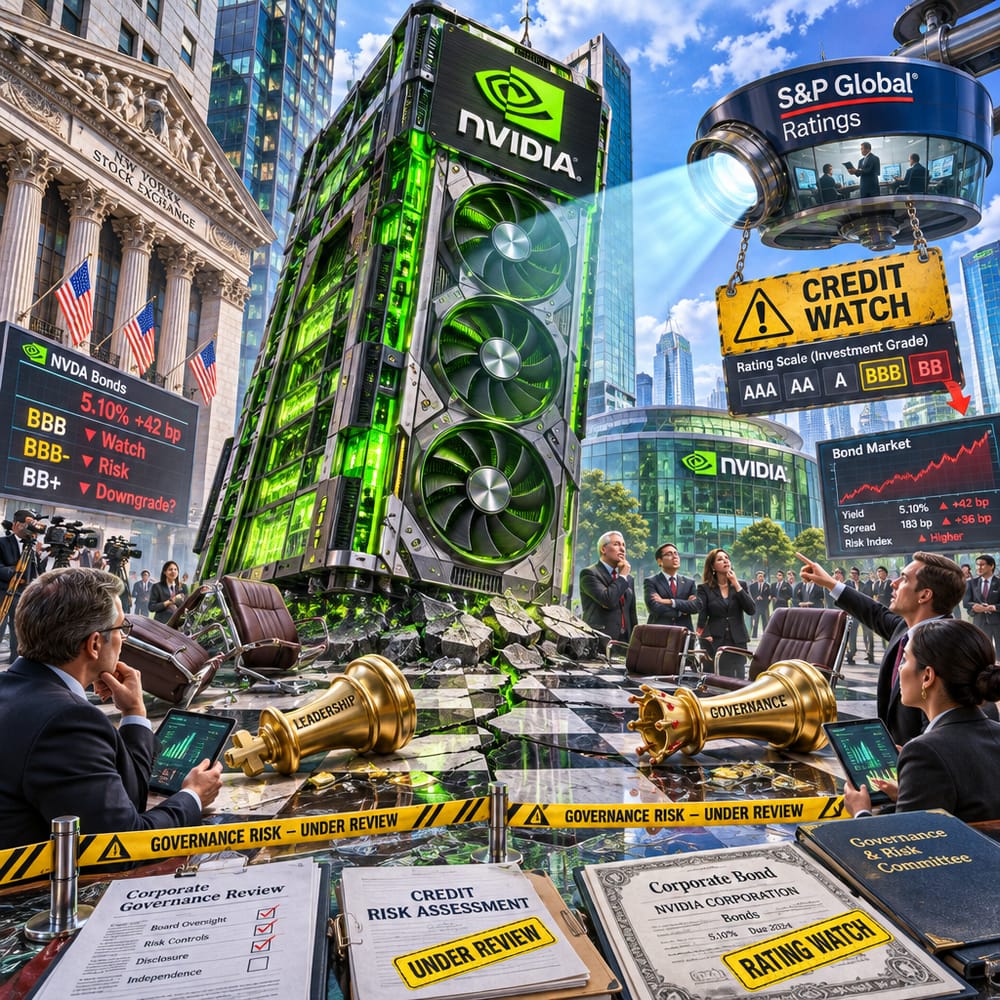
THE SAGA OF NVIDIA: WHY GOVERNANCE MATTERS MORE THAN EVER
Hang onto your hats, folks, because the tech world just got a fresh twist. Picture this: one of the biggest names in the tech industry, Nvidia, is facing a potential credit rating downgrade from S&P Global Ratings. Why? Governance issues. That's right, not financial turmoil, not a product fiasco, but good old-fashioned governance. You might be asking, “How does boardroom drama affect my portfolio?” Let’s dive in.
THE NITTY-GRITTY: WHAT'S AT STAKE?
First things first, what exactly is a credit downgrade? Imagine S&P Global as a school teacher. They give companies grades based on their ability to pay back debt. A downgrade is like getting a B- instead of an A. A slide in the credit rating can make borrowing more expensive for Nvidia, as lenders might see the company as riskier. It's like getting a higher interest rate on your credit card because the issuer thinks you're a bit more likely to go on a spending spree you can't afford.
But here’s the kicker: the potential downgrade isn’t about Nvidia’s financial health. It’s rooted in governance issues following some shuffling in the CEO suite. Jensen Huang, Nvidia's charismatic CEO, was ousted and then quickly reinstated, a move that left investors scratching their heads. That kind of management musical chairs doesn’t inspire confidence.
GOVERNANCE: THE BEATING HEART OF INVESTOR CONFIDENCE
Let’s talk about governance. It’s like the plumbing in your house—crucial but hidden. When something leaks, though, you definitely know it. Good governance means strong, reliable leadership and a board that acts in the best interest of shareholders. Bad governance? It's the opposite—chaotic decision-making and questionable leadership.
For retail investors, governance issues are red flags. They suggest instability at the top, which can lead to strategic blunders, compliance lapses, and, yes, financial missteps. Think of governance as the rudder of a ship; if it’s misaligned, even the mightiest vessel can veer off course.
WHY NVIDIA’S SHAKE-UP MATTERS TO YOU
Nvidia isn’t some obscure tech startup. It’s a behemoth that powers everything from gaming to artificial intelligence. Every move it makes sends ripples throughout the tech sector.
If S&P decides to lower Nvidia’s credit rating, the impact will likely extend beyond just making loans more costly for them. Investor confidence could take a hit, sending stock prices on a rollercoaster ride. And since Nvidia is often seen as a bellwether for the tech industry, this could drag down tech stocks as a whole.
Now, before you pull the plug on your investment account, consider this: a credit rating downgrade doesn’t erase Nvidia’s cutting-edge technology or its leadership in AI and semiconductors. What it does do is introduce a layer of uncertainty that might make investors jittery. If you’ve got Nvidia in your portfolio, brace for a bumpy ride.
WHAT THIS MEANS FOR THE TECH SECTOR
Nvidia’s story isn’t happening in a vacuum; it has broader implications for the tech sector. If Nvidia’s creditworthiness is questioned, other tech companies with governance issues might also find themselves under scrutiny. The tech industry thrives on innovation and rapid growth, but these dynamics often come at the expense of governance robustness.
With the market already on edge over AI bubbles and global economic shifts, any perceived instability in major players could lead to a broader sector shake-up. The tech-heavy Nasdaq might feel the heat, especially if investors start questioning the governance practices of other big names.
PORTFOLIO MOVES: YOUR GAME PLAN
So, what should you do? Should you sell, hold, or buy more Nvidia shares? Here’s the play: don’t panic, but don’t ignore the red flags either. Governance issues are serious but not necessarily fatal.
Consider diversifying your tech holdings to spread out the risk. Look into companies with strong governance practices and stable leadership. Also, keep an eye on the bond market; if borrowing becomes more expensive for tech giants, that could impact their growth trajectories.
And remember, market volatility can be your friend if played right. It’s a chance to reassess and rebalance your portfolio, building a stronger strategy for the long haul.
THE FINAL WORD
Nvidia’s predicament serves as a reminder that in the world of investing, governance matters. It’s not just about the latest product or quarterly earnings; it’s about how companies are run. As Nvidia navigates these choppy waters, retail investors should keep their eyes peeled and their strategies flexible. Because in the end, those who adapt are the ones who thrive.
This article is for informational purposes only and is not investment advice. Always do your own research or consult a licensed financial professional before making investment decisions.
© Copyright 2024. All Rights Reserved.
© Copyright 2024. All Rights Reserved.