

CPI Softness in July Reduces Odds of Fed Hike Next Month
Thursday, August 20, 2026
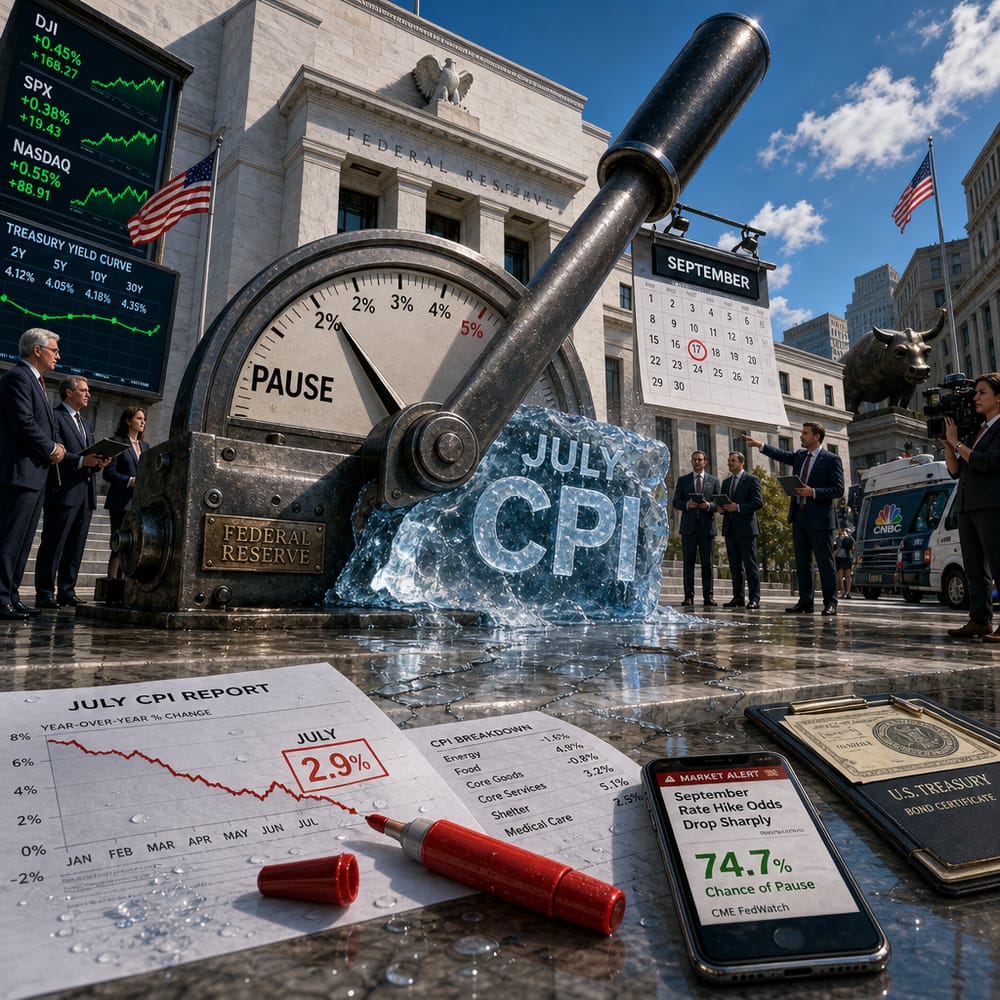
Have you ever tried to blow out those trick birthday candles that keep relighting themselves? Every time you think you've extinguished them, poof, there’s another flame. Well, recently, inflation in the U.S. has had a similar uncanny knack for reigniting, keeping the Federal Reserve on its toes. But as of July, it seems the Consumer Price Index (CPI) has finally taken a little breather, much to the relief of everyday consumers and jittery investors.
As the July numbers rolled in, the CPI—the economic bellwether that measures the average change in prices consumers pay for goods and services—slowed its frenetic dance. The increase was modest, which is a financial analyst’s way of saying you can exhale, at least until the next report. This cooling off reduces the likelihood of a Federal Reserve interest rate hike in September. That's good news if you're a borrower or an investor, bad news if you make a living predicting doom.
Let’s break down why you should care. Stable interest rates can be like a Mediterranean breeze in the world of finance—not too hot, not too cold, just right. Lower inflation can mean stable borrowing costs, which can be excellent news for businesses and homeowners looking to refinance or take out loans. It also means you might not have to sacrifice your morning latte to afford your mortgage payment.
But why does this little number called CPI hold so much sway over the Federal Reserve's decisions? Imagine the Fed like a chef trying to make a perfect soufflé. They need inflation, but just the right amount. Too little, and the economy feels stagnant—too much, and it’s in crisis mode. The CPI is a critical ingredient they monitor to decide whether to tweak interest rates, which are basically the cost of borrowing money.
So, with the July CPI behaving itself, some sectors might be clinking glasses in celebration. Tech companies, for instance, tend to thrive with stable interest rates; they often rely on borrowing to fund their shiny new innovations. Similarly, real estate might see a lift. Lower borrowing costs make buying a home or investing in property more enticing—cue the cheers from real estate agents across the land.
Financial markets, on the other hand, can be a tad more volatile. They tend to react like a caffeinated squirrel when there’s chatter of interest rate changes. Stable rates can assuage some investor anxiety, but as we’ve seen recently, external factors like geopolitical tensions and corporate earnings still make Wall Street a bit of a rollercoaster.
Now, turning to consumers—like you, me, and the couple down the street agonizing over back-to-school shopping lists. Stable prices mean we’re less likely to have a panic attack every time we approach the checkout line at Target. Consumer confidence—how optimistic we feel about our financial future—often gets a boost when inflation is in check. We’d rather spend on necessities and maybe a few splurges rather than hoard cash for the next price surge.
But hold on, isn’t there always a catch? Naturally, yes. The Fed’s current sigh of relief could be short-lived. Rising oil prices, for example, are creeping around like party-crashers, threatening to push up costs again. And let’s not forget those pesky geopolitical tensions, like the current U.S.-Iran spat, which can throw the best-laid economic plans into disarray.
So, what should you, as an everyday investor or consumer, be doing in light of all this? Keep your eyes on the broader economic picture. Focus on sectors that historically do well in low-inflation environments; it's gold star time for tech and real estate. As for your personal finances, monitor interest rates if you're considering significant financial moves, like buying a house or refinancing loans.
The July CPI news might not be a magic wand solving all economic woes, but it’s a reminder that sometimes, in the world of finance, no news is good news. So, let’s cherish this moment of relative calm and hope it sticks around longer than those trick birthday candles.
This article is for informational purposes only and is not investment advice. Always do your own research or consult a licensed financial professional before making investment decisions.
© Copyright 2024. All Rights Reserved.
© Copyright 2024. All Rights Reserved.