

CPI Sees Sharpest Monthly Drop Since 2020
Tuesday, August 04, 2026
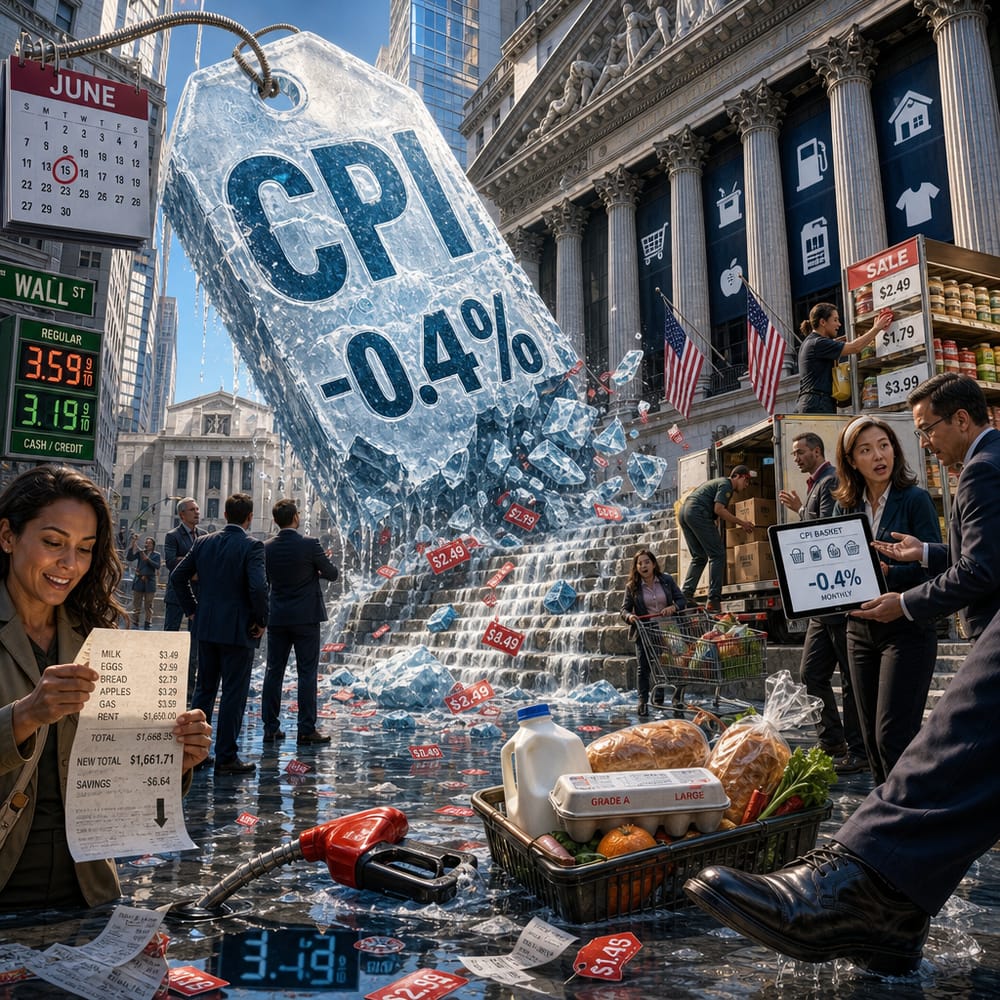
The Consumer Price Index (CPI) just pulled a Houdini, vanishing by 0.4% in June — its most magical disappearance act since April 2020. If you’re wondering what kind of financial sorcery could be behind this, grab your favorite beverage and settle in, because this isn’t your average economic update.
There’s a lot of chatter these days about inflation; namely, how it’s been stretching like your grandma's old elastic waistband pants. But hold on to your hats, because for the first time in a long while, we’re seeing a different story. This recent drop in the CPI might have Jerome Powell and his Fed crew breathing a temporary sigh of relief, but let's not throw confetti just yet. The past year has been all about wrestling the inflation beast, which has been stubbornly staying high, peaking at numbers that make your grocery bill look like a major credit card statement.
So, what on Earth caused this drop? It’s not just the economic gods smiling down upon us. No, it's a bit more terrestrial. Dive into the data, and you'll find a tale of cheaper goods. Energy prices have taken a bit of a tumble, and for once, it's not due to some miraculous technological breakthrough. The recent geopolitical rumblings have stirred the oil pot — remember that dance Trump did with Iran about "last chance" negotiations? Yeah, that one. While tensions have made oil prices as volatile as a teenager's moods, they’ve also led to significant fluctuations, and this time, a dip helped nudge the CPI down.
But hang on, there's more to it than just the black gold. Other goods and services have seen price adjustments too. You might have noticed that the cost of used cars isn't making your eyes water anymore. Yep, the auto sector is seeing some corrections now that supply chains are somewhat untangling themselves after the pandemic-induced chaos.
Now, what does this mean for our pals at the Federal Reserve? Well, here’s where things get spicy. Normally, a CPI drop could mean the Fed would ease up on the interest rate hikes — those nagging bumps that have made borrowing money feel like pulling teeth. However, with annual inflation still doing its best impression of the Energizer Bunny, the Fed's rate hike tools might not get stashed away just yet.
The core readings, which strip out the more volatile food and energy costs, are still simmering a bit too high for anyone's comfort. Imagine you’re baking cookies, and the oven temperature just won’t drop to the right level — you’ve got to keep tweaking those dials. That's the Fed right now, trying to ensure the economy doesn’t overcook.
But why should you, the savvy retail investor, care about this CPI circus? Well, a cooler CPI could mean a temporary break from aggressive rate hikes, which might spell good news for stocks. Watch those sectors that dance to the interest rate tune, like real estate and tech — they could be in for a bit of a rally if the Fed decides to ease its foot off the brake.
Still, don’t get too comfortable. The Fed knows the economy is a finicky beast, and the road to steady inflation is littered with false starts and deceptive detours. They’ll be watching the data like a hawk — one eye on the CPI, another on the labor market, and possibly a third on whatever wild card event 2026 has up its sleeve.
So, what’s the takeaway from this CPI rollercoaster? It's a signal, not a verdict. Enjoy the temporary relief, but keep a careful watch on the Fed’s next moves. We might be in for a breather, but the game is far from over. Keep your portfolio nimble and your ears perked for the next surprise — because in this economic landscape, complacency is not your friend.
This article is for informational purposes only and is not investment advice. Always do your own research or consult a licensed financial professional before making investment decisions.
© Copyright 2024. All Rights Reserved.
© Copyright 2024. All Rights Reserved.