

CPI Sees Largest Monthly Drop Since 2020
Thursday, July 30, 2026
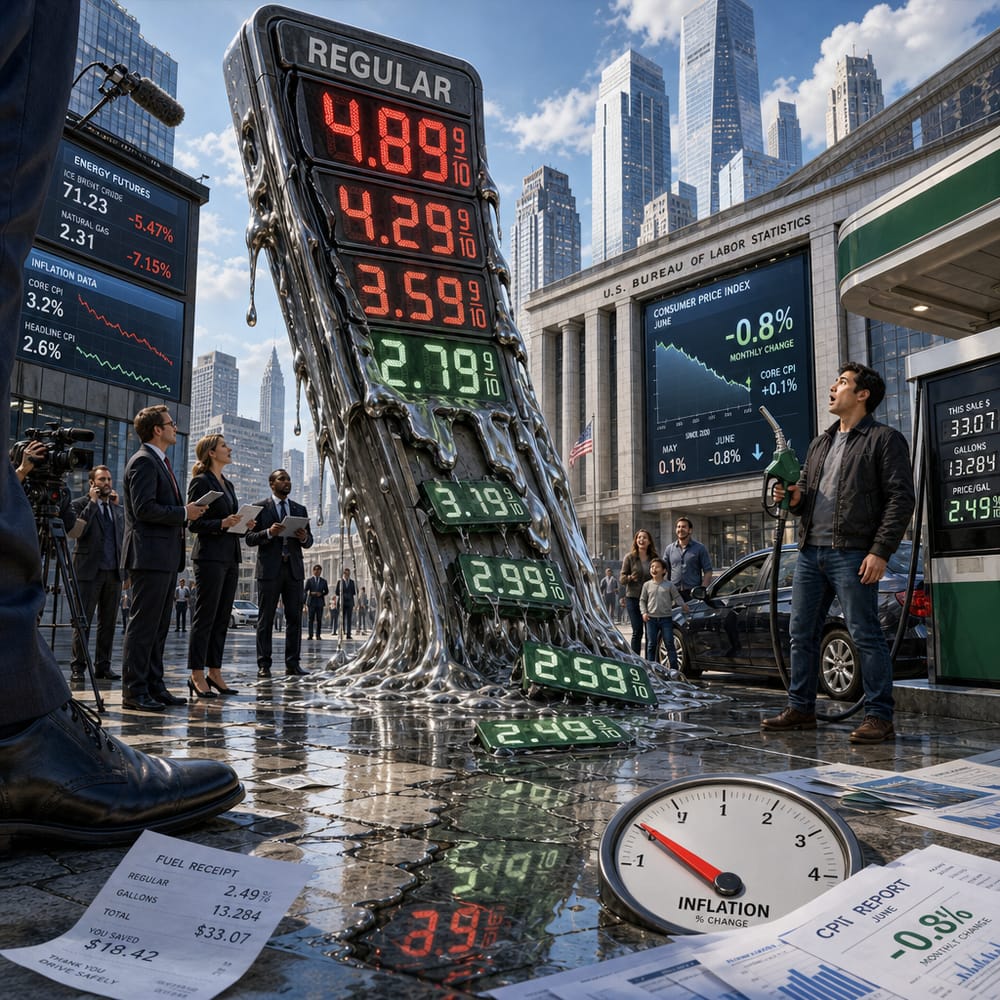
CPI SEES LARGEST MONTHLY DROP SINCE 2020
When was the last time you saw a drop like this and didn’t check to see if you tripped? The Consumer Price Index (CPI) just pulled off its biggest monthly decline since April 2020, plummeting 0.4% in June. It's not exactly a nosedive, but it's enough to make Wall Street's eyebrows arch higher than a cat in a Halloween commercial. So, what exactly is going on here, and why should we even care?
ENERGY PRICES SLIDE, CPI FOLLOWS SUIT
Picture this: energy prices decided to act like a rebellious teenager and just plummet. We're talking energy costs that have been propping up the CPI for a while now finally took a dive, dragging the CPI down with them. It's like watching the weight come off after you finally ditch that midnight snack habit. With oil prices taking a breather, it's no surprise that the CPI is coming along for the ride. But, as with all good things, the question remains: how long will it last?
But let’s not get too carried away with joy. The energy sector is historically as stable as a Jenga tower in an earthquake. The geopolitical drama, especially with Iran hurling threats and Brent crude creeping upward, could swing those prices back up faster than you can say "inflation." So, yes, it's a break, but definitely not a permanent vacation.
THE FED'S DANCE WITH INFLATION
Now, why does this CPI drop matter? Two words: Federal Reserve. The folks at the Fed are sitting in their leather chairs in a room that probably smells like mahogany, wondering if they need to hit the brakes before speeding off into 'interest rate hike' territory again. When the CPI drops, it could mean inflation isn't as sticky as that gum on your favorite sneakers, giving the Fed some breathing room.
Yet, the Fed's got a bit of a conundrum here. Their last meeting saw more dissenters than a rock concert mosh pit, as some members grumbled for rate hikes while others wanted to keep things cool. The CPI dropping might give them an excuse to stay put for now, but if inflation expectations start to rise again, you can bet they’ll be reaching for the rate adjustment lever.
TINKERING WITH EXPECTATIONS
The real intrigue lies in what this all means for inflation expectations. If people start believing that prices will keep falling, they might delay their purchases, thinking everything from toothpaste to Teslas will be cheaper tomorrow. This can spiral into reduced demand and, surprise, a slowing economy. But let's not jump off the deep end just yet.
The current CPI dip doesn’t necessarily mean inflation is packing its bags. It’s more like it's taking a nap. With fluctuating oil prices and potential supply chain hiccups lurking in the background, inflation could very well tap us on the shoulder when we least expect it.
LOOKING BEYOND THE NUMBERS
The impact of this CPI shift resonates beyond just the Fed's ivory tower. Retail investors, like you and me, might see shifts in the stock market. A drop in CPI might initially cheer up stock prices, especially for those sectors sensitive to consumer spending. But watch out—if inflation expectations change, it could lead companies to adjust their pricing strategies, impacting earnings.
If you're wondering about your investment in consumer staples or tech giants like Microsoft riding the AI wave, keep an eye on how inflation trends develop. When consumer prices dip, it might mean more wallet room for discretionary spending. But again, with the Fed in a "hawkish hold" mode, markets might remain jittery until a clearer path emerges.
The latest CPI numbers are sure to spice up dinner table conversations, but remember, in the financial world, what's up today might be down tomorrow. Keep your eyes peeled, your ears open, and your investment strategies as flexible as a yoga instructor in a pretzel pose. The Fed’s next move, energy prices, and inflation expectations will all play their parts in this ongoing economic drama. Let's just hope this act doesn’t end with a dramatic plot twist.
This article is for informational purposes only and is not investment advice. Always do your own research or consult a licensed financial professional before making investment decisions.
© Copyright 2024. All Rights Reserved.
© Copyright 2024. All Rights Reserved.