

CPI & PPI: Price Pressures Steady, PCE on Deck
Sunday, August 23, 2026
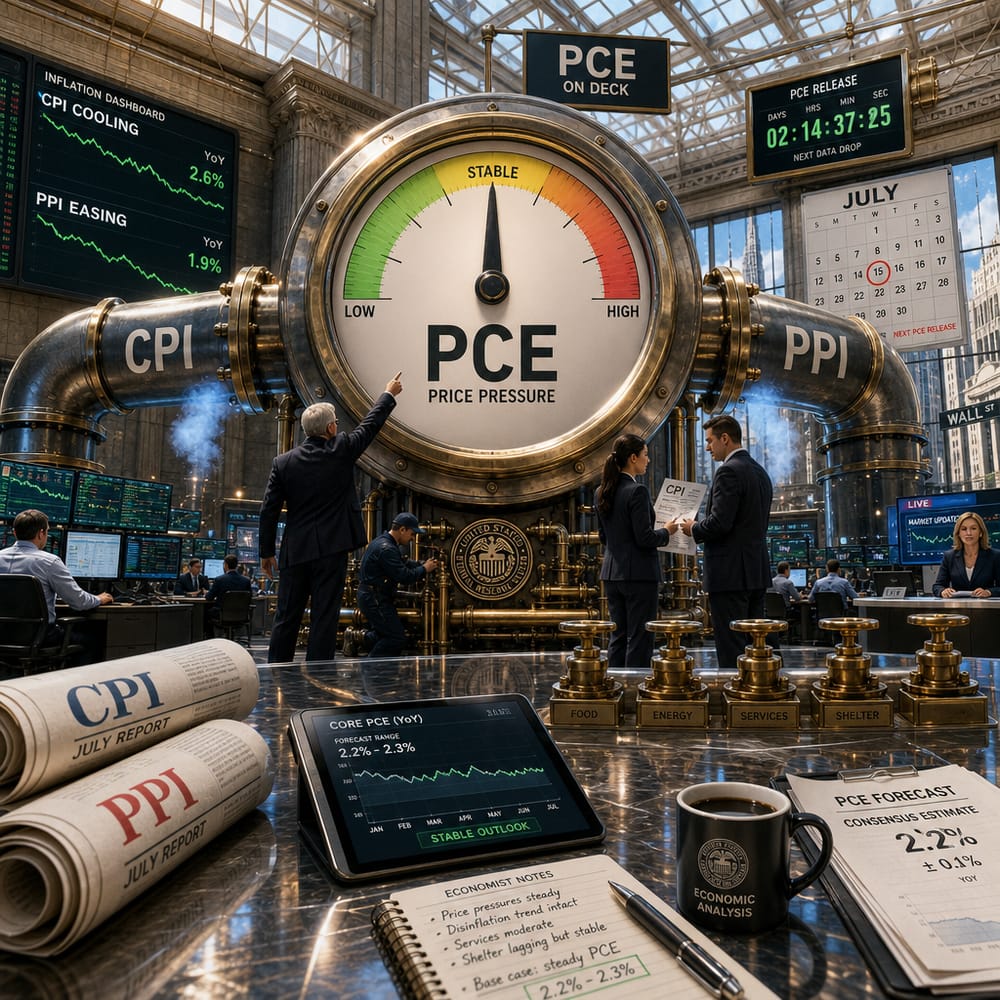
BRACE YOURSELF FOR THE FED’S NEXT MOVE
If you’ve ever tried catching a greased pig, you’ll understand the Federal Reserve’s battle with inflation. It's slippery, unpredictable, and a little chaotic. As we gear up for the release of the Personal Consumption Expenditures (PCE) inflation data, grab your popcorn because this could reveal if the Fed's got a grip or if inflation is still running circles around them.
Economists are playing the guessing game, and while some seem to be betting the farm on stable inflation numbers, this isn’t their first rodeo. The July Consumer Price Index (CPI) told a cozy bedtime story of cooling inflation, with the Producer Price Index (PPI) joining the narrative. But the PCE? That’s the plot twist we’re waiting for.
Economists have projected a fairly chill reading for the upcoming PCE data. The optimism stems from the CPI and PPI numbers, which suggest that inflation’s heatwave may have finally reached its peak. But let’s not celebrate just yet.
THE ENERGY PRICE WILD CARD
We need to talk about energy prices. They’re like the unpredictable cousin who could either bring a delightful surprise to the family dinner or spill wine all over the carpet. Recently, energy prices have been doing their best rollercoaster impression—a mix of unpredictable highs and unexpected lows. A steady increase in summer demand, coupled with geopolitical tensions (hello, Iran), could ignite a rise in energy costs, throwing a wrench in the expectation for muted inflation.
A spike in energy prices could cause the PCE readings to edge higher than anticipated, adding pressure on consumer wallets and potentially prodding the Fed to reconsider their next steps.
THE CONSUMER SPENDING CONUNDRUM
Now, let’s bring this down to street level. If the PCE reveals a higher-than-expected inflation, brace yourself for some belt-tightening. Rising prices across the board could make consumers hesitate on spending that extra dollar, especially when gas prices are creeping above $4 a gallon again. We’re talking fewer impulse buys, fewer splurges, and a whole lot more people clutching their wallets tighter.
And for the Fed? A high PCE reading can push them into a hawkish corner, meaning they might be more inclined to keep interest rates higher for longer. Not exactly the news you want if you’re hoping for cheaper loans or an easier time buying a new home.
THE FED’S CRYSTAL BALL
The upcoming PCE data is not just another number thrown into a spreadsheet. It’s a key piece of the puzzle for understanding what Jerome Powell and his Federal Reserve crew might do next. Will they stay the course, holding rates steady, or are we buckling up for another rate hike?
We all know that the Fed is allergic to runaway inflation like cats are to cucumbers. The PCE index is their preferred gauge of inflation, providing a comprehensive view of consumer spending habits. And with the data on deck, everyone from Wall Street analysts to Main Street workers is eager to see if inflation is truly cooling or if it’s just been playing possum.
SO, WHAT’S NEXT?
If you’re a retail investor, it’s time to keep a keen eye on the economic news ticker. The PCE reading will drop clues about the Fed’s future maneuvers, and by extension, could ripple through the stock market, bond yields, and even your 401(k).
Whether inflation has truly been tamed or is just catching its breath, one thing’s for sure: the Fed will be watching closely, and so should you. Keep your ears peeled for any signs of the Fed signaling changes in their monetary policy. Because if we’ve learned anything, it’s that in this economic rodeo, even the slightest hint can send markets bucking like a wild bronco.
In the meantime, tighten those financial reins, stay informed, and remember—like inflation, the Fed can be unpredictable, and knowing their next move is half the battle.
This article is for informational purposes only and is not investment advice. Always do your own research or consult a licensed financial professional before making investment decisions.
© Copyright 2024. All Rights Reserved.
© Copyright 2024. All Rights Reserved.