

CPI Just Hit 4.2% — Why Inflation Won't Quit
Friday, June 19, 2026
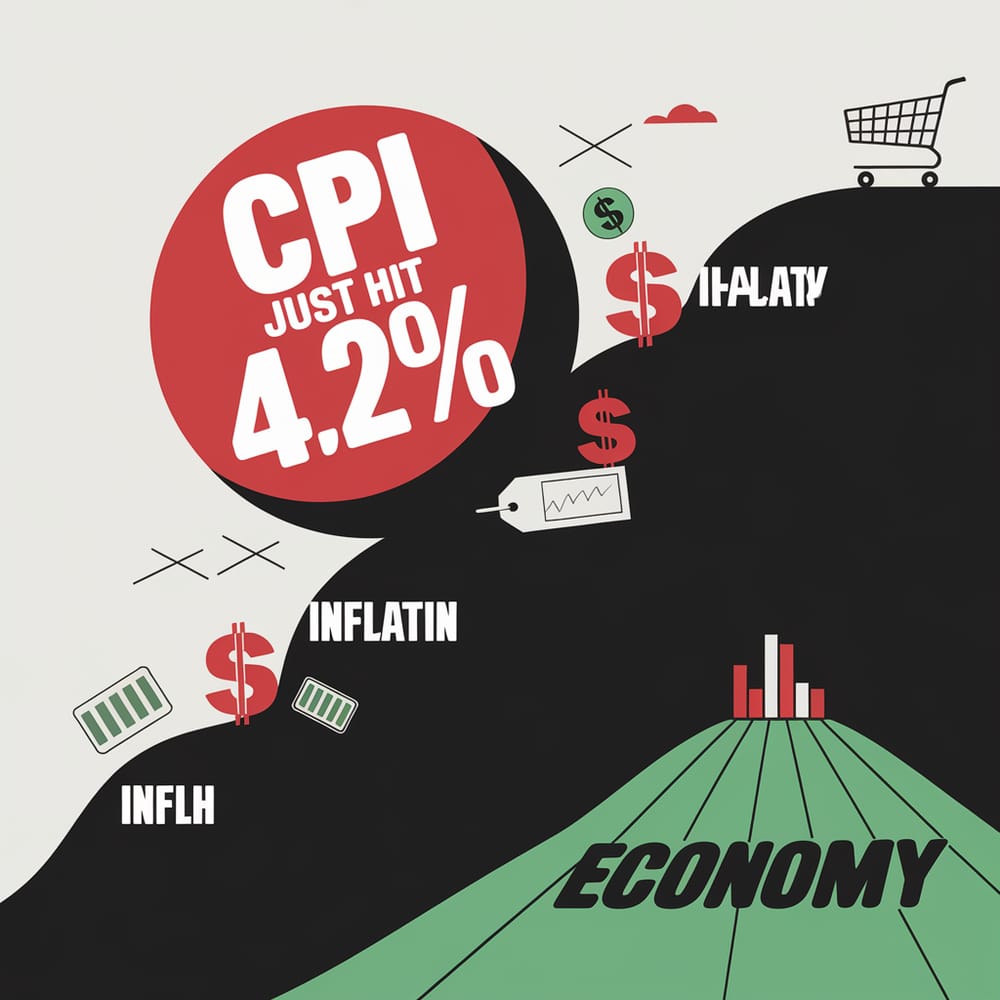
Inflation was supposed to be yesterday's problem. Instead, the latest Consumer Price Index came in hot at 4.2% — well above the Federal Reserve's 2% target and stubborn enough to reshape the entire market outlook. Here's what's keeping prices high and what it means for your wallet.
What the 4.2% Number Really Says
The CPI tracks what Americans actually pay for goods and services, from groceries to rent to gas. A 4.2% reading means prices are still climbing more than twice as fast as the Fed wants. After two years of progress, inflation has stopped cooling — and in some categories, it's heating back up.
Oil Is Pouring Fuel on the Fire
A big piece of the puzzle is energy. The recent conflict around the Strait of Hormuz sent oil prices spiking, and energy costs bleed into everything — shipping, manufacturing, food, travel. When crude jumps, it shows up in the inflation data a few weeks later. That's exactly what we're seeing now.
Why the Fed Is Stuck
The Federal Reserve's job is to bring inflation down, usually by keeping interest rates high. But with prices reaccelerating, new Chair Kevin Warsh has signaled that rates will stay higher for longer — and the next move could even be a hike. A hot CPI ties the Fed's hands.
What It Means for Your Money
Sticky inflation has real consequences. Borrowing stays expensive, so mortgages and loans don't get cheaper. Cash savings finally earn a decent yield above 3.5%. And your everyday costs keep creeping up, which means a dollar today buys less tomorrow. Owning assets that tend to keep pace with inflation becomes more important.
The Bottom Line
A 4.2% CPI is a reminder that the inflation fight isn't over. Until prices cool convincingly, expect the Fed to stay cautious and rates to stay elevated. Plan your budget and your portfolio for a world where inflation lingers a little longer than anyone hoped.
This article is for informational purposes only and is not investment advice. Markets are volatile right now — do your own research or talk to a licensed professional before making decisions. Figures as of June 19, 2026.
© Copyright 2024. All Rights Reserved.
© Copyright 2024. All Rights Reserved.