

CPI Inflation Slows in July, but Fed’s Preferred PCE Data Still Awaits
Tuesday, August 18, 2026
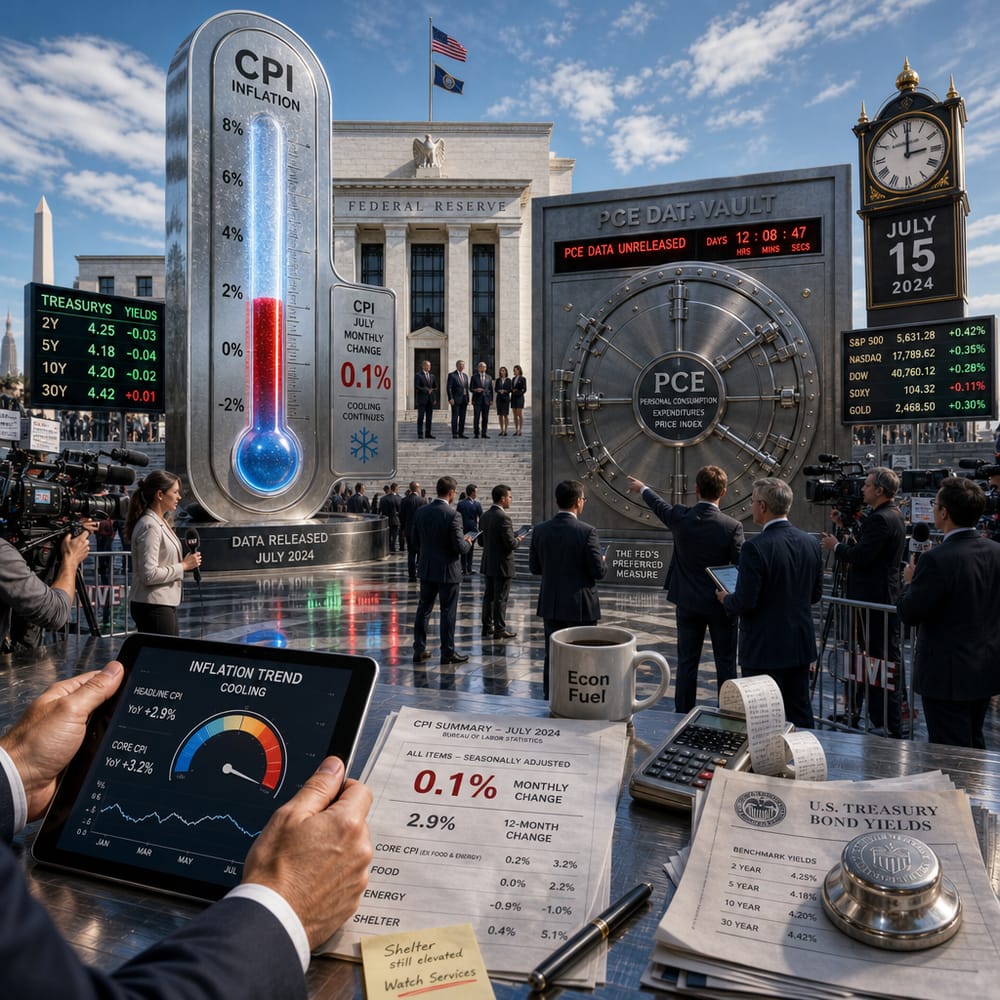
THE INFLATION BATTLE: CPI'S BREATHER, BUT THE PCE WAR RAGES ON
Gather 'round, folks, because the wild world of inflation just pulled in for a pitstop, and it’s brought a whole bag of intrigue. July's Consumer Price Index (CPI) has decided to take it easy, ticking up a mere 0.1% from the previous month and sliding down to a 3.4% increase over the year. But before you start popping champagne and telling your wallet the worst is over, remember: the Federal Reserve's favorite inflation gauge, the Personal Consumption Expenditures (PCE) index, is about to strut on stage, and it might not bring the same good vibes.
THE CPI VS. PCE SHOWDOWN
First, let’s break down this inflation cage fight. CPI and PCE might sound like financial jargon that makes your eyes glaze over, but stick with me. CPI is like that nosy neighbor who tracks the price of a basket of goods and services that a typical urban consumer buys. It's straightforward, and it gives us a snapshot of what’s happening in our shopping carts.
PCE, on the other hand, is the Fed's golden child. It peeks into the broader picture, including not just what consumers buy, but also what businesses and the government provide. Plus, it accounts for changes in consumer behavior—like switching from champagne to sparkling water when the going gets tough. This makes it a bit more flexible and, in the Fed's eyes, a more accurate reflection of underlying inflation trends.
But why does it matter which inflation dance step we follow? Because the Fed’s interest rate decisions hang in the balance. If PCE shows inflation simmering hotter than CPI suggests, we could be in for more interest rate hikes than we’d like.
THE EXPECTATION GAME
Analysts are tapping their crystal balls, fully aware the PCE could throw a curveball. While the CPI data brought a sigh of relief, the PCE is a wildcard that the market isn’t entirely confident to bet against. The consensus is mixed—expectations are leaning towards a mild increase, but there’s a cautious undercurrent given recent volatility in other economic indicators.
Investors are closely watching how this plays into the Fed’s September pow-wow. The big question: will they or won't they hike rates? If PCE echoes CPI's chilled-out story, the Fed might just hit the pause button and keep rates steady. But if it suggests inflation is still lurking in the shadows, well, brace yourselves for possibly more hikes—a phrase that sends shivers down every borrower’s spine.
FED’S SEPTEMBER CONUNDRUM
So, where does this leave the Federal Reserve? They're like poker players, staring at their cards, gauging whether to fold, pass, or go all in with another rate increase. The current market mood, however, is reminiscent of a dovish Fed—one that would favor holding rates, especially with the economic ripples from rising global bond yields and oil prices.
But let's face it, the Fed isn’t shy about throwing its weight when needed. If inflation doesn’t play nice, they might just flex their monetary muscles. Remember, they’ve been clear: their 2% inflation target isn't just a suggestion—it’s a mission.
WHAT THIS ALL MEANS FOR YOU
For the average Joe or Jane, the CPI and PCE tussle is more than economic drama; it's personal. Mortgage rates, credit card interest, and even the returns on your savings are all tied to these inflation metrics. If rates go up, borrowing gets pricier, but savings could see a boost. Conversely, if the Fed cools its jets, borrowing stays manageable, but your savings might not earn you a vacation to Disneyland anytime soon.
In the grand scheme, keeping an eye on these inflation indicators is your best bet to navigate the financial waters. It’s a balancing act with the Fed as the tightrope walker. And as they tiptoe across the high wire of monetary policy, every slip or steady step can send ripples through your financial reality.
Stay tuned, folks. The PCE report’s outcome will be the clarion call for the Fed’s next move—and for your financial plans. The inflation battle isn’t over, and the next round might just be the real showdown.
This article is for informational purposes only and is not investment advice. Always do your own research or consult a licensed financial professional before making investment decisions.
© Copyright 2024. All Rights Reserved.
© Copyright 2024. All Rights Reserved.