

CPI Inflation Rises Slightly in July
Monday, August 24, 2026
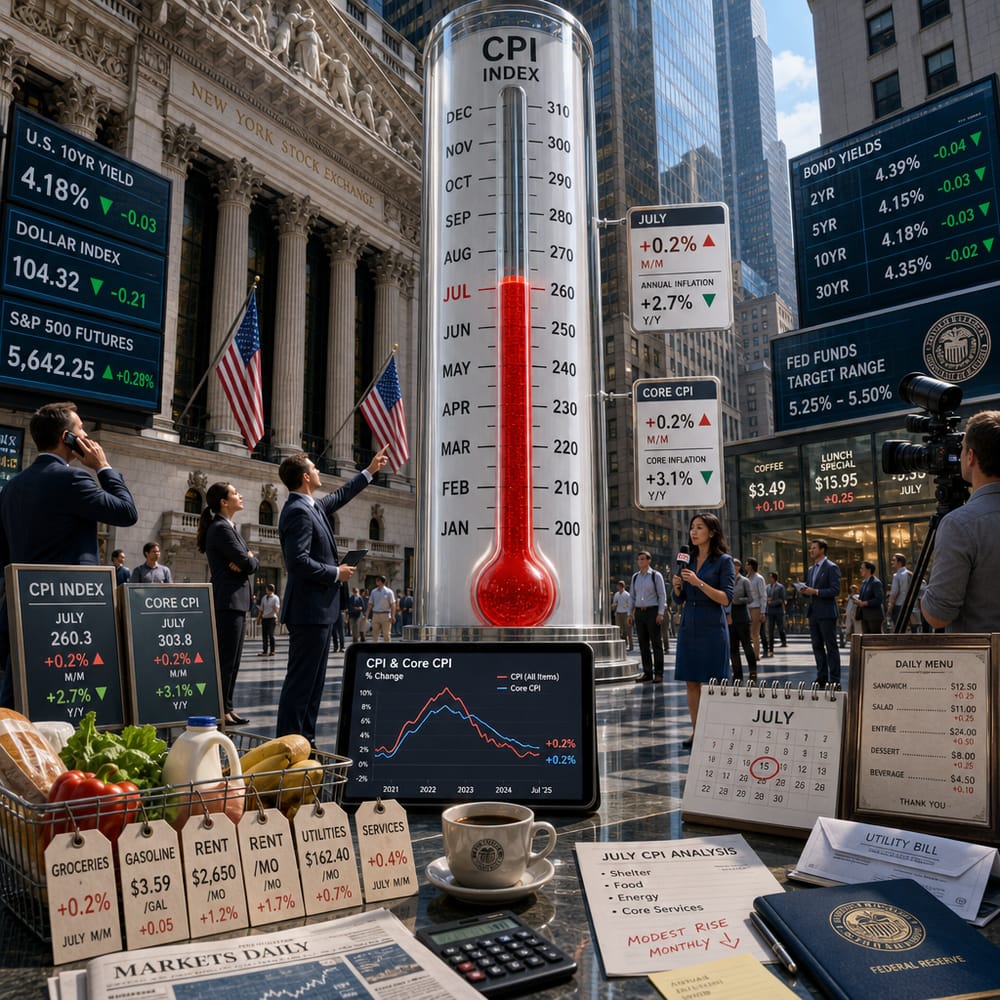
THE CPI'S SLIGHT BUMP IN JULY: SHOULD YOU BE WORRIED?
Hold on to your wallets, folks! The Consumer Price Index (CPI) has nudged upwards in July, painting a slightly pricier picture of everyday life — but don't sprint to your panic stations just yet. Annual inflation figures actually took a small step back, and that, my friend, is what really matters. This latest economic ballet could set the stage for the next dance in the inflation saga: the upcoming release of the Personal Consumption Expenditures (PCE), another metric that economists, policy-makers, and yes, even your nosy uncle Ron, love to chat about over Thanksgiving dinner.
But why should you, the everyday retail investor, care about these swirling numbers? Because they offer a peek into the future inflation trends that could ripple through everything from your savings account to that budding stock portfolio you’ve been nurturing.
WHAT’S FUELING THE CPI ROLLER COASTER?
The CPI is like a massive shopping list, ranging from gas at the pumps to the cost of a new pair of shoes. This July, it seems the 'fuel and utility' aisles were particularly active. Energy costs made a comeback, goosed by rising gasoline prices that had been in a lull but found their spark again. Meanwhile, the housing market continued its relentless crawl upwards, pushing shelter costs higher into the stratosphere.
Food prices were the steady rock in this storm, showing little change. But don't break out the party hats yet — it's the Core CPI, the version of the index that excludes those notoriously jumpy food and energy prices, that keeps an economist's hair from turning gray too soon. This measure inched up slightly as well, largely driven by stubborn rises in housing costs.
COMPARING THE GHOST OF CPI PAST
Now, you savvy numbers folks might be asking: "How does this compare to previous months?" Good question! June saw a similar trend, with energy costs rising but being offset by other, more stable elements like groceries and services. The slight increase in July’s CPI figure, although not dramatically different, suggests a continuing but moderate pace of inflation.
Despite the modest rise in July, the annual inflation rate has lowered a smidge. This brings a sigh of relief and a sprinkle of hope that maybe, just maybe, the Federal Reserve's interest rate gymnastics are starting to smooth out that volatile inflation curve.
WHAT’S NEXT: PCE AND YOU
This CPI report is a teaser for the grand reveal: the PCE figures due soon. Why is PCE the star of this economic show? Because unlike CPI, PCE covers a broader range of expenditures and provides insights into consumer behavior, giving Uncle Sam a clearer picture of inflationary pressures.
This PCE data could help answer the trillion-dollar question: Will the Fed continue its high-wire act of raising interest rates? Or will it calm the markets, allowing investors to sip their morning coffee without a side order of anxiety?
WHAT DOES THIS MEAN FOR YOUR PORTFOLIO?
Keep your eyes on sectors sensitive to inflation changes. Stocks in areas like tech might wobble, as they’re skittish about potential interest rate hikes. However, energy stocks could get a boost if oil prices keep climbing. For the bond enthusiasts, rising interest rates could mean an impact on yields, shifting investment strategies.
Ultimately, while this slight bump in CPI might seem like a storm in a teacup, it's the longer trend that savvy investors should watch. Stay alert, stay informed, and remember: navigating the market is less about dodging every drop of rain and more about having the right umbrella handy when the storm clouds gather.
So, retail investor, take this CPI update as a gentle nudge. Dust off that portfolio strategy, maybe chat with your financial advisor, and be ready to adapt — because in the world of markets, the only constant is change.
This article is for informational purposes only and is not investment advice. Always do your own research or consult a licensed financial professional before making investment decisions.
© Copyright 2024. All Rights Reserved.
© Copyright 2024. All Rights Reserved.