

CPI Inflation Moderates; Core Sticky
Friday, August 21, 2026
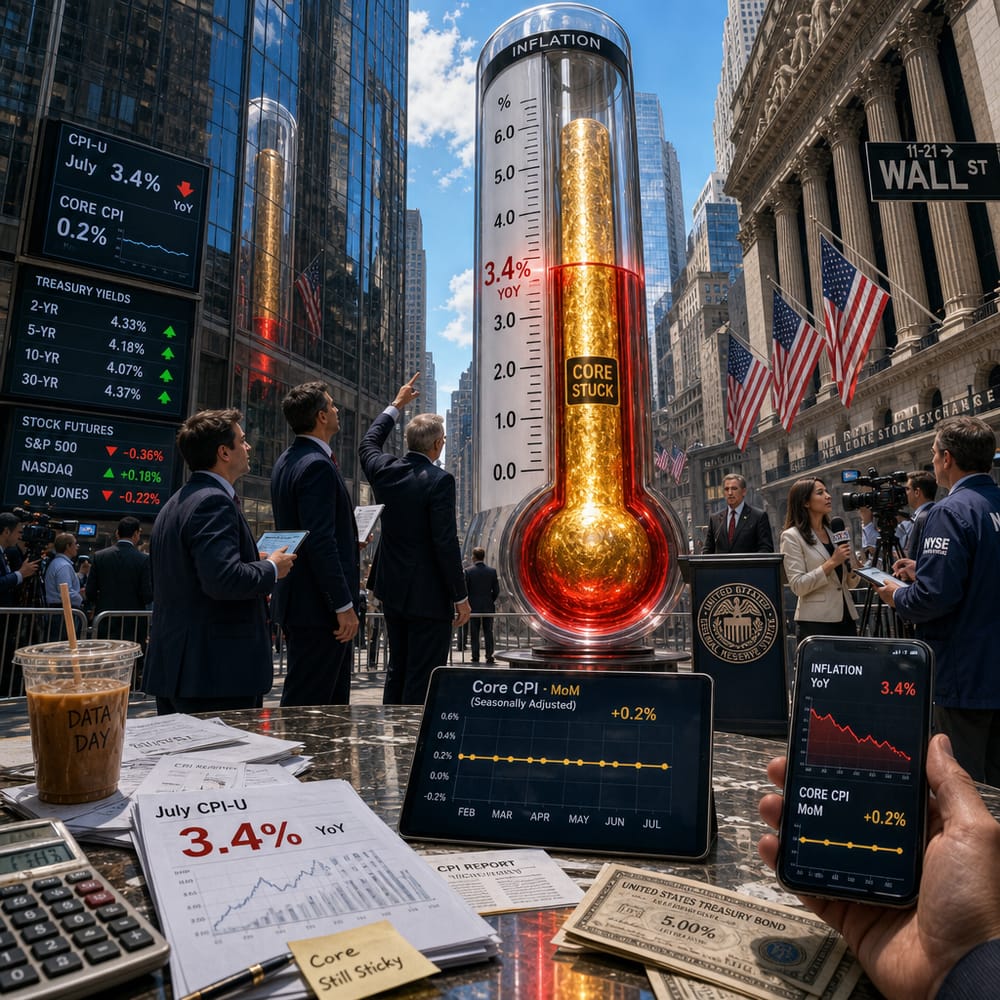
FED STARS IN THE LATEST EPISODE OF "AS THE INFLATION TURNS"
Spoiler alert: July’s inflation numbers just dropped, and it’s the kind of drama that might make the Federal Reserve reach for their antacid tablets. The Consumer Price Index (CPI-U) climbed 3.4% over the past year, a notch below last month, suggesting that maybe, just maybe, inflation might be mellowing out. But wait! The core CPI, which strips out the rollercoaster of food and energy prices, stayed as flat as a pancake month-over-month. Translation: the Fed’s work is far from done.
WHAT'S THE DEAL WITH CORE INFLATION?
Core inflation can be like that one scene-stealer in a movie who keeps the plot thickening. While overall inflation seems to be easing its foot off the gas pedal, core inflation is sticking around like an uninvited guest. This stickiness is a big headache for the Fed, which is on a mission to keep prices as stable as your grandma's Jell-O at Thanksgiving.
The Fed aims to keep inflation around 2%, but the unchanging core CPI suggests persistent pressures on prices in crucial sectors like shelter and medical services. You know, things you can't really do without. This could mean the Fed might have to keep interest rates high to cool things down, even if it risks leaving the economy a bit frosty.
CONSUMER POWER VS. STICKY PRICES
What does this all mean for you, the everyday consumer? Well, if core inflation doesn’t budge, your purchasing power might have to put on some sneakers just to keep up. When the cost of that roof over your head or a trip to the doctor doesn’t budge, every dollar in your wallet has to stretch further. High-interest rates could make financing bigger purchases, like homes or cars, a pricier affair, too.
It’s like a juggling act where the balls are your paycheck, your grocery bill, and your rent, and core inflation is that pesky wind that keeps trying to knock things off balance.
WHAT'S THE FED TO DO?
Now, here’s where the plot thickens. If inflation refuses to cool at a pace that makes the Fed happy, they might continue to hike interest rates. This is their go-to move to make borrowing more expensive, hoping to tame consumer spending and, by extension, price hikes. However, this risky maneuver could slow down economic growth and potentially rattle the stock market, which isn’t exactly a fan of anything resembling a rate hike hangover.
But let’s not sell stocks short here. Sure, the market’s been a bit of a drama queen lately, with investors jittery over rising interest rates and inflation fears. Yet, sectors like healthcare and materials have been throwing a lifeline, with some solid gains helping balance the scales.
MARKET REACTIONS AND THE ROAD AHEAD
In the recent market tango, the Dow danced upwards by over 500 points, buoyed by strong performances from health sector juggernauts like Merck and Johnson & Johnson. All this while Bitcoin was having a party of its own, with crypto-related stocks like Robinhood and Coinbase rallying after a 22% Bitcoin boost.
However, the party might not last if the Fed keeps its foot firmly on the rate hike pedal. Higher rates tend to make other investments like bonds more attractive compared to stocks, potentially leading to a sell-off in riskier assets.
Yet, investors are known for their optimism. They’ll be scouring the upcoming data releases and watching the Fed’s every move, poised to react faster than a day trader on caffeine.
THE BIG PICTURE
So, will the Fed’s strategy work? Only time will tell if this is the start of a downward trend in inflation or just a plateau before the next climb. If core inflation remains sticky, the Fed might find itself in a holding pattern with its policy till the numbers fall in line with their target.
For now, keep an eye on your grocery receipts and your investment portfolio. As the inflation saga unfolds, it’s crucial to stay informed and agile, because in the world of finance, the only constant is change — and sometimes, a bit of drama.
This article is for informational purposes only and is not investment advice. Always do your own research or consult a licensed financial professional before making investment decisions.
© Copyright 2024. All Rights Reserved.
© Copyright 2024. All Rights Reserved.