

CPI Holds Steady; Treasury Market Reacts Moderately
Sunday, August 16, 2026
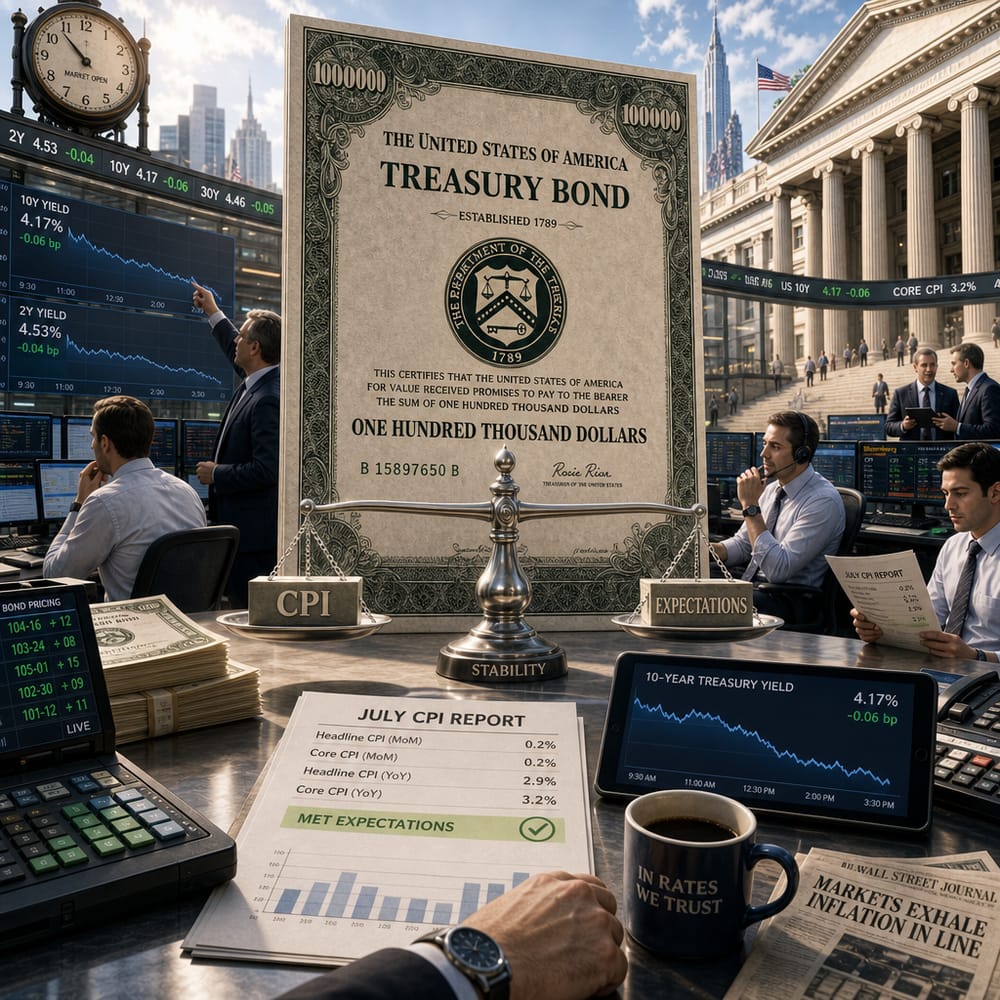
CPI HOLDS STEADY; TREASURY MARKET REACTS MODERATELY
Stop the presses, folks! The July Consumer Price Index (CPI) just quietly walked into the room meeting expectations without breaking a sweat. It's like that uninviting guest who shows up, doesn't cause a scene, and leaves everyone wondering what just happened. Well, here's what happened: inflation isn't throwing any surprise parties this month, and the bond markets are reacting more like they're at a yoga retreat than a rock concert.
STABLE CPI, WHAT'S THE DEAL?
Let’s break it down for those whose eyes glaze over at the mention of economic indicators. The CPI is a crucial barometer for inflation—it measures the average change over time in the prices paid by urban consumers for a market basket of consumer goods and services. Basically, it’s the report card for how pricey life is getting month-to-month.
A stable CPI suggests that inflation is holding steady. It’s not rocketing into the stratosphere, gobbling up your paycheck faster than you can say "I need a raise," nor is it dropping like a rock which could spell economic gloom. It's just waltzing along, keeping pace with economists’ expectations. And when the CPI is on its best behavior, the Federal Reserve (a.k.a. the Fed) can sleep a bit easier knowing their interest rate strategies don't need to be as frantic as a cat on a hot tin roof.
BOND MARKETS DOING DOWNWARD DOG
So, how are the bond markets reacting to this? Imagine them stretching into a downward dog pose—nothing drastic, just a modest drop in Treasury yields. When yields fall, it usually means investors are comfortable with the current economic scenarios, opting to hold onto bonds rather than leap into more volatile investments. It's like they're taking a deep breath and finding their inner zen, reflecting a calm acceptance that inflation won't be gate-crashing the economy anytime soon.
And why would they react this way? Simply put, when inflation is stable, the Fed is less likely to jack up interest rates, which usually makes bonds less attractive because of potential higher returns elsewhere. With the CPI behaving, the bond market takes it as a cue to relax their grip on higher yields.
WHAT DOES THIS MEAN FOR FUTURE FED ACTIONS?
Now, let’s peek into the crystal ball to see what this all means for future Fed rate decisions. A stable CPI gives the Fed a little breathing room. They're less likely to go on an interest-hike spree which they typically use to curb runaway inflation. Instead, they can continue with their gradual approach, keeping rates palatable for both borrowers and investors.
Essentially, their current strategy of tinkering with rates at a measured pace seems to be the plan—like that one guy who insists on brewing his coffee with a Chemex because each drop matters. If the CPI keeps its cool, expect the Fed to keep sipping that carefully brewed, moderately caffeinated monetary policy.
LONG STORY SHORT
In the grand scheme of things, this stable CPI is a comfort to those worried about rampant inflation eating away purchasing power. Yet, it's also a sigh of relief for those fearing a deflationary tailspin that could shrink economic growth. So while it might not be headline-grabbing, a steady CPI is like a trusty pair of jeans: you might not notice them every day, but they sure provide a solid foundation.
In conclusion, the CPI staying steady is like the universe saying, “Chill, I got this,” to the bond markets and the Fed. It's a reminder that sometimes, no news is the best news, even if it doesn’t make for the most exhilarating coffee shop chatter. And for you, the everyday retail investor, it signals a stable playing field where you can focus on the big picture, keeping your portfolio balanced without having to panic about the next economic tremor. Now, that’s something to scroll over to your favorite investment app and smile about.
This article is for informational purposes only and is not investment advice. Always do your own research or consult a licensed financial professional before making investment decisions.
© Copyright 2024. All Rights Reserved.
© Copyright 2024. All Rights Reserved.