

CPI Data: Subdued Monthly Rise but Still Elevated Annual Inflation
Sunday, August 30, 2026
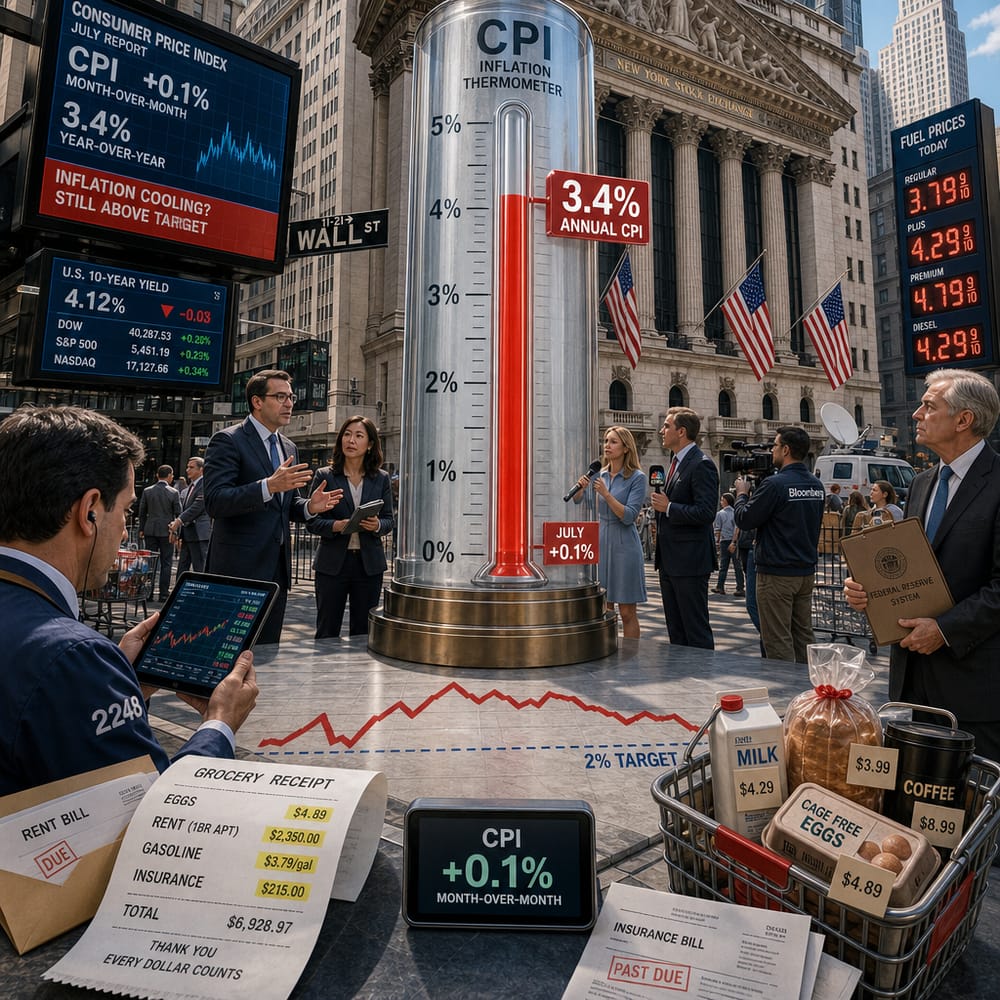
CAN THE CPI REALLY RING THE ALARM BELLS FOR THE FED?
Hold onto your wallets, folks—CPI is in with a not-so-splashy debut, showing a modest monthly increase of just 0.1% for July. But before you start planning your shopping spree, note that the annual inflation rate clocked in at a not-so-cheap 3.4%, only a smidge down from June. So, what gives? Are these tiny figures a sign of peace or just the calm before a financial storm? Let’s dig into the underbelly of this data to see what it really means for you and the folks at the Federal Reserve.
THE CONSUMER CONUNDRUM
First, let’s talk about consumer behavior—because in an economy like this, you are the star of the show. Now, with inflation staying stubbornly high, you're probably asking yourself, “Is my paycheck really stretching far enough, or am I just stretching my imagination?” If you're like most people, you’re feeling the pinch of rising prices on essentials like groceries, gas, and rent. Even with this soft monthly CPI increase, the annual rate is still high enough to make any budget-conscious shopper cringe.
And it’s not just the big-ticket items that are causing headaches. The subtle, almost sneaky rise in everyday expenses can lead to a psychological shift. You may start cutting back a little here and there—opting for the store brand frozen pizza instead of your favorite takeout, or postponing that weekend getaway—tiny sacrifices adding up over time. And as consumers pull back, the ripple effect can be felt far and wide across various industries, from retail to travel to dining.
THE FED'S DILEMMA
Now, let’s spin the wheel over to the Federal Reserve. The Fed is in a tight spot, and no, it’s not just the G20 drama or trade skirmishes causing the headache. Inflation, as Fed Chairman Kevin Warsh ominously described it, is “concerning.” But he’s keeping mum on when or if interest rates will hike. The lack of transparency hints at a strategic shift—a poker game of sorts. Less tell, more show.
However, the numbers don’t lie, even if they mumble. If inflation remains sticky, the Fed might have no choice but to tighten the screws with more rate hikes. Yes, you heard it here—brace yourself for potentially higher borrowing costs. Those of you eyeing a new mortgage or car loan might want to lock in those rates sooner rather than later.
WHAT'S IN THE CARDS?
So, what does all this means for you, the savvy investor or just the everyday person trying to navigate this economic maze? It means keeping a keen eye on how this CPI data influences Fed decisions in the coming months. The central bank’s moves could shake up the stock market, bond yields, and even the value of your dollar.
Expect some market volatility as traders and investors try to decode the Fed’s next steps. Tech giants like Nvidia and consumer-oriented companies like Amazon might see shifts as spending power fluctuates. Sectors sensitive to interest rates, like real estate and utilities, are particularly worth watching.
In the end, while July’s CPI numbers might seem like a whisper rather than a shout, they tell a story of an economy tiptoeing on a tightrope. Consumers are watching their spending, the Fed is playing its cards close to the vest, and everyone is left wondering whether inflation will finally take a back seat or continue to ride shotgun.
So, hold onto your financial hats and stay tuned. The economic ride is far from over, and the next chapter—whatever it may be—will certainly be one to watch.
This article is for informational purposes only and is not investment advice. Always do your own research or consult a licensed financial professional before making investment decisions.
© Copyright 2024. All Rights Reserved.
© Copyright 2024. All Rights Reserved.