

CPI Cooling Continues; Implications for September Fed Meeting
Monday, August 17, 2026
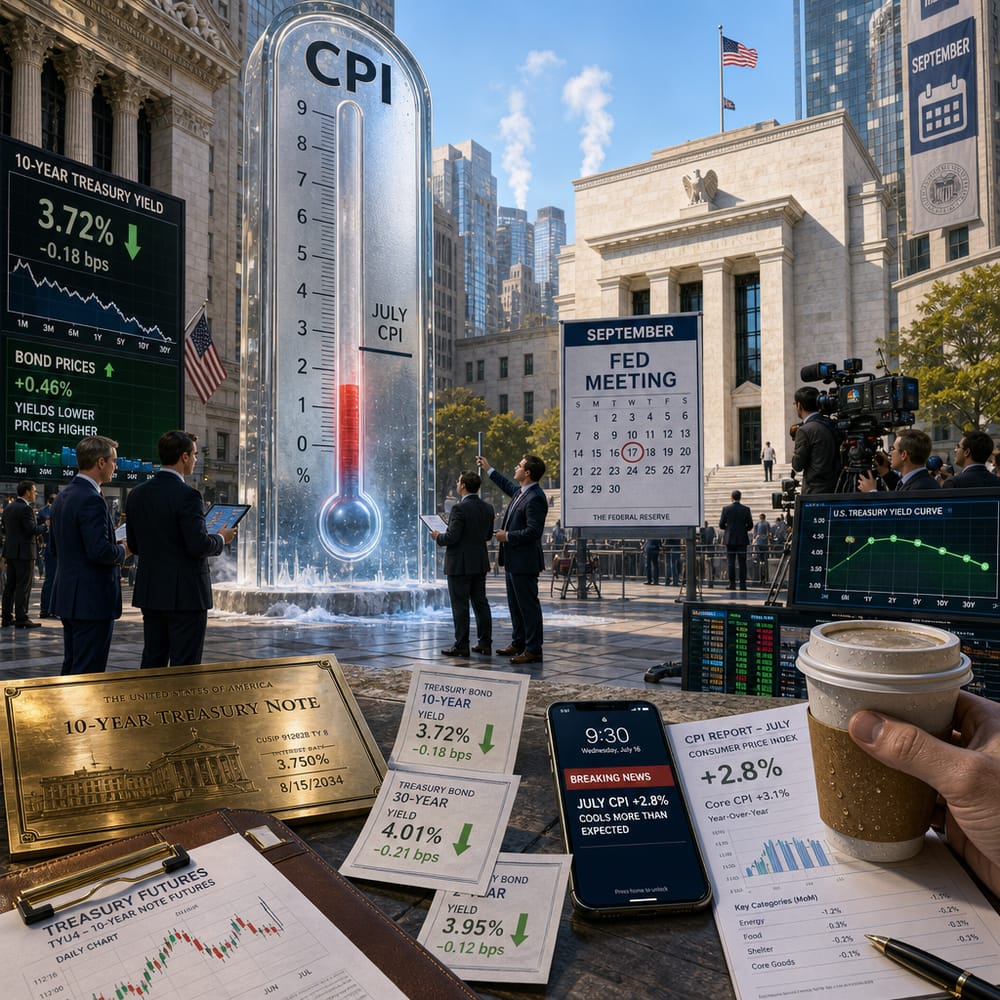
WHEN CPI COOLS, WILL THE FED KEEP THE AIR CONDITIONING ON?
Imagine you're at a swanky outdoor party, the summer heat is blazing, and the only salvation is an ice-cold drink. Now picture the Federal Reserve as the stoic bartender deciding when to serve that refreshment. This month’s Consumer Price Index (CPI) data is the ice cube in the drink: cooling, but not the entire solution. As July's inflation figures creep in, the party's chatter revolves around one question: how will this affect the Fed's September plans?
The latest CPI report is like that moment when the DJ finally plays your favorite song—the beat of inflation has cooled just a bit, aligning with expectations. In July, the pace of inflation slowed, introducing a breath of fresh air into an economy that's been sweltering under price pressures. But don't start dancing just yet. Core inflation—which excludes the volatile food and energy prices—is stubbornly shimmying above the Fed's 2% target, raising eyebrows and skeptical smirks among market watchers.
The key intrigue here is how this little dip in inflation numbers is swaying expectations for the Fed’s next move. With the possibility of the Fed easing up on interest rate hikes in September, markets are now playing a guessing game. Like an episode of a suspense thriller, investors hang on the edge of their seats, eagerly watching every economic report, every Fed statement, and—let's be honest—even the Fed Chair's facial expressions during speeches.
The bond market, often regarded as the refined elder in the financial family, is also feeling the impact of this inflation chill. When inflation cools, bond yields tend to follow suit. After all, if you’re lending money (which is what buying a bond essentially is), you want to ensure your returns beat inflation. The 10-Year Treasury yield, a bellwether for everything from mortgage rates to car loans, has been reacting like a thermometer on a brisk autumn morning. Lower yields signal that the market believes inflation might just be reined in, giving the Fed some wiggle room to pause its rate hike rave.
So, what’s in it for you, the everyday investor? Well, with potentially lower rates, borrowing costs could ease up. That means your dream of buying a home or refinancing your mortgage might not burn as much of a hole in your pocket. But here’s the twist: it's a double-edged sword. Lower rates can also mean less income from your savings and fixed-income investments, like bonds, so the dance is delicate.
The markets are tuned into this CPI report like it’s the last episode of a financial Game of Thrones. Stocks, particularly those reliant on borrowing (looking at you, tech companies), could see a boost if borrowing costs decrease. However, let’s not get too carried away by the romance of it all. While a slowdown in inflation might reduce the pressure on the Fed to tighten its grip, core inflation remains a pesky guest that overstays its welcome.
This inflation cooling might be a gentle breeze, but no one is suggesting economic shorts and flip-flops just yet. The economy is like a complex ecosystem, and the Fed is the gardener trying to keep everything in balance without overwatering or letting the weeds take over. The next few weeks leading up to the September meeting will be crucial. Markets will be watching for any hints from the Fed, whether in official statements or subtle signals, akin to reading tea leaves or, in this case, the carefully crafted words of Fed officials.
In the end, this CPI report is a crucial piece of the puzzle, but not the entire picture. It's a moment that offers hope, but also a reminder of the road ahead. As we edge closer to September, investors, economists, and casual market observers will all be parsing through data like detectives, looking for clues that might offer insight into the Fed’s next move.
So, keep your eyes peeled, your mind sharp, and your portfolio diversified. In this financial story, anything can happen, and the plot is yet to fully unfold. And remember, in the markets, much like in life, timing—and a good sense of humor—can be everything.
This article is for informational purposes only and is not investment advice. Always do your own research or consult a licensed financial professional before making investment decisions.
© Copyright 2024. All Rights Reserved.
© Copyright 2024. All Rights Reserved.