

CPI and PPI Releases to Steer Fed Policy Direction
Monday, August 10, 2026
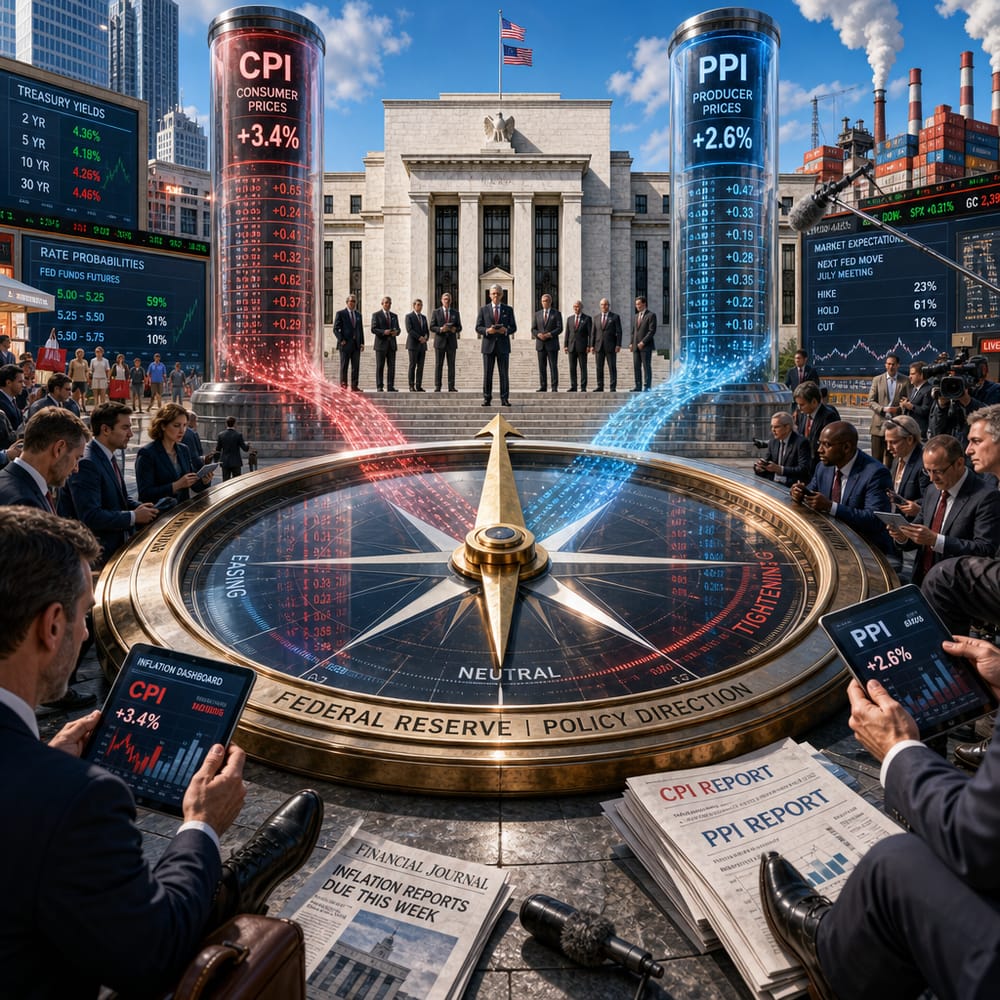
CPI and PPI Releases to Steer Fed Policy Direction
Attention, retail investors: the tea leaves are about to be read, and they come in the form of some crunchy, alphabet-soup data — the Consumer Price Index (CPI) and the Producer Price Index (PPI). These aren't just any numbers; they are the Holy Grail for anyone trying to divine the Federal Reserve's next move. Imagine Jay Powell, the Fed Chair, as a maestro, and these indexes as the sheet music for the economy's symphony. Buckle up, because what happens next could send ripples through everything from your mortgage to your 401(k).
So, what's the buzz? The CPI, which tracks the average change over time in the prices paid by urban consumers for a basket of goods and services, is expected to show another modest increase in July. Meanwhile, the PPI, which measures prices at the wholesale level before they hit consumers, will likely provide its own insights into the upstream factors affecting inflation. According to experts, a slightly hotter-than-expected report could push the Fed off the fence and into rate-hiking territory come September.
The Fed has been playing a game of chicken with inflation, keeping interest rates on hold all year. But as inflation stubbornly parks itself above the Fed's 2% comfort zone, even their patience has limits. A sharper-than-expected rise in these indexes could be the straw that breaks the camel's back and leads to another hike. On the flip side, if inflation cools more than anticipated, the Fed might just pump the brakes on rate hikes and let the economy breathe a little. Who doesn't love a good plot twist?
But what do these numbers mean for you, the everyday investor? Let's break it down. If the CPI or PPI comes in hotter than expected, brace yourself for potential turbulence. Higher inflation could slam the brakes on growth stocks and give bond yields a leg up — basically, it's the equivalent of adding an extra layer of SPF to your portfolio's sun protection. On the other hand, cooler-than-expected data might serve up a rally, offering a sigh of relief to any stock market bulls out there.
Here's where it gets really spicy: If the Fed does decide to hike rates, you might see a shift in market darlings. Tech stocks, which have been riding high thanks to low rates, could face a reality check. On the contrary, sectors like financials or consumer staples might start to shine. Think of it as a cosmic shift in the investment universe, and you have a front-row seat.
While we're on the subject of a cosmic shift, let's touch on the Strait of Hormuz drama for a moment. It's not directly related to the CPI or PPI, but who are we kidding? Geopolitics always finds a way into the economic conversation. The tensions between the U.S. and Iran over the Strait have left traders on tenterhooks, adding yet another layer of suspense. While a breakthrough seems as distant as a peacefully cohabiting cat and dog, the mere possibility could have cascading effects, including impacting oil prices, which in turn could feed into inflation metrics. Talk about a domino effect!
So, what's an investor to do amid this swirl of anticipation? Keep your eyes glued to market updates — it's like binge-watching a season finale, but with real money on the line. The stakes are higher, and the plot twists are just as riveting. Whether you're sipping on your morning espresso or doom-scrolling at 2 AM, knowing which way the economic winds are blowing will give you an edge.
In the end, whether the Fed decides to raise rates or hit the pause button, remember that every market move creates both challenges and opportunities. It might feel like you're in the spin cycle of an economic washing machine, but hold tight — informed decisions are your best fabric softener. Keep your wits about you, and as always, invest wisely.
This article is for informational purposes only and is not investment advice. Always do your own research or consult a licensed financial professional before making investment decisions.
© Copyright 2024. All Rights Reserved.
© Copyright 2024. All Rights Reserved.