

CPI and PCE Inflation Remain Sticky—Core Pressures Persist
Wednesday, August 26, 2026
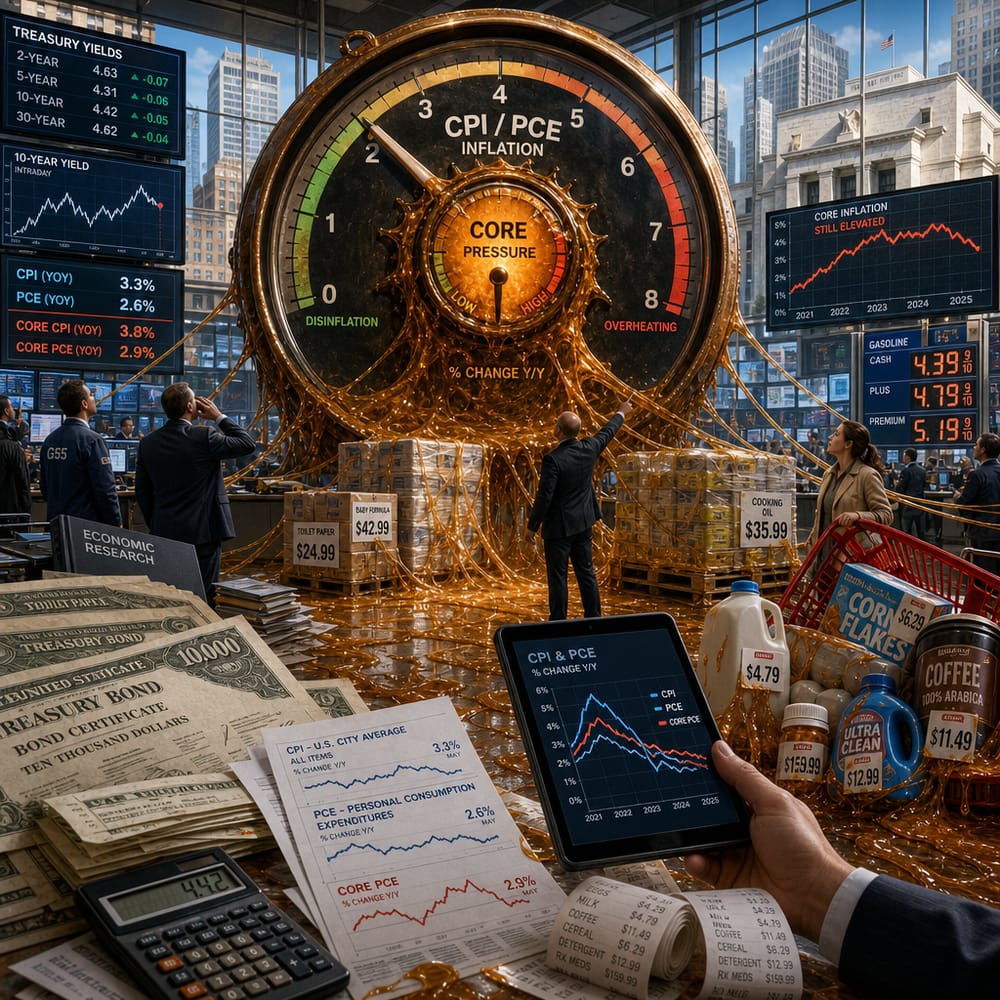
THE STICKY SITUATION: WHY CORE INFLATION WON'T TAKE A HINT
Grab your wallets and hold onto your hats because inflation is sticking around like that one guest who just won't leave the party. While headline inflation numbers, those splashy figures that include the high-flying costs of food and energy, have shown a bit of cooling, deeper down in the economy, core inflation is hanging on like a stubborn stain.
Recent data has thrown cold water on anyone hoping for a quick inflation cool-off. The Consumer Price Index (CPI) and Personal Consumption Expenditures (PCE) have indeed seen some slight easing. However, core inflation, the more nerdy cousin that ignores the unpredictable ups and downs of food and energy, is the real star of the stubborn show. This measure is still driving the Federal Reserve's decisions, as persistent price pressures continue to influence how we spend, save, and predict the future of our financial choices.
SO, WHAT'S MAKING CORE INFLATION SO STICKY?
Let's cut to the chase. The main culprits behind core inflation’s persistence are services, housing, and labor costs. Think rent, healthcare, and those sneaky streaming service price hikes. These elements might not grab headlines like a surge in oil prices, but they're the steady drumbeat behind the inflation symphony. As wages rise and the cost of living creeps upward, these components keep the core inflation cooking, regardless of what oil and grocery prices are doing.
The labor market is still tighter than your jeans after Thanksgiving dinner, which means wages are climbing. When wages rise, businesses tend to pass those extra costs down the line — to us, the consumers. It's a vicious cycle; wages go up, prices go up, and the cycle spins on.
WHAT'S THE FED UP TO?
With core inflation making itself comfortable, all eyes are on the Federal Reserve, which is in a delicate dance trying to curb inflation without tipping the economy into a recession. The Fed has been on a rate-hiking spree, trying to cool the economy by making borrowing more expensive. The idea? Squeeze spending and investment just enough that inflation doesn't become a permanent resident in your monthly budget.
But hold onto your rate charts! The Fed's decisions aren't made in a vacuum. Treasury bonds are particularly sensitive to the Fed's moves. When the Fed hikes rates, bond yields typically follow suit. We've seen Treasury yields inching higher, reflecting the market’s expectations of what’s coming. So keep an eye on those yields — they’re a good barometer for where things might head next.
WHAT DOES THIS MEAN FOR YOU?
There's a lot at stake here for retail investors. If the Fed continues on its path of rate hikes, borrowing costs for everything from mortgages to car loans could rise. In other words, that dreamy house you’ve been eyeing might just get pricier to finance. And let's not forget about consumer goods. If living costs keep climbing, you might need to rethink that impulse buy habit.
For stock investors, the sectors to watch are consumer goods and Treasury bonds. As the Fed maneuvers to rein in inflation, companies that rely heavily on consumer spending could feel the pinch. On the flip side, Treasury bonds might seem like a safer bet amid market volatility, but remember that their prices are inversely related to yields. As yields rise, the price of existing bonds tends to fall, so it's a double-edged sword.
BOTTOM LINE
As the Fed navigates this challenging landscape, the coming months are set to be chock-full of economic intrigue. Will core inflation finally take the hint and start to decline? Will the Fed's rate hikes hit the sweet spot, cooling inflation without freezing economic growth? Keep a close watch on bond yields and consumer spending habits to read the economic tea leaves. In the meantime, it's wise to buckle up and prepare for a ride that’s as unpredictable as the latest tech stock debut. Stay sharp, stay informed, and maybe, just maybe, core inflation will finally catch the hint to move along.
This article is for informational purposes only and is not investment advice. Always do your own research or consult a licensed financial professional before making investment decisions.
© Copyright 2024. All Rights Reserved.
© Copyright 2024. All Rights Reserved.