

Countdown to CPI: Inflation Watch Tops Market Agenda Ahead of August 12 Release
Monday, August 10, 2026
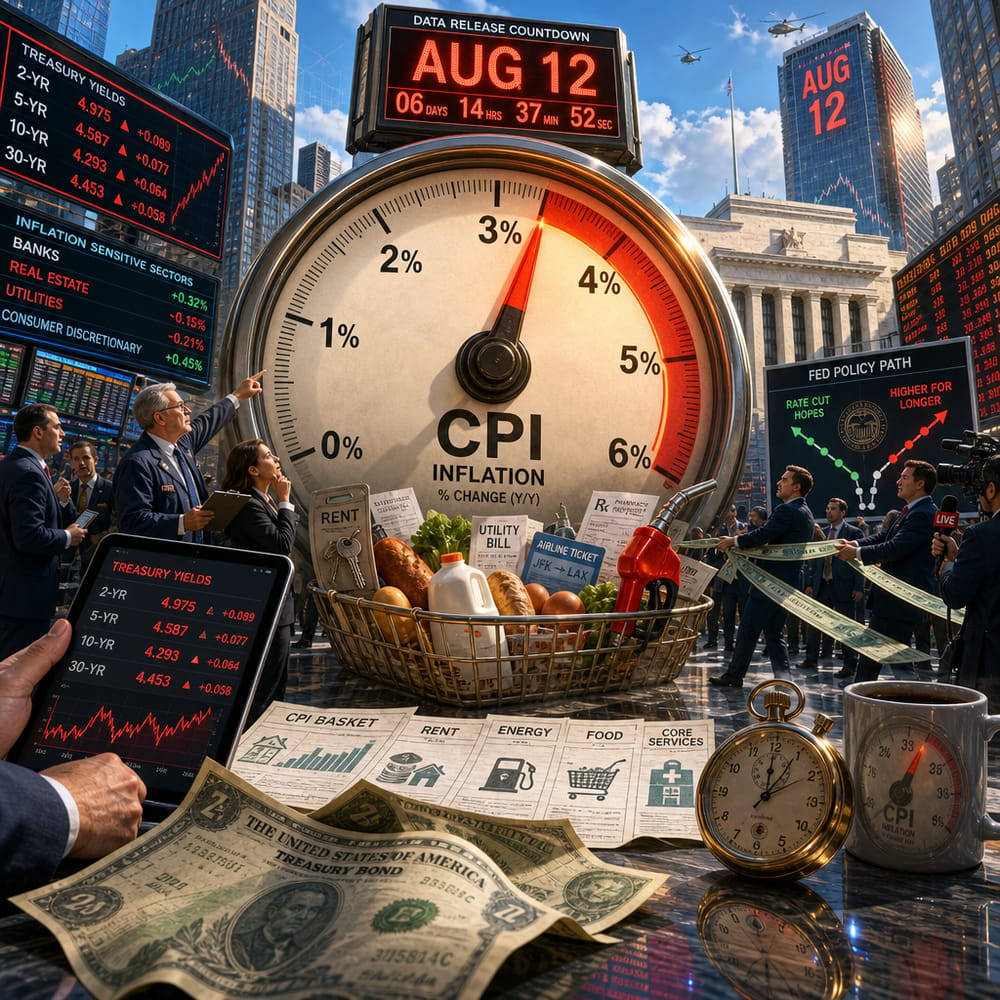
Brace yourselves, financial thrill-seekers! The Consumer Price Index (CPI) report is about to drop, and it's more eagerly awaited than the next season of your favorite reality show. Scheduled to roll out on August 12, this little report has more power over your wallet than you might think. So, what’s the buzz? It's expected to show inflation playing it cool at a smidge over 3%. But don’t let that tame number fool you. The CPI is the Federal Reserve's crystal ball, and its reading can set the stage for what happens next in the markets.
THE CRYSTAL BALL OF THE ECONOMY
Think of the CPI as the Fed's mood ring—because how the Fed feels about inflation determines whether they’ll crank up interest rates or not. More inflation? Higher rates. Less inflation? Maybe they’ll ease off. But why does this matter to you, the everyday Joe or Jane scrolling through financial news while sipping iced coffee? Well, interest rates influence everything from your mortgage rate to how much bang you get for your stock market buck.
THE FED FACTOR
Now, let's talk expectations. Analysts have been peering into their economic tea leaves, and many are betting on the CPI showing inflation sticking around in the 3% neighborhood. That might not seem like a lot, but it's enough to keep the Fed on its toes. If the CPI comes in hotter than expected, the Fed might consider tightening the screws further—think higher interest rates, more expensive loans, and your favorite tech stocks taking a hit. Conversely, a cooler-than-expected inflation rate could mean the Fed leaves rates alone for a while.
SECTOR SPOTLIGHT: VULNERABLE VICTIMS
Certain sectors have already been bracing for impact like a cat in a thunderstorm. Inflation-sensitive sectors—hello, consumer staples, and utilities—can feel the sting faster than you can say "higher grocery bill." These sectors often rely on predictable costs and prices, and inflation throws a wrench into that predictability like a toddler in a toy store. Then there are your U.S. Treasury bonds, those stalwart soldiers of safe investments. Rising inflation erodes the value of their predictable payouts, making them less attractive to investors looking for greener pastures.
THE RIPPLE EFFECT
So, what happens if the CPI report comes in as expected or surprises us? Let's say inflation holds steady or ticks up. The Fed might feel the need to keep interest rates high, a move that ripples through the economy faster than gossip in a high school cafeteria. Higher rates can mean more expensive borrowing costs for companies, potentially squeezing their profit margins. It might also mean less disposable income flowing into the stock market as everyday investors like you and me get wary of taking risks.
But if inflation surprises on the downside? That could be a green light for the Fed to back off, at least a little. Lower rates could breathe fresh life into the stock market party, as cheap money often translates to more investment in growth-oriented stocks, like those in tech or green energy. It’s a delicate dance, and the Fed's next steps hinge on this CPI report more than a tightrope walker’s balance.
GEARING UP FOR THE RELEASE
For those of you watching the markets from the comfort of your home, this CPI release could be the equivalent of a seismic tremor in financial terms. Will we see a rollercoaster ride with the Fed adjusting interest rates, or will it be smooth sailing? As you queue up your trading apps or stab at the refresh button on your financial news sites, consider this: the CPI isn’t just about numbers. It's a narrative of economic health, consumer confidence, and yes, a big indicator of what the Fed will do next.
So, keep your eyes peeled and your notifications on. The upcoming CPI report is more than just a statistic—it's a sneak peek into the Fed's decision-making room. It's a chance to adjust your investment strategy, whether you're a stocks enthusiast, a bond holder, or just someone keeping an eye on how much bread costs at your local store. Ready or not, CPI day is coming, and it’s got the potential to reshape economic expectations faster than you can say "interest rate hike."
This article is for informational purposes only and is not investment advice. Always do your own research or consult a licensed financial professional before making investment decisions.
© Copyright 2024. All Rights Reserved.
© Copyright 2024. All Rights Reserved.