

Core PCE Inflation Remains Elevated
Wednesday, August 19, 2026
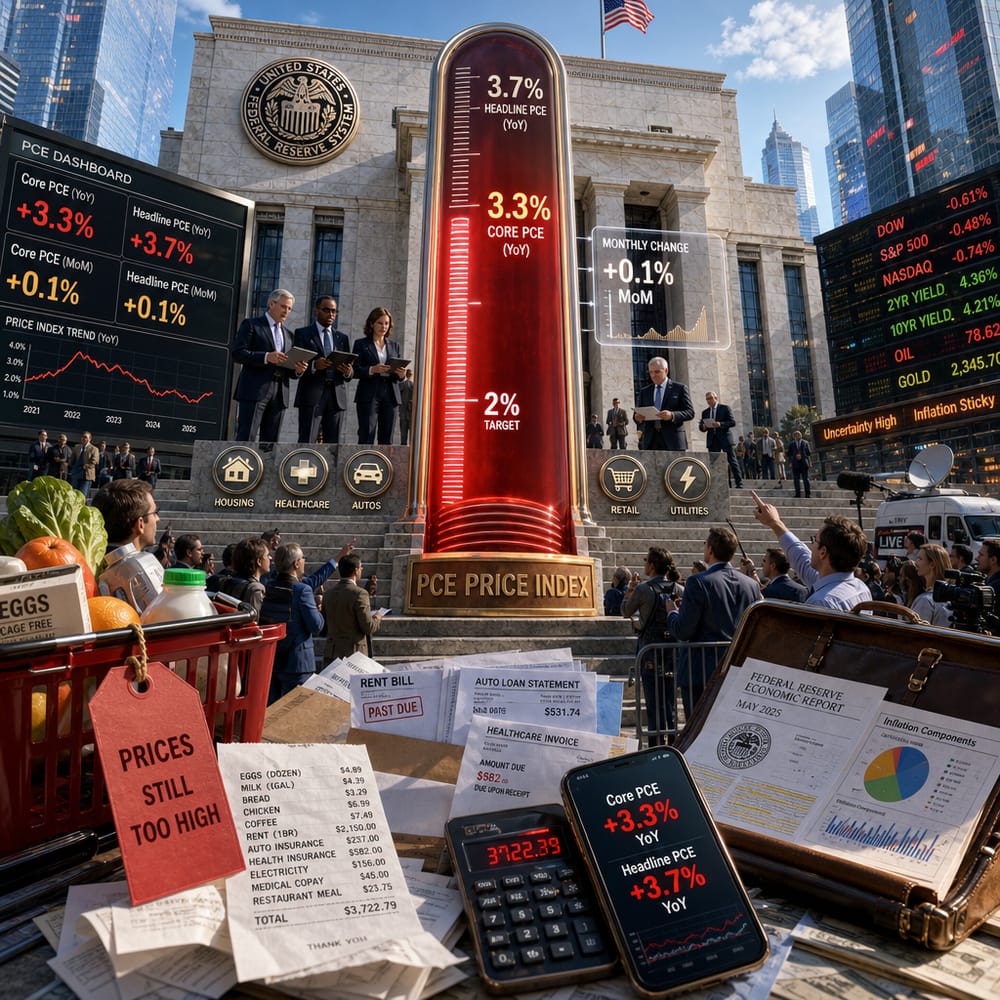
FED'S INFLATION TANGO: CORE PCE KEEPS THE BEAT
Move over, TikTok dances—there's a new rhythmic routine captivating Wall Street's attention, and it involves the Federal Reserve, inflation, and a suspenseful will-they-won't-they with interest rates. The U.S. Personal Consumption Expenditures (PCE) Price Index just dropped like the latest viral beat, showcasing a year-over-year rise of 3.7% for headline PCE and a 3.3% climb for core PCE. For those new to the party, core PCE slyly shimmies out of the spotlight on food and energy prices to give a smoother read on inflation. The month-over-month dance step revealed a 0.1% uptick in core PCE, suggesting inflation remains stubbornly elevated.
Now, why should you care? Picture the Federal Reserve as the DJ of the American economy. When inflation heats up the dance floor, they crank up interest rates to cool things down. But with core inflation remaining elevated, the Fed's next move is as suspenseful as a reality show twist.
KEEPING THE FED ON ITS TOES
With these figures, the Fed might have to keep their dancing shoes on longer than expected, as a rate cut seems as distant as your last vacation. In fact, they might even be pondering tightening their monetary policy belt instead. Imagine the Fed as the strict chaperone at a high school dance—if things get too wild, they’re ready to step in and remind us all who's in charge. Persistent inflation means they could keep rates higher for longer, or even hike them further, just when everyone was hoping for a breather.
MARKET'S MOOD SWING
What does this all mean for your portfolio? For starters, it keeps the market on edge. In the latest stock shuffle, the S&P 500 has been feeling the heat, posting its third straight losing day. Tech stocks are particularly sensitive to the interest rate tango, since higher rates make future profits look less appealing. And with bond yields hitting fresh highs, especially the 30-year Treasury yield climbing to its loftiest perch since 2007, investors find themselves caught in a volatility whirlpool.
But here’s the twist: despite these yield milestones, the stock market's reaction wasn’t as dramatic as one might expect. It's almost like the market's saying, "Yeah, we see you, inflation, but we've got our eye on other players, too."
INFLATION-SENSITIVE SECTORS: THE REAL MVPs?
Enter the inflation-sensitive sectors—these are your energy, real estate, and consumer staples, often viewed as the haven when inflation jitters take the spotlight. With that 3.7% headline PCE, these sectors might just be the wallflowers waiting to shine. Higher rates mean higher borrowing costs for companies, and those with dependable revenue streams, like utilities and consumer staples, often manage to keep their cool.
SO WHAT'S NEXT?
The burning questions: What are the implications of this stubborn core inflation for Federal Reserve's future moves? And how might this sway market expectations for interest rates? The answers, like any good dance move, require a bit of anticipation and a lot of watching the floor.
For now, the Fed is likely to keep the music playing at its current tempo, and while rate cuts are on the wishlist of many, they might just have to wait a little longer. As the market keeps an eye on the inflation numbers, the Fed's every move will be scrutinized like the judges at "Dancing with the Stars."
As you watch this thrilling show unfold, remember that keeping your ear to the ground—and your portfolio diversified—might just be the best way to glide smoothly through the economic dance floor. But don't get too comfy in the audience, because in the world of finance, one thing's for sure: the next act is always full of surprises.
This article is for informational purposes only and is not investment advice. Always do your own research or consult a licensed financial professional before making investment decisions.
© Copyright 2024. All Rights Reserved.
© Copyright 2024. All Rights Reserved.