

Cooling Wholesale Inflation: Implications for Fed Policy
Friday, August 14, 2026
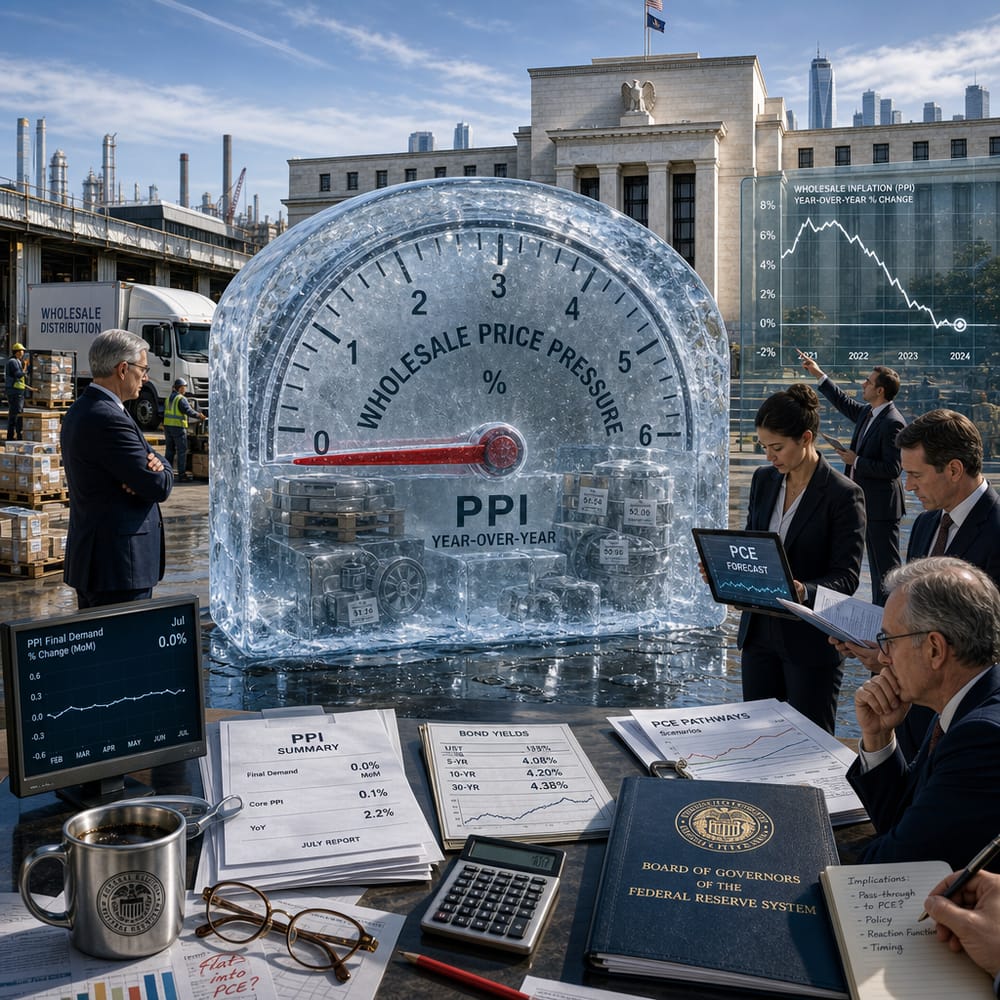
INFLATION CHILL: WHAT WHOLESALE PRICES MEAN FOR YOUR WALLET AND THE FED'S BIG DECISIONS
Remember the days when gas prices felt like highway robbery, and grocery shopping required a second mortgage? Well, hang on to your hats (and wallets), because there might just be a light at the end of the inflation tunnel. The July Producer Price Index (PPI) report has rolled in, and it’s as flat as a Kansas pancake. But what does this really mean for you, your trusty dollar, and those mysterious folks at the Federal Reserve?
WHOLESALE WHISPERINGS: DECODING THE PPI
The PPI is a bit like the behind-the-scenes magician of the economy. It measures the prices producers receive for their goods and services before these costs trickle down to us, the consumers. Think of it as a glimpse into the future of what might soon hit your local supermarket’s price tags.
Now, a flat PPI means that prices at the wholesale level are holding steady. And why should you care? Because this could mean a kinder, gentler price experience is coming your way too. But let's not get too dreamy-eyed just yet. The real star of the show is how this quieting of wholesale inflation might play into the Federal Reserve’s grand scheme.
THE FED'S FAVORITE CRYSTAL BALL: CORE PCE
If the PPI is the magician, the core Personal Consumption Expenditures (PCE) report is the all-knowing oracle for the Fed. This report tells the Fed what's happening with consumer prices, minus the wild swings of food and energy costs. Why does the Fed love this so much? Because it’s a steady, no-nonsense look at inflation’s core—without the chaos of volatile categories.
So, if the PPI is signaling peace and quiet in the price world, the core PCE might echo this harmony. And that could give the Fed some breathing room. Translation? The knights of monetary policy might just decide to relax their inflation-fighting tactics if they believe the dragon is calming down.
INTEREST RATES: TO HIKE OR NOT TO HIKE?
Here’s where it gets juicy. If inflation shows signs of taking a back seat, the Fed might hit pause on the interest rate hike express. Or better yet, they could even consider cutting rates down the line. This ripple effect is crucial. Lower interest rates mean cheaper loans for you and me—whether for homes, cars, or those tantalizing credit card balances.
But before we pop the champagne, let's remember the Fed has a reputation to uphold. They’re the cautious type, always weighing every decision like it's the last piece of cake at a party. They will be watching that core PCE data like a hawk to make sure inflation isn't playing a game of hide and seek.
MARKET MOVES AND MONEY MOODS
So, what should you, the everyday investor, keep an eye on? Well, if the Fed does dial down rate hikes, it could breathe new life into various sectors. Think tech stocks getting a second wind, or housing markets shaking off some dust. Yep, even those cash-hoarding companies might start splurging, sparking potential growth in your investment portfolios.
On the flip side, if inflation decides it’s not done with its cameo, the Fed could keep rates high, which might give the stock market the jitters. But then again, it’s all about the thrill of the chase, isn’t it?
FINAL THOUGHTS: THE WAITING GAME
As we await the core PCE data, remember this: the market loves a good plot twist. So, keep your eyes peeled, don’t lose sight of your financial goals, and cherish a little economic stability when you can get it. Whether the Fed decides to keep its foot on the gas or tap the brakes, your financial journey is always in motion.
Stay sharp, stay savvy, and keep those market antennas up. After all, who doesn't love a good roller coaster, especially when it’s your financial future at stake?
This article is for informational purposes only and is not investment advice. Always do your own research or consult a licensed financial professional before making investment decisions.
© Copyright 2024. All Rights Reserved.
© Copyright 2024. All Rights Reserved.