

Cooling Producer Price Index Suggests Easing Inflation Pressures
Friday, August 21, 2026
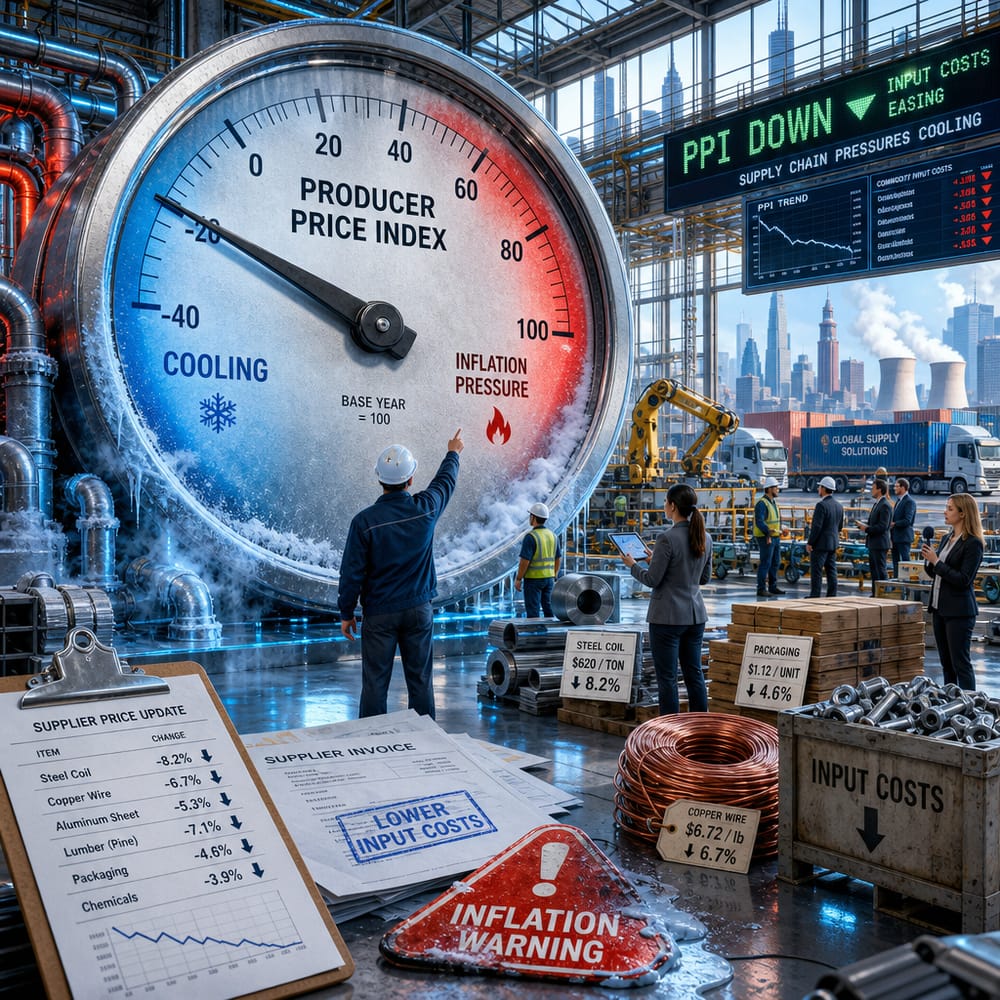
It wasn't too long ago that inflation seemed like the house guest who overstayed their welcome, raising prices on everything from milk to your morning coffee. But here's a plot twist: the Producer Price Index (PPI), a key indicator of inflation at the wholesale level, has taken a surprising dip. What does this mean for your wallet and the economy at large? Let's dive in.
From the front lines of the supply chain, the PPI is like the canary in the coal mine for future consumer prices. When the cost of goods at the production stage decreases, it often trickles down to the store shelves. In plain terms, if making stuff gets cheaper, buying stuff might follow suit. So, the cooling PPI is throwing a bucket of ice water on the inflation fire—good news if you're hoping for a reprieve on your grocery bill.
Now, why should you care beyond being able to afford more avocados? Because the Federal Reserve, the big kahuna of U.S. monetary policy, is paying very close attention. The Fed's job is to keep inflation in check while fostering economic growth. If inflation pressures ease, the Fed might decide to take a breather from hiking interest rates. Lower rates could mean cheaper loans for businesses and consumers alike, potentially sparking more spending and investment.
But hold your horses before you start planning that shopping spree. While a cooling PPI suggests that wholesale inflation is slowing, it doesn't automatically mean consumer inflation is about to nosedive. There's a time lag between when producers feel the burn and when you, the consumer, notice a change. Plus, other factors—like wages, rent, and pesky international events—can still keep the consumer price index (CPI) sizzling.
The Federal Reserve's decisions are, in part, influenced by this complex tango between PPI and CPI. With a cooling PPI, Fed officials might lean towards keeping interest rates steady or even consider cuts. That would be a sweet melody for the stock market, which typically thrives on lower borrowing costs. But if other inflation pressures remain stubbornly high, the Fed's dance card might still include a rate hike or two.
Let's throw in a sprinkle of economic growth prospects. When the cost to produce goods falls, it generally boosts corporate profit margins. Companies can either pocket the savings or pass them on to consumers through lower prices—or ideally, a bit of both. This could mean more robust economic growth, as businesses find it easier to expand or innovate without passing hefty costs onto buyers.
But remember, it's not all sunshine and rainbows. Economic growth isn't just about cheap production costs. We're talking about a global economy that's a delicate tapestry of geopolitical tensions, supply chain hiccups, and labor market shifts. The PPI may be cooling, but how much of that will be overshadowed by other factors is a wild card.
In this high-stakes game of economic Jenga, investors and everyday folks alike are watching closely. Will the Fed stay the course and allow lower PPI numbers to influence its strategy? Will consumer prices reflect these changes before Halloween or by the time you’re buying your holiday turkey? And most importantly—how does this impact your bottom line?
One thing's for sure: a drop in the PPI is a critical piece of the economic puzzle. It's a hopeful sign that inflation's grip might be loosening, but it’s also a reminder of how interconnected—and unpredictable—economic forces can be. So, stay tuned, savvy readers. The plot, as they say, thickens.
This article is for informational purposes only and is not investment advice. Always do your own research or consult a licensed financial professional before making investment decisions.
© Copyright 2024. All Rights Reserved.
© Copyright 2024. All Rights Reserved.