

Cooling PPI and Its Impact on Fed Policy
Saturday, August 15, 2026
COOLING PPI AND ITS IMPACT ON FED POLICY
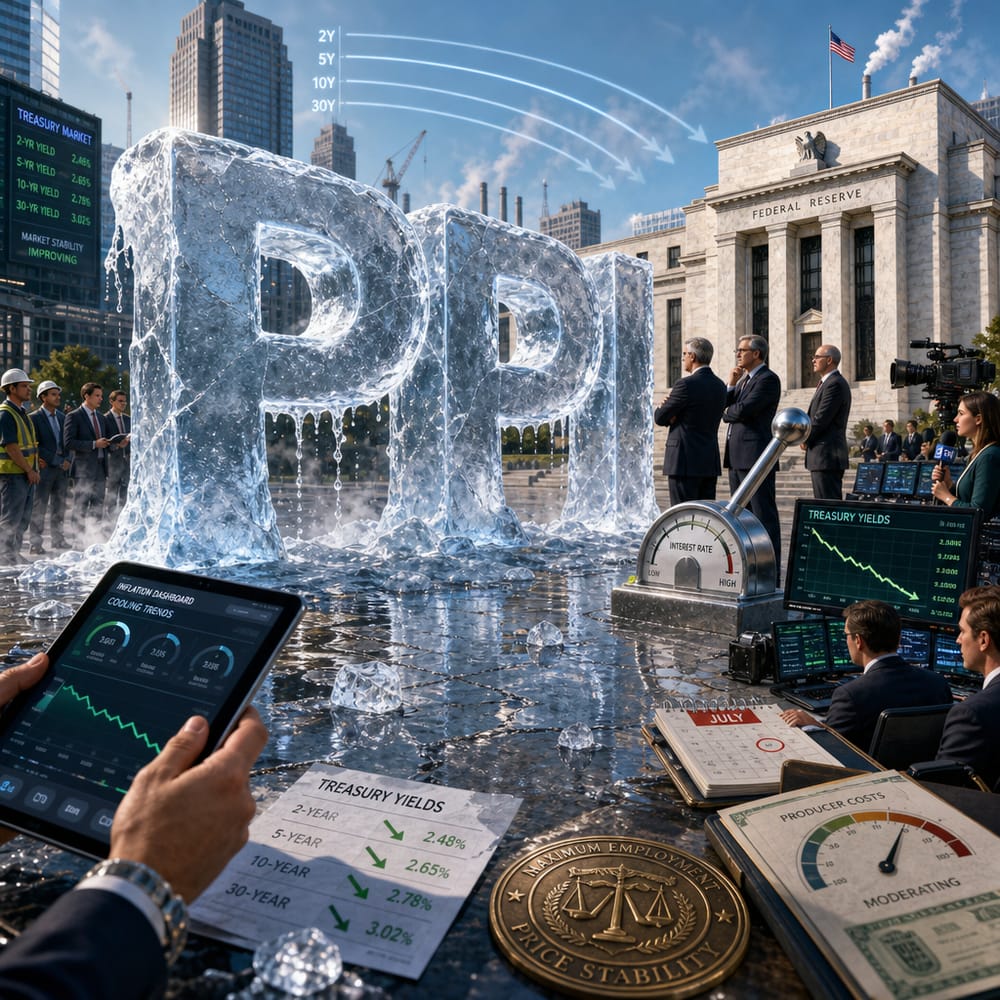
In the high-stakes poker game of economic indicators, the Producer Price Index (PPI) just laid down a surprising hand. The July PPI stats revealed a year-over-year increase of just 4.7%, down from June’s 5.5% — the kind of cool-off we hadn’t seen for a while, especially after the false alarm that was May's fiery 5.9%. Now, unless you’re an economist who dreams in spreadsheets, you might be wondering: why does this matter? Well, my friend, this could be a plot twist in the Federal Reserve’s epic saga of interest rate deliberations.
INFLATION EXPECTATIONS: CONSUMERS’ CRYSTAL BALL
First off, let's talk about the PPI — that somewhat geeky cousin of the more familiar Consumer Price Index (CPI). While the CPI tracks what you pay at checkout, the PPI measures what businesses pay each other for goods and services. Why should you care? Because the PPI acts like a crystal ball, giving us a sneak peek at what could be coming down the line for consumer inflation. If producers are paying less, they might just pass those savings to you, keeping price pressures at bay when you’re out doing your Saturday shopping.
So, what’s got the PPI cooling its jets? Part of it comes from easing energy prices following the tumultuous impact of geopolitical tensions (thanks, Iran). But it’s also a signal that the breakneck pace of inflation might be tapping the brakes. And that’s music to the Federal Reserve’s ears.
FED POLICY: THE DANCE OF THE INTEREST RATES
Now, imagine you’re Jerome Powell, chair of the Federal Reserve. You’ve been hiking interest rates like it’s the Appalachian Trail, trying to put a lid on runaway inflation. But with the PPI showing signs of cooling, you might be tempted to take a breather. It’s all about avoiding the dreaded “R” word—recession. Aggressive rate hikes can tame inflation, sure, but they can also throw cold water on economic growth.
So, will the Fed hit pause on their rate hiking party? It’s a coin toss. But with the PPI slowdown, they might opt for a more cautious step rather than a full-on dance-off with inflation. Keeping rates steady could help avoid choking off economic momentum, especially when businesses and consumers are just starting to catch their breath post-pandemic.
MARKET REACTION: A CAUTIOUS OPTIMISM
Naturally, when the PPI went public with its July numbers, financial markets reacted quicker than a cat to a laser pointer. For those watching, U.S. Treasury yields—a fancy term for the interest rates on government bonds—did a little shimmy downwards. Why? Lower inflation expectations often mean investors anticipate fewer rate hikes from the Fed, making current bonds more attractive.
In the stock market, the mood was a tad rosier. Lower interest rates can mean good news for stocks, as they lower corporate borrowing costs—making it cheaper for companies to expand, invest, and, let's be honest, buy back their own shares. So, while bond investors clink glasses over steadier yields, stock market players might be readying their portfolios for a potential bull run.
SO, WHAT NEXT?
The big question on everyone’s lips is: will this cooling trend continue? And what does it spell for the future? If energy prices remain stable and the global supply chain woes don’t rear their ugly heads again, we might see a smoother PPI ride in the months ahead. But, let’s not get too cozy. Geopolitical tensions, like those swirling around the Strait of Hormuz, remind us that surprises can lurk around any corner.
For now, the Federal Reserve will be watching the PPI like a hawk. They’ll balance the need to keep inflation in check without putting the brakes on economic growth. Whether they keep interest rates steady or pull another trick out of their monetary toolkit, retail investors, consumers, and businesses alike will be watching every move.
So, as you sip your coffee, scroll through your phone, and ponder where the economy’s headed, remember this: the PPI isn’t just some dry economic stat. It’s the plot twist that might just influence the next chapter in the Fed’s ongoing drama of interest rates and economic recovery. Keep your eyes peeled, your portfolios balanced, and your fingers crossed—because in the world of finance, it’s never a dull moment.
This article is for informational purposes only and is not investment advice. Always do your own research or consult a licensed financial professional before making investment decisions.
© Copyright 2024. All Rights Reserved.
© Copyright 2024. All Rights Reserved.